
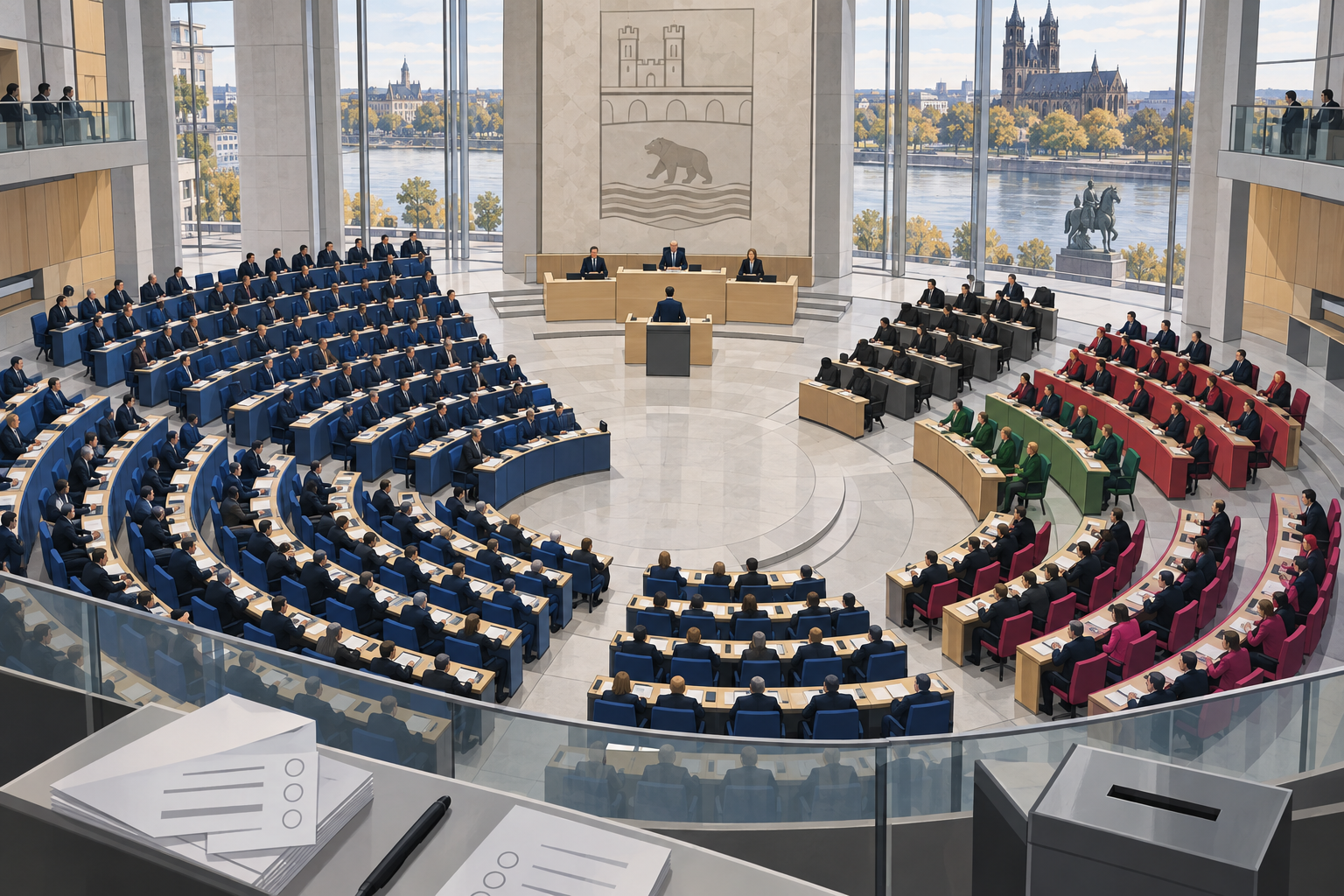
MAGDEBURG, Germany - Alternative for Germany won a commanding victory in Saxony-Anhalt's state election, taking 43.8% of the vote and 39 seats in the 83-member parliament, but falling three seats short of the majority needed to govern alone.
The preliminary result more than doubled the party's support from the previous state election and delivered a severe defeat to Chancellor Friedrich Merz's Christian Democratic Union. The CDU received 17.2% and 15 seats after leading the eastern German state for 24 years.
The Social Democrats took 9.3%, the Greens 8.9% and the Left party 8.6%, with each securing eight seats, according to results reported by The Associated Press and published by Saxony-Anhalt's election authorities. The Sahra Wagenknecht Alliance won 5.3% and five seats. Turnout reached 77.8%.
AfD's lead candidate, 35-year-old Ulrich Siegmund, called the result a mandate for political change. The party campaigned heavily on migration, public security and dissatisfaction with Germany's national leadership. Its state branch has been classified by domestic intelligence as a proven right-wing extremist organization, a designation the party rejects as politically motivated.
Despite the scale of its victory, AfD has no automatic path to government. Germany's mainstream parties have maintained a firewall against governing with it. The fragmented result means the remaining parties will face difficult coalition talks if they intend to keep AfD out of the state administration.
Saxony-Anhalt controls important areas including policing and education and holds four votes in Germany's Bundesrat, the chamber representing the states. AfD also advocates positions on Ukraine and Russia, including opposition to aid for Kyiv and support for lifting sanctions on Moscow, although a state government cannot set national foreign policy.
The first democratic fact is unavoidable: millions of voters cannot be dismissed simply because their choice alarms the political establishment. A free society must count their ballots accurately, protect their right to participate and listen seriously to the grievances that produced such a dramatic result.
But respecting voters does not require pretending every political program is harmless. Germany's democracy has a special responsibility to examine extremist rhetoric, threats to independent institutions and attempts to divide citizens by identity. That scrutiny must be based on evidence and law, not censorship or convenient labels.
The result exposes the weakness of a strategy that treats isolation as a complete political answer. A firewall may prevent AfD from entering government, but it cannot by itself reduce the party's vote. If established parties appear unable to control migration, improve local services, revive investment or speak plainly about public safety, moral warnings will sound increasingly disconnected from daily life.
There is also a strategic issue beyond Saxony-Anhalt. Russia benefits when democratic societies lose confidence in their alliances and turn against support for Ukraine. A regional party can use anger over living costs or migration to advance foreign-policy arguments that serve Moscow, even when those issues have little direct connection.
American and European democracies should therefore read the vote as both a warning and a test. The warning is that public frustration can overwhelm traditional party loyalties. The test is whether democratic leaders can answer that frustration with competent government while defending NATO, Ukraine and the constitutional order.
The coalition negotiations will be uncomfortable. Parties that disagree sharply may have to work together, and voters may see another broad anti-AfD arrangement as an effort to deny the election's message. Any coalition that emerges will need a positive program, not merely a shared determination to exclude the winner.
AfD, meanwhile, should face the same standards expected of any party seeking power: credible budgets, workable administration, respect for courts and media, and clear answers about candidates or statements identified as extremist. Winning a large vote is democratic legitimacy, but it is not a license to weaken democratic safeguards.
Saxony-Anhalt has not handed AfD total control. It has handed Germany a political reality that can no longer be treated as temporary protest. The strongest response is neither panic nor denial. It is open democratic competition, firm constitutional boundaries and practical results that give disillusioned voters a reason to reconsider.
Comments
Loading comments…