
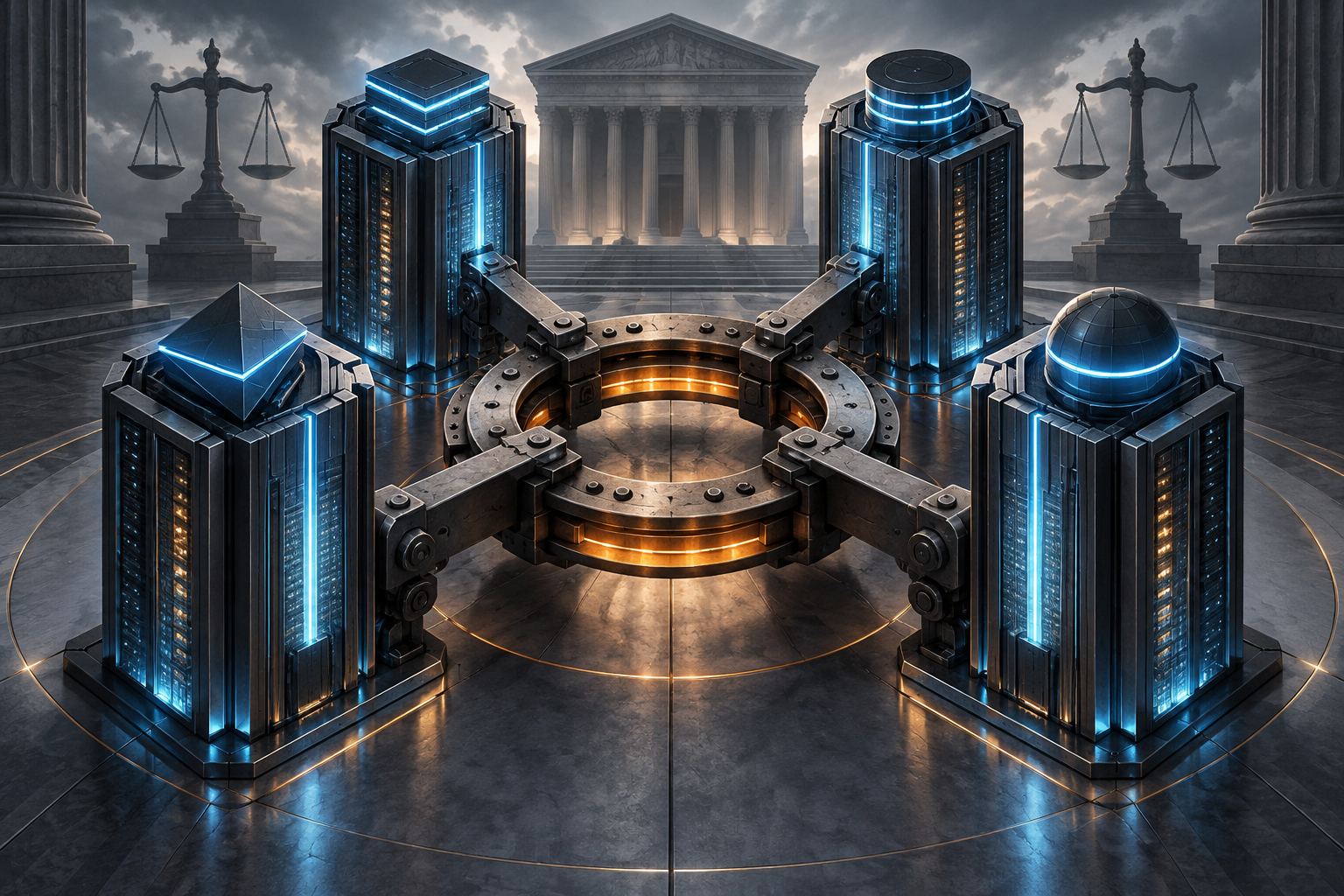
SAN FRANCISCO - Anthropic, OpenAI, SpaceXAI and Google are facing a proposed class-action lawsuit that accuses the rival artificial-intelligence companies of illegally coordinating efforts to slow the pace of AI development.
The complaint was filed Friday in the U.S. District Court for the Northern District of California by four named plaintiffs who pay for premium access to Claude, ChatGPT, Grok or Gemini. They seek to represent a nationwide class of paying subscribers and ask the court for an injunction, class certification and a declaration that the companies violated federal antitrust law.
The case is Buist v. Anthropic PBC, No. 3:26-cv-10693. It is a civil complaint at the beginning of litigation, not a court finding. No judge has ruled that the companies reached an agreement, restrained competition or harmed subscribers. Representatives for the four defendants did not immediately respond to requests for comment cited in reporting on the filing.
The plaintiffs focus on public statements made around September 12. Their complaint says Anthropic chief executive Dario Amodei called for industrywide coordination to pace frontier AI development so safety systems could catch up. It alleges that public expressions of agreement from OpenAI chief executive Sam Altman, SpaceXAI leader Elon Musk and Google DeepMind co-founder Demis Hassabis amounted to coordination among competitors.
The lawsuit also cites an earlier statement signed by AI researchers and executives that described the competitive pressure preventing any one laboratory from slowing by itself. According to the complaint, subscribers are harmed if companies charge the same prices while improving their products more slowly than they would under ordinary competition.
The plaintiffs do not argue that an AI company is forbidden from independently delaying a model for safety reasons. They also say they do not oppose federal regulation or an antitrust exemption approved through government. Their narrower claim is that competing companies cannot privately replace individual decisions with a collective restraint on how quickly their products improve.
Amodei had acknowledged the antitrust problem in his proposal, suggesting that the U.S. government could mediate or enable limited discussions and issue a narrow waiver for certain safety conversations. Altman publicly supported a consistent federal safety framework while saying OpenAI did not need to wait for an exemption or legislation to begin work intended to build confidence.
The dispute exposes a real conflict rather than an easy morality play. Advanced AI companies warn that rapidly improving systems may become harder to control, while each company also has a commercial incentive to influence rules that could restrain competitors. Safety coordination can be responsible. It can also become a shield for incumbents if the same firms controlling the strongest models decide privately how much innovation the market will receive.
American law offers a better path than trusting executives to police themselves in private. Congress and federal agencies can set transparent safety requirements, authorize narrowly defined information sharing and preserve competition where coordination is unnecessary. Courts can test evidence under rules available to both sides. That process is slower and less comfortable than an informal agreement, but democratic legitimacy depends on public authority rather than corporate promises.
The national-security stakes make that distinction even more important. The United States is competing with China for leadership in models, chips, data centers and military applications. Racing without safeguards could create serious risks, yet a vague domestic slowdown could also surrender an advantage while Chinese state-backed laboratories continue advancing. Washington must be able to demand safety without confusing caution with retreat.
The complaint may ultimately fail. Public statements of support for a general idea are not automatically proof of a binding agreement, and the plaintiffs will need evidence connecting discussion to actual competitive restraint and consumer injury. The companies may also show that model schedules remained independent or that safety measures improved products rather than reducing their value.
Still, the lawsuit asks a question the industry cannot dismiss: who decides the pace of a technology that may reshape the economy and national power? The answer should not be four executives meeting an undefined standard behind closed doors. It should be a lawful framework that protects the public, keeps markets open and forces every claimed restraint to survive scrutiny.
Comments
Loading comments…