
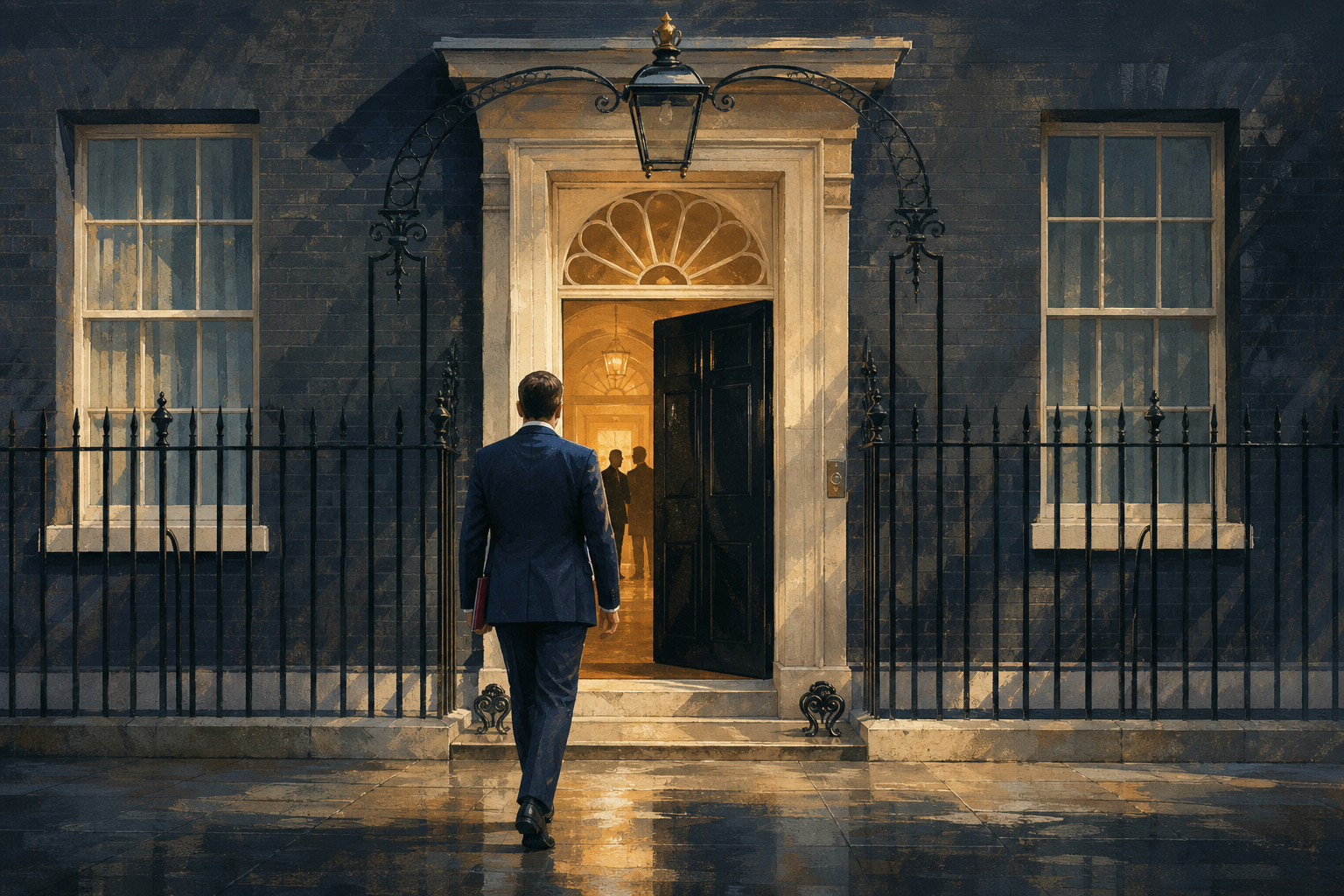
LONDON — Andy Burnham became Britain’s prime minister on Monday, July 20, after King Charles III formally invited the new Labour leader to form a government. The former mayor of Greater Manchester replaced Keir Starmer, whose resignation ended a two-year premiership and opened another abrupt chapter in a decade of political turnover.
Burnham, 56, entered Downing Street as the seventh British prime minister since 2016. The transfer did not require a general election: Labour still holds a majority in the House of Commons, and its lawmakers selected Burnham as party leader after Starmer stepped down. That is lawful and familiar under Britain’s parliamentary system, but it also means voters are watching a governing party change its leader and direction in the middle of a term.
In his first speech outside No. 10, Burnham acknowledged public exhaustion with politics and promised what he called a circuit breaker for Britain. He set out a programme built around shifting power away from Westminster, strengthening public control over essential services, using government purchasing to support British industry and producing a 10-year national plan later this year.
He also promised near-term cost-of-living measures, more council housing, additional support to help young people enter work and a drive to end rough sleeping. The details — especially how the government will pay for its plans while meeting fiscal and defence commitments — are expected to determine whether the speech becomes a governing programme or another optimistic launch that runs into Britain’s tight public finances.
Burnham moved quickly to mark a break with the previous administration. Official appointments named John Healey as chancellor of the Exchequer, Ed Miliband as foreign secretary and Louise Haigh as first secretary of state and Cabinet Office minister. Shabana Mahmood remained home secretary, while Rachel Reeves and David Lammy were among the senior figures who left government.
The new prime minister’s path to Downing Street was unusually compressed. Burnham was not a member of Parliament until June, having first won a special election in the north-western constituency of Makerfield. He then returned to Westminster, secured Labour’s leadership and was chosen by 379 party lawmakers. His rise reflects Labour’s fear that it was losing working-class support to Reform UK after poor local-election results and growing pressure on Starmer.
That background explains Burnham’s emphasis on deindustrialised communities and power outside London. His political wager is that Labour can rebuild trust by making government feel more local, economically interventionist and responsive to households that believe national growth has passed them by. It is also a direct attempt to deny populist parties the argument that established institutions have stopped listening.
The democratic test, however, will be delivery rather than tone. Decentralisation can create accountability closer to voters, but only if local authorities receive real authority and sustainable funding. Public control of essential services can improve long-term planning, but it can also become expensive or ineffective without disciplined management. Industrial policy can protect strategic capacity, yet it must still reward productivity rather than simply preserve politically favoured projects.
Burnham’s first calls with President Donald Trump and Ukrainian President Volodymyr Zelensky signalled continuity in Britain’s major security relationships. His speech also said the government would honour defence commitments to international partners. That matters at a time when Europe is under pressure to carry more of its own security burden and when political instability in London can create doubt among allies.
Britain’s repeated changes of prime minister expose a harder reality. A parliamentary democracy can replace a failing leader without a constitutional crisis, which is a strength. But seven prime ministers in a decade is also evidence that changing the person at the top has repeatedly proved easier than fixing weak growth, strained public services, housing shortages and regional inequality.
Burnham now has the authority he sought and a governing majority behind him. He will not have a long grace period. His success will be measured by whether families see relief, communities gain meaningful control and Britain recovers the stability he promised — not by the choreography of another arrival at Downing Street.
Comments
Loading comments…