
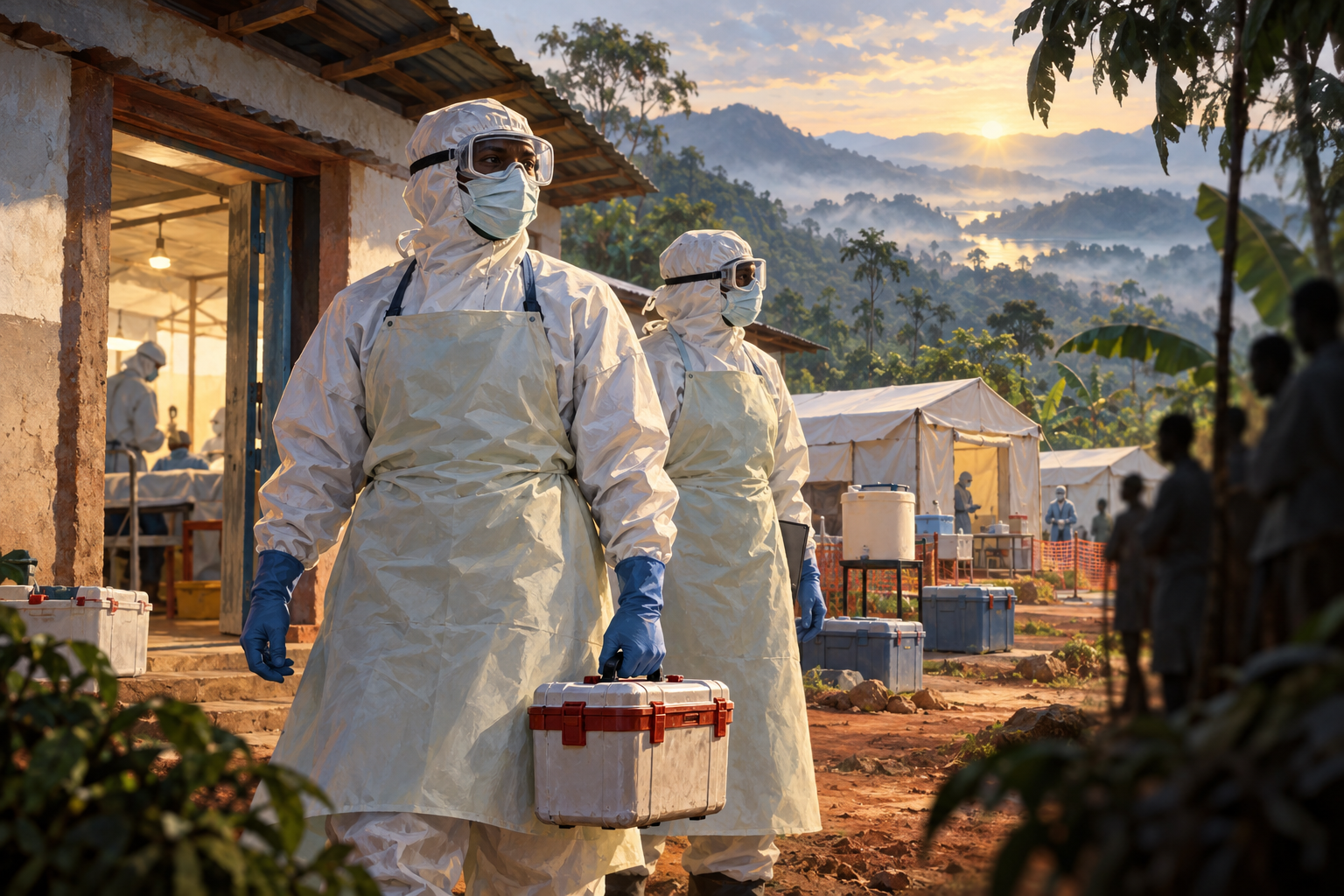
BUTEMBO, Congo - A nurse was killed and another health worker severely injured while responding to an Ebola alert in eastern Democratic Republic of Congo, the World Health Organization said, adding a new security crisis to the country's deadliest Ebola outbreak.
The attack occurred Saturday in Bafwasende, a town in Tshopo province. WHO Director-General Tedros Adhanom Ghebreyesus disclosed the incident Sunday and said people protecting communities from the disease must be allowed to work safely. Local authorities had not publicly identified suspects or explained a motive by early Monday.
The assault came as transmission of Bundibugyo virus disease continued across a widening area. WHO reported 9,704 confirmed cases and 4,687 deaths in Congo as of Oct. 20, a crude case-fatality ratio of 48.3%. The outbreak had reached 66 health zones in eight provinces, with Ituri remaining the epicenter.
The human toll has continued to rise since that report. Congo's Health Ministry later counted more than 9,800 cases and 4,700 deaths since the outbreak began in May, according to the Associated Press. The figures make this the deadliest Ebola outbreak in the country's history.
WHO said 307 of the 482 deaths recorded in the period since its previous update occurred in communities rather than treatment centers. That pattern points to delayed detection, reluctance to seek care and continuing difficulty reaching patients before they infect others.
The outbreak has also crossed borders. Kenya had reported nine cases, all linked to an imported patient, while Nigeria confirmed an imported case in Abuja. WHO said there was no evidence of wider community transmission in Kenya and continued to assess the global risk as low, while rating risk inside Congo as very high and risk for neighboring countries as high.
Uganda tightened screening at land borders and Entebbe International Airport on Sunday. It said returning citizens with recent travel to Congo must enter a 21-day quarantine at their own expense, while nonessential Congolese travelers would be turned back. WHO, however, has advised against broad restrictions on travel or trade with affected countries.
Violence against responders has become part of the emergency. A Congolese politician was beaten to death in North Kivu last month after defending public-health measures on radio. In May, residents burned tents at two health centers in separate incidents. WHO's Africa regional director, Mohamed Yakub Janabi, warned that misinformation and fear must not be allowed to fuel attacks.
Health authorities have expanded treatment capacity and deployed surveillance teams, but trust remains a basic requirement. WHO said contact follow-up reached 79.7% nationally in its Oct. 20 update, below the 95% threshold considered necessary. North Kivu was at 73.3%, leaving thousands of contacts without confirmed daily monitoring.
Fear becomes a weapon when institutions lose trust
An Ebola outbreak is fought through laboratories, protective equipment and treatment beds, but it is stopped in conversations. A family must report a fever. A community must permit testing. Contacts must answer the door each day. When responders are attacked, every part of that chain becomes more dangerous and less reliable.
The killing in Bafwasende therefore threatens more than the team involved. It can make nurses hesitate before entering a hostile area, discourage volunteers and persuade frightened families that cooperation carries its own risk. The virus gains time whenever the people tracking it are forced to withdraw.
Misinformation is real, but blaming communities alone would hide the deeper failure. Congo's citizens have lived through conflict, corruption and repeated emergencies in which promises from distant authorities did not always produce security or competent care. That history does not justify violence. It does explain why official messages may arrive in communities where the government has little accumulated credibility.
Rebuilding that credibility requires more than telling people to trust experts. Local religious leaders, survivors, traditional authorities and independent community groups need a meaningful role in the response. Information must be delivered in local languages, questions answered openly and deaths handled with dignity. Security forces must protect clinics without turning public-health work into a coercive occupation.
Outside governments also have responsibilities. Border screening and targeted quarantine can be useful when based on evidence, but sweeping travel bans often drive movement underground and punish entire populations. Funding treatment, surveillance and safe working conditions attacks the outbreak at its source. Political theater at an airport does not.
The cruel reality is that a nurse entered danger to answer a health alert and did not return. The attacker remains unidentified, but the effect is clear: one fewer professional on a frontline already short of people, and another reason for communities and responders to fear each other.
Congo will not defeat Ebola through medicine alone. It must protect those delivering that medicine and earn the cooperation of the people receiving it. Until safety and trust are treated as core outbreak tools, every new treatment center will stand on ground that violence and rumor can still pull away.
Comments
Loading comments…