
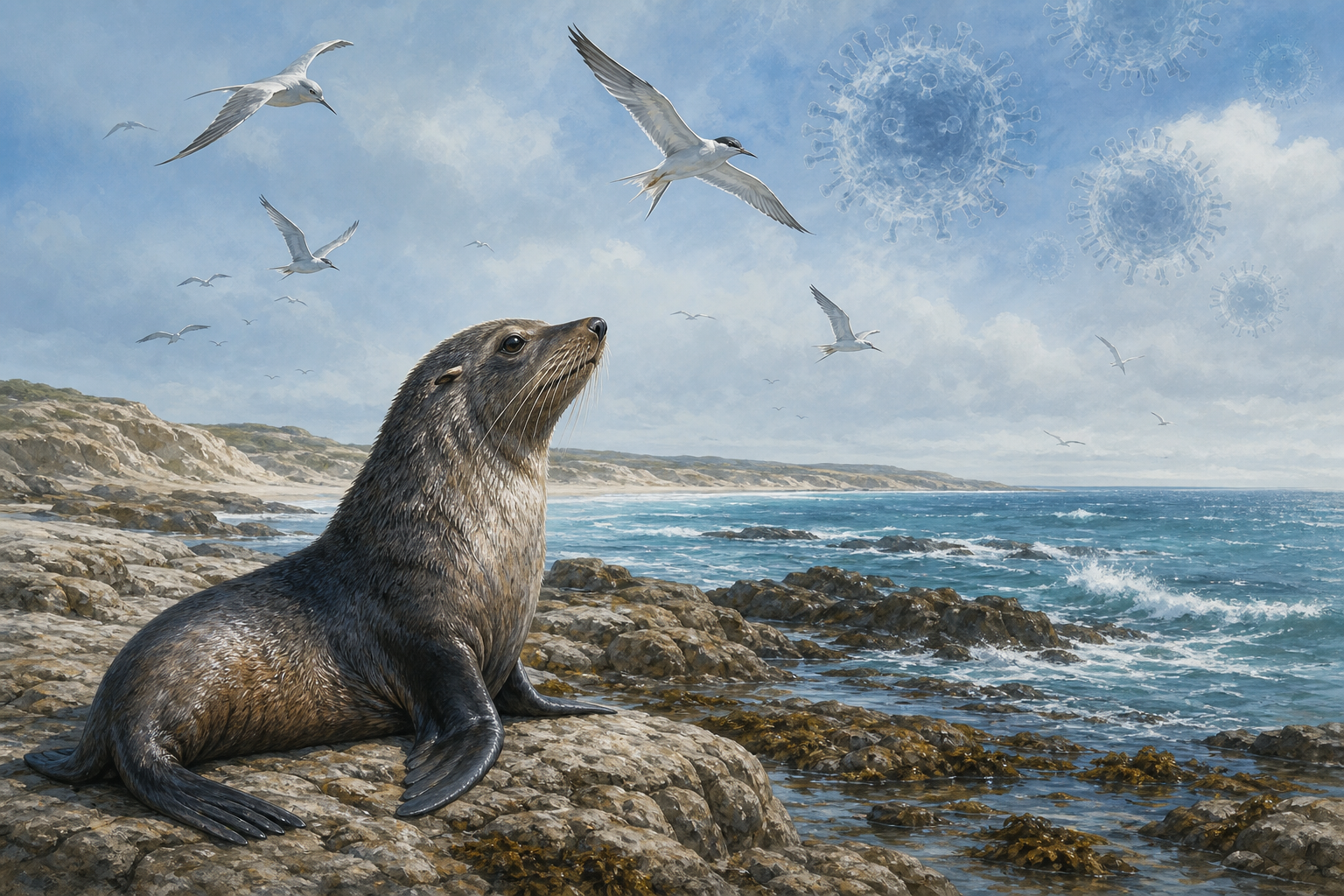
BEACHPORT, Australia - Australian authorities confirmed Sunday that H5 bird flu had been detected in a long-nosed fur seal found on South Australia's coast, the country's first confirmed mammalian case on the mainland.
The seal was found dead at Beachport, about 300 kilometers south of Adelaide, and reported by a member of the public on August 19. South Australia's Department of Primary Industries and Regions said the animal showed no signs of physical injury. Initial state testing was inconclusive, but urgent testing by the CSIRO's Australian Centre for Disease Preparedness confirmed H5 infection.
Officials said the individual case was concerning but not unexpected as the virus spreads among wild birds. Federal Agriculture Minister Julie Collins said the seal was likely exposed through infected birds or a shared environment. Authorities had not identified an associated cluster of sick or dead marine mammals as of Sunday.
The seal was among 11 newly confirmed H5 events announced by South Australia. Other detections involved several seabird species and a little penguin. The state has recorded 194 confirmed events under a system that counts an event as one or more animals at a location, while the national total has reached 298 events, according to government figures reported by ABC News.
There were still no confirmed detections in Australian poultry or other livestock, and the South Australian government said the risk to human health remained low. Officials urged the public not to touch sick or dead wildlife and to report sightings through the Emergency Animal Disease Hotline.
Australia had remained free of this highly pathogenic H5 strain until it reached the country in June. Its spread has already caused serious wildlife losses. More than 1,000 greater crested terns were involved in recent mass mortality events on remote South Australian islands, while earlier outbreaks on Heard Island, an Australian external territory far southwest of the mainland, killed large numbers of seal pups.
The Beachport detection does not prove that the virus is now moving from seal to seal in Australia. It is one confirmed animal, and officials have not reported a mainland marine-mammal cluster. That distinction matters because responsible public-health reporting must separate a warning sign from evidence of a larger transmission pattern.
Yet the case is still a threshold event. Marine mammals gather in dense colonies, share shorelines with seabirds and can encounter contaminated carcasses and water. Overseas outbreaks have shown how quickly H5 can devastate seal populations once it enters those environments. Australia's vulnerable sea lions are a particular concern because their breeding population is already limited.
The harder reality is that wildlife disease cannot be managed with border controls alone once migratory birds carry it across oceans. Governments can monitor farms, restrict animal movements and vaccinate selected captive populations, but they cannot quarantine every beach or prevent every contact between wild species.
That makes surveillance the first line of defense. Fast reporting by the person who found the Beachport seal, confirmatory laboratory testing and publication of location-level data are exactly how an open system should work. Transparent information gives scientists time to identify patterns and allows communities to take proportionate precautions without panic.
Authorities should now expand testing around seal and sea-lion colonies, protect wildlife staff with clear safety protocols and publish genomic findings when available. Sequence data could help establish how the animal was infected and whether the virus carries changes associated with adaptation to mammals. None of that should be presumed before the evidence is examined.
The response must also keep the risk in perspective. H5 is a serious animal disease with potential public-health implications, but Sunday's announcement did not establish sustained human transmission, infection in farms or a widespread mammal outbreak on the mainland. Alarmist claims would make it harder for officials to maintain trust if the situation changes.
Beachport is therefore both a warning and a test of institutions. Australia cannot eliminate every encounter between a virus and wildlife, but it can detect events early, share facts promptly and direct resources toward the species most at risk. The seal's infection is a line the outbreak had not previously crossed on the mainland. What happens next depends on disciplined science rather than fear or complacency.
Comments
Loading comments…