
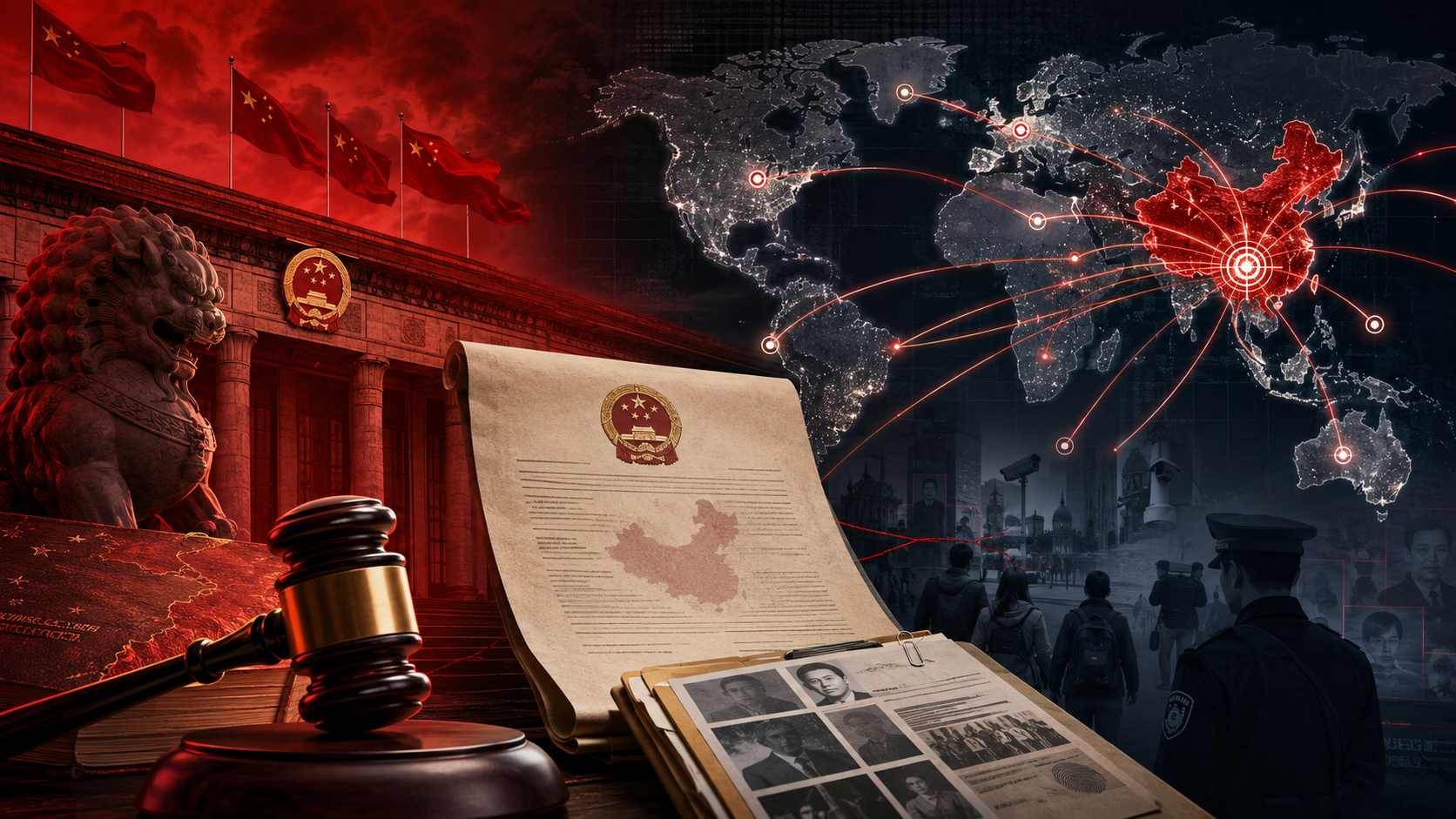
China has defended the most controversial part of its new ethnic unity law, insisting it has the right to take legal action against people and organisations outside its borders if they are accused of undermining national unity or creating ethnic division.
The law, formally known as the Law on Promoting Ethnic Unity and Progress, takes effect on July 1, 2026. It was passed by China’s National People’s Congress in March and turns President Xi Jinping’s political slogan of “forging a strong sense of community for the Chinese nation” into binding law.
Beijing says the law is designed to strengthen national unity among China’s 56 officially recognised ethnic groups, including the Han majority and ethnic minorities such as Tibetans, Uyghurs and Mongols.
But critics see a more worrying direction. They argue that the law moves China further away from recognising ethnic differences and toward forced assimilation under a single Chinese national identity. The law promotes Mandarin as the common national language, strengthens patriotic education, and narrows the space for minority languages, culture and religious identity.
The most sensitive provision is the law’s overseas reach. Reports say Article 63 allows China to pursue organisations and individuals outside the People’s Republic of China if they carry out activities that Beijing says undermine ethnic unity or incite ethnic division.
That wording has sparked international concern because it does not clearly limit the rule to Chinese citizens. In theory, critics warn, it could be used against overseas activists, journalists, researchers, foreign organisations, Taiwanese voices, or companies that investigate sensitive issues such as forced labour.
China has rejected those concerns. Vice Justice Minister Hu Weilie said the provision is based on China’s national conditions, follows legal principles and is consistent with international practice. He said the law targets unlawful acts only and would not affect normal exchanges, academic discussion, trade, or economic cooperation.
But the reassurance has not ended the alarm.
Taiwan is especially concerned because Beijing claims the island as part of China. The new law could give Beijing another legal tool to accuse Taiwanese politicians, activists or organisations of promoting separatism.
Human rights groups have also warned that the law may increase the risk of transnational repression. China has previously been accused of using overseas pressure, legal threats and international policing mechanisms to pursue dissidents and activists abroad. The new law may give such actions a broader legal justification.
The European Parliament has condemned the law, warning that it could deepen the suppression of ethnic identities and further restrict cultural, religious and linguistic freedoms. UN human rights experts have also raised concerns that the law could restrict the rights of Tibetans, Uyghurs, Mongols and other ethnic groups, while creating a chilling effect beyond China’s borders.
The problem is not that a country wants national unity. Every country has the right to protect public order and prevent violence. The real concern is how broadly China defines “ethnic division” and how far it is willing to reach beyond its own borders.
If a person outside China criticises Beijing’s treatment of Uyghurs or Tibetans, is that legitimate human rights speech, or will China call it ethnic division? If a researcher investigates forced labour, is that academic work, or will it be treated as an attack on national unity? If a Taiwanese politician rejects Beijing’s claim over Taiwan, will that be framed as separatism under this law?
Those questions matter because vague laws can become powerful political weapons.
China says the law is lawful and necessary. But for many outside observers, the overseas clause looks like another sign of Beijing’s expanding long-arm jurisdiction — a system where speech, activism and political expression outside China may still be treated as punishable by China.
The law also comes at a time when China is already facing global criticism over Xinjiang, Tibet, Hong Kong, Taiwan and overseas pressure on dissidents. Instead of calming those concerns, the ethnic unity law may deepen them.
A state can promote unity without erasing identity. It can protect stability without threatening speech abroad. If China wants the world to trust this law, it must prove that it will not be used to silence minorities, overseas activists, journalists, researchers or foreign critics.
For now, the world is watching closely. The new law may be presented as a domestic unity measure, but its overseas clause has turned it into an international human rights and free speech issue.
Comments
Loading comments…