
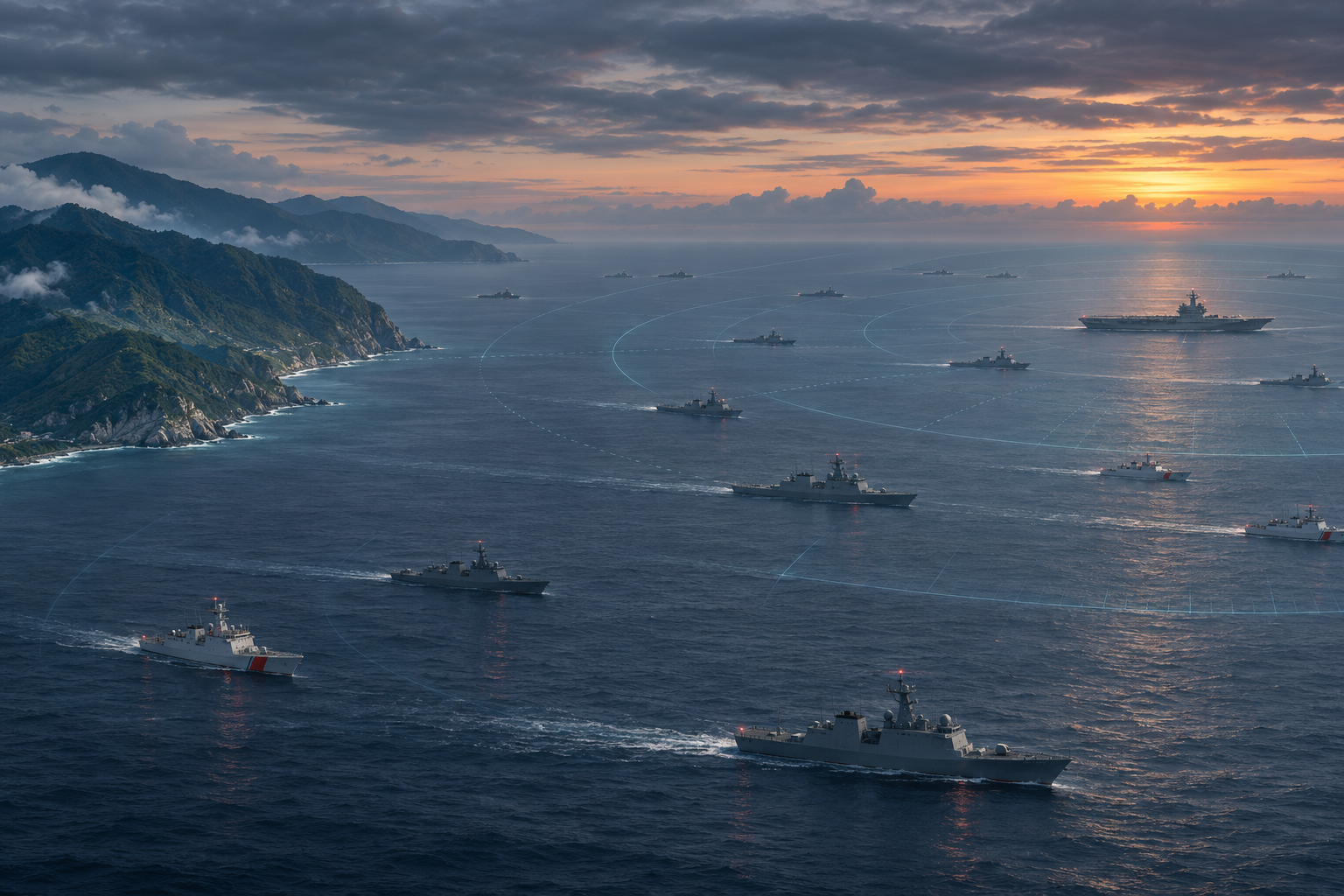
TAIPEI - China massed more than 100 military and coast guard vessels around Taiwan and across the western Pacific during a large unannounced exercise in early November, according to Taiwanese security officials.
A senior official told Reuters that the deployment included simulated attacks on foreign militaries and cities, including targets in Taiwan. The official spoke anonymously because of the sensitivity of the intelligence, and China has not confirmed that description of the exercise.
Taiwanese Defense Minister Wellington Koo publicly confirmed this week that Chinese forces were conducting area-denial drills in the western Pacific. He said the activity involved the Liaoning aircraft carrier and other naval formations.
China described the carrier's operations as routine training not aimed at any country. Its Defense Ministry did not respond to Reuters' questions about the broader deployment or the Taiwanese account that more than 100 vessels participated.
Taiwanese officials said the operation was larger than Justice Mission 2025, China's last formally named exercise directed at Taiwan. The latest movements combined forces from the People's Liberation Army's eastern, northern and southern theater commands, suggesting coordination across regional fleets.
The deployment had decreased by Friday, but about 70 vessels were still operating inside the first island chain, two Taiwanese security officials said. National Security Council Secretary-General Joseph Wu said formations from all three theater commands and the Liaoning carrier group remained east of the Philippines while Chinese air activity near Taiwan also remained high.
The Institute for the Study of War assessed that the duration and scale were consistent with an exercise simulating the extended isolation of Taiwan. The research group said Chinese forces appeared to be practicing how to sustain operations beyond the first island chain and limit access by U.S. and allied forces during a crisis.
That assessment goes beyond the facts publicly confirmed by Beijing. It is based on observed ship movements, statements from Taiwan and information released by Japan's Defense Ministry. The absence of a Chinese exercise name or detailed announcement makes independent evaluation more difficult.
A Taiwanese security official called the operation silent intimidation, arguing that Beijing could exert pressure without triggering the same diplomatic response as a formally announced blockade exercise. Chinese state media instead described expanding naval and coast guard activity as legitimate and increasingly routine.
The drills occurred days before China hosts the APEC leaders' meeting in Shenzhen. President Xi Jinping gave a speech Thursday calling for peaceful reunification with Taiwan but did not renounce force. Beijing claims the self-governed democracy as its territory, while Taiwan's government rejects Chinese sovereignty.
Calling coercion routine is part of the strategy
A named military exercise attracts satellite coverage, diplomatic statements and public preparation. An unannounced deployment can apply similar pressure while leaving other governments debating whether anything exceptional is happening. That ambiguity is useful to Beijing.
If more than 100 ships can gather around Taiwan and then be described as ordinary activity, the next deployment begins from a more dangerous baseline. Repetition can make coercion appear normal even as the practical ability to isolate the island improves.
The threat is not limited to an immediate invasion. Taiwan depends on open sea and air routes for energy, trade and communication. A sustained Chinese presence could raise insurance costs, test commercial shipping and force Taipei to spend resources responding to operations that Beijing can start and stop without warning.
Democratic governments should avoid both complacency and panic. Treating every movement as the beginning of war could help China exhaust Taiwan and divide its supporters. Ignoring large coordinated formations would allow Beijing to practice military isolation while weakening the political response to it.
The United States, Japan, the Philippines and other regional partners need persistent maritime awareness, shared intelligence and clear procedures for keeping lawful traffic moving. Visible allied readiness makes silent coercion less effective without requiring reckless escalation.
Taiwan also needs resilient fuel stocks, communications and ports that can function under pressure. Weapons matter, but so do repair teams, civil defense, commercial continuity and the ability to explain events quickly when Beijing withholds information.
China says it prefers peaceful reunification, yet a democracy cannot freely choose its future while surrounded by military formations practicing how to cut it off. Peace requires more than the absence of gunfire. It requires the absence of coercion strong enough to make resistance appear hopeless.
The darker purpose of these exercises may be to change expectations one deployment at a time. Beijing does not need to announce a blockade if the region gradually accepts that Chinese ships can encircle Taiwan whenever the Communist Party chooses. Preventing that new normal is now as important as preparing for the crisis everyone can see.
Comments
Loading comments…