
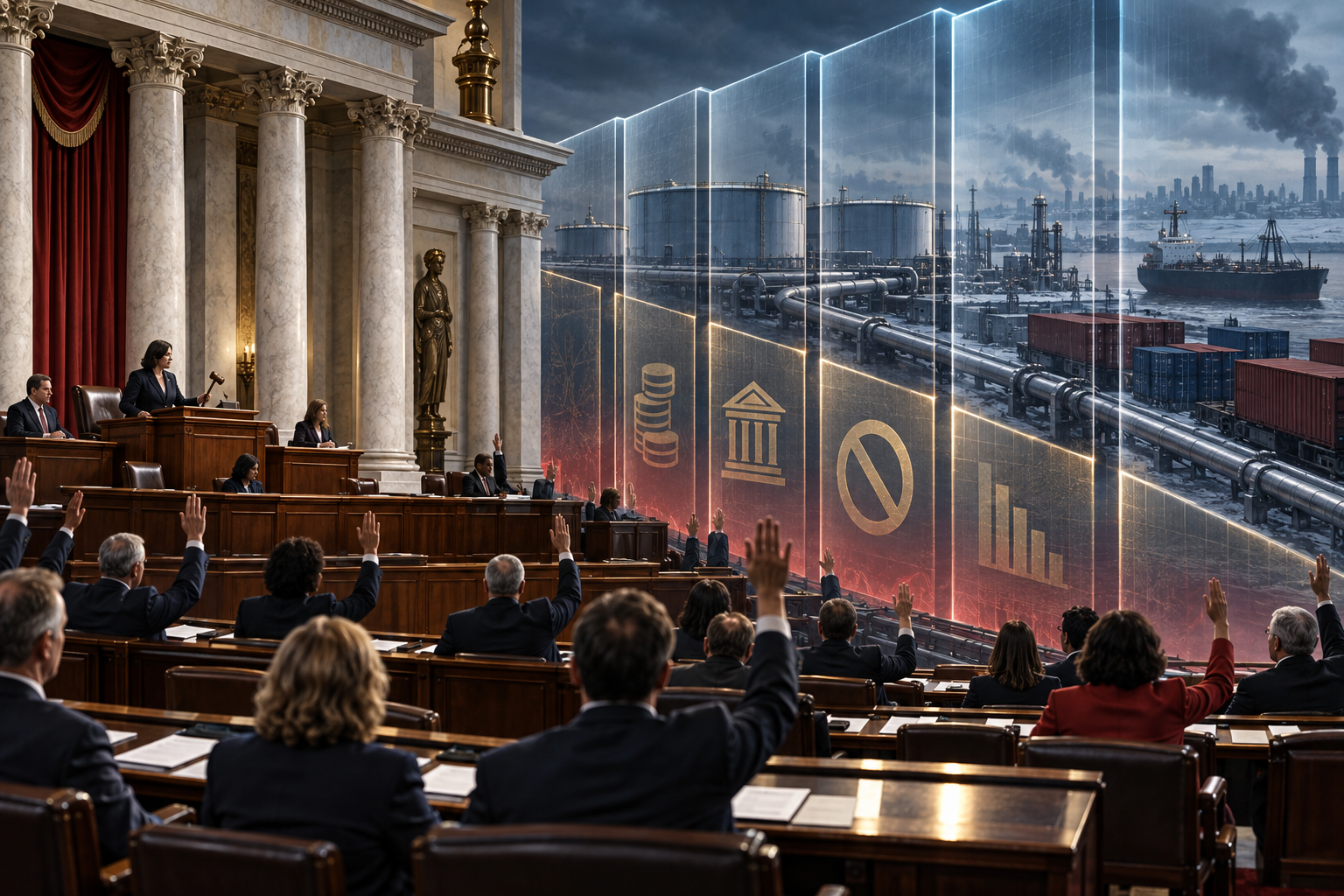
WASHINGTON - The House approved a broad sanctions package targeting Russian officials, banks, energy networks and sanctions-evasion operations, sending the measure to President Donald Trump after a 262-159 vote on Wednesday.
The Senate passed the package 86-11 last month. The bill, named for the late Republican Sen. Lindsey Graham of South Carolina, is expected to be signed after the White House previously indicated that presidential advisers would recommend approval.
The legislation would sanction Russian officials and institutions, along with entities in other countries that support Russia's defense industry, energy sector or efforts to evade existing restrictions. It specifically targets the shadow fleet of tankers used to keep Russian oil moving outside conventional shipping and insurance channels.
The bill also directs the president to impose tariffs of up to 100% on the five largest importers of Russian oil or natural gas and on leading facilitators of sanctions evasion. An exception applies to countries importing less than 15% of Russia's natural-gas exports that have taken significant steps to reduce those purchases.
Supporters say the secondary pressure is intended to force countries, including major energy buyers such as China and India, to choose between access to the American market and helping finance Moscow's war against Ukraine. The package also extends existing sanctions on Iran that were due to expire.
The House vote exposed an unusual divide. Republicans backed the measure 203-7, while Democrats split, with 58 voting for it and 152 against. Many Democratic opponents said they supported Ukraine but objected to giving Trump additional tariff authority that might be used against U.S. allies or raise prices for American consumers.
Congressional leaders rejected amendments because any change would have returned the bill to the Senate and delayed it beyond the House's final scheduled voting day before the November midterm elections. One proposed amendment would have authorized $15 billion in direct financing for Ukraine to buy weapons.
The measure is the most substantial congressional action supporting Ukraine since Trump returned to office. It arrives after nearly two years of political gridlock and at a time when Moscow continues missile and drone attacks while betting that Western unity will weaken before Russia's capacity to wage war does.
Sanctions are not a symbolic substitute for strategy. Their value depends on enforcement: identifying front companies, tracing payments, denying insurance and port access, and penalizing banks that knowingly make evasion profitable. A long list of restricted names means little if oil, components and money simply move through a new intermediary.
The shadow fleet is central to that problem. Aging tankers with opaque ownership structures allow Russia to sell energy while reducing exposure to Western rules. These vessels also create maritime and environmental risks that can be shifted onto coastal states and ordinary taxpayers when ownership and insurance are unclear.
Secondary tariffs create leverage but also carry danger. If applied indiscriminately, they can strain relations with partners, disrupt supply chains and increase prices at home. The administration should use the authority against deliberate, large-scale support for Russia's war economy rather than as a convenient weapon in unrelated trade disputes.
China presents the hardest test. Beijing has given Moscow diplomatic and economic space while benefiting from discounted Russian energy, yet it also wants continued access to American consumers, technology and capital. A credible sanctions regime must make the cost of sustaining Putin visible without pretending that every commercial relationship proves direct participation in the war.
The bipartisan vote nevertheless sends an important democratic message. America can debate the method and still agree that an authoritarian state should not be allowed to invade a neighbor, wait out public attention and finance the destruction through lightly disguised trade.
Trump will now control much of the implementation. Congress should require detailed reporting on waivers, tariff decisions and enforcement outcomes so that pressure cannot be quietly suspended for political convenience. Presidential flexibility may be necessary in negotiations, but flexibility without transparency can become an escape hatch.
Ukraine does not need another promise that exists only on paper. It needs sanctions that reduce Russia's revenue, allied military support that arrives on time and diplomacy backed by consequences. The bill gives Washington stronger economic tools. Whether they change Putin's calculations will depend on the consistency and resolve with which the United States uses them.
Comments
Loading comments…