
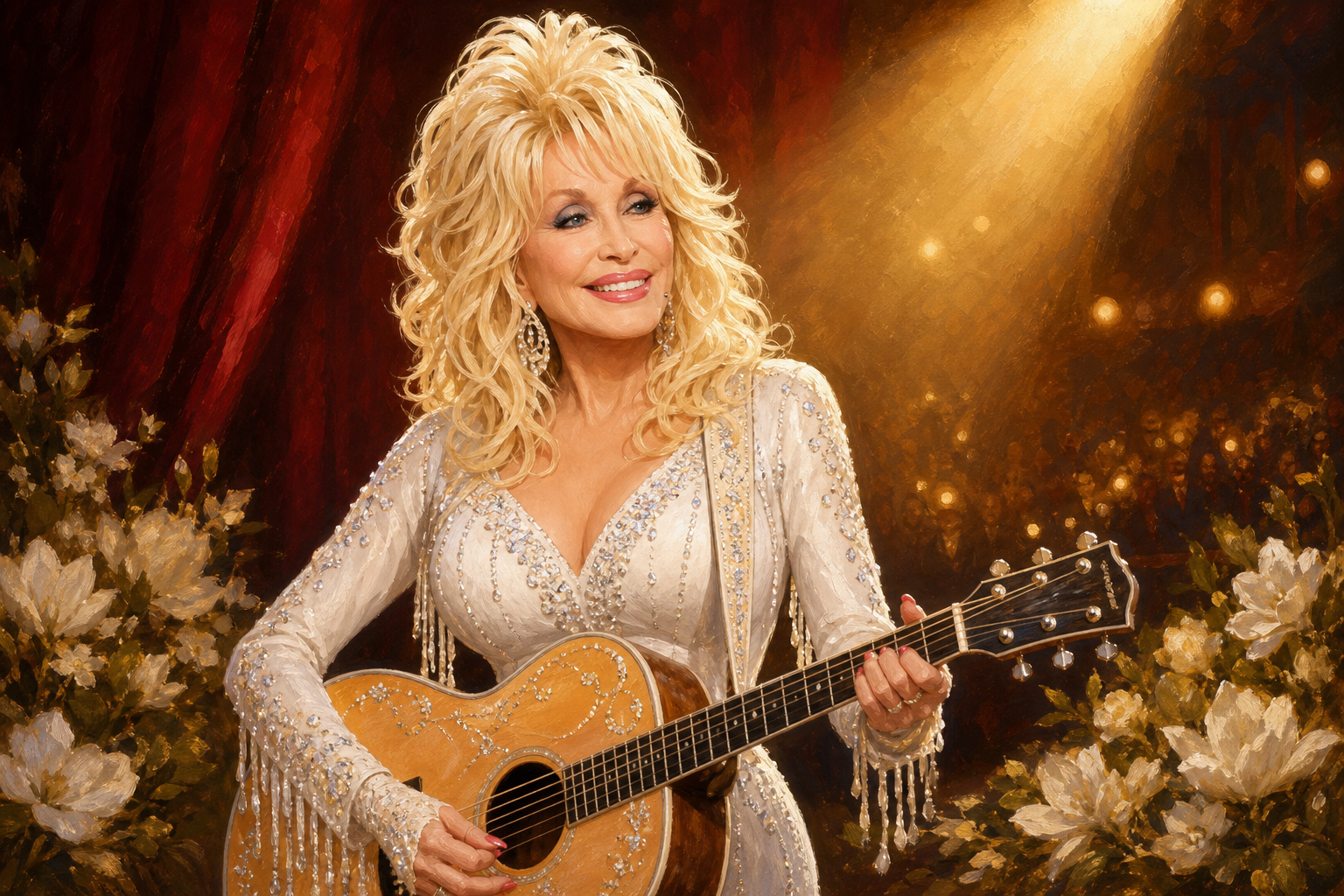
NASHVILLE, Tennessee - Dolly Parton, the country music songwriter and performer who rose from childhood poverty in the Tennessee mountains to become one of America's most recognizable and widely loved cultural figures, died Tuesday in Nashville. She was 80.
Parton died peacefully at Vanderbilt-Ingram Cancer Center after a brief battle with cancer and was surrounded by loved ones, her publicist said in a family statement reported by major news organizations. Her husband of nearly 60 years, Carl Dean, died in 2025.
President Donald Trump ordered flags at federal buildings, military posts, naval vessels and U.S. facilities overseas lowered to half-staff until sunset on September 1. Musicians, actors and fans gathered in Nashville and shared tributes to an entertainer whose appeal crossed genres, generations and political divisions.
Born on January 19, 1946, Parton was one of 12 children in a poor East Tennessee family. She first performed in church, learned guitar as a child and appeared at the Grand Ole Opry at 13. After finishing high school in 1964, she went to Nashville with a suitcase of songs and the certainty that writing would be the foundation of her career.
Her partnership with Porter Wagoner brought national exposure in the late 1960s, but Parton also created her own publishing company early. That decision allowed her to retain control over work whose value would grow for decades. She later declined an offer for Elvis Presley to record "I Will Always Love You" because his team wanted a share of the publishing rights.
Parton wrote thousands of songs and built a catalog that included "Jolene," "Coat of Many Colors" and "I Will Always Love You." Her recordings sold more than 100 million copies worldwide and accumulated more than one billion online streams, according to the Associated Press. Whitney Houston's version of "I Will Always Love You" carried Parton's songwriting to another generation.
Her reach extended beyond country music. Parton became a pop crossover star, appeared in films including "9 to 5" and "Steel Magnolias," and turned her public image into a form of self-aware performance. The wigs, rhinestones and jokes were unmistakable, but they never obscured the discipline behind the spectacle.
She was also a serious entrepreneur. Dollywood helped anchor tourism and employment in the Smoky Mountain region near where she was born. Her business success did not require abandoning her rural identity; she made that identity part of a global brand while continuing to invest in the place that formed her.
Parton's most enduring work may exist away from a stage. She founded the Imagination Library because her father struggled to read. The program sends free books to young children, turning a private family memory into a large literacy effort. She also donated $1 million to research that supported development of a COVID-19 vaccine.
The scale of the mourning reflects more than nostalgia for familiar songs. Parton represented a version of American success that felt open rather than remote. She did not hide where she came from or treat poverty as a costume. She showed that ambition, faith, humor and commercial intelligence could exist in the same person.
Her career also carried a lesson about ownership. Performers are often celebrated while contracts quietly transfer the value of their work to more powerful institutions. Parton understood early that authorship without control could leave a creator famous but dependent. Protecting her publishing rights gave her freedom to choose projects, build businesses and direct wealth toward causes she valued.
That independence helped her cross political boundaries. She rarely allowed partisan demands to reduce her audience to one faction. At a time when cultural figures are encouraged to convert every appearance into a political declaration, Parton maintained broad affection without becoming empty or evasive. Her public commitments were expressed through songs, jobs, books and giving.
There is a harder reality inside that achievement. America celebrates stories of rising from poverty, but talent alone does not guarantee escape. Parton needed opportunity, discipline, business judgment and the ability to resist people who wanted control of her work. Millions with equal determination never receive the same opening.
Her response was not to deny that inequality, but to widen opportunity where she could. A free book delivered to a child's home is modest beside a global music career, yet it addresses the exact barrier her father faced. That direct connection made her philanthropy credible: the cause grew from experience rather than reputation management.
Dolly Parton's death closes one of the longest and most distinctive careers in American entertainment. The music will remain, but so will a larger example. She built ownership from creativity, generosity from memory and unity from a personality that never asked Americans to become identical before they could sing along.
Comments
Loading comments…