
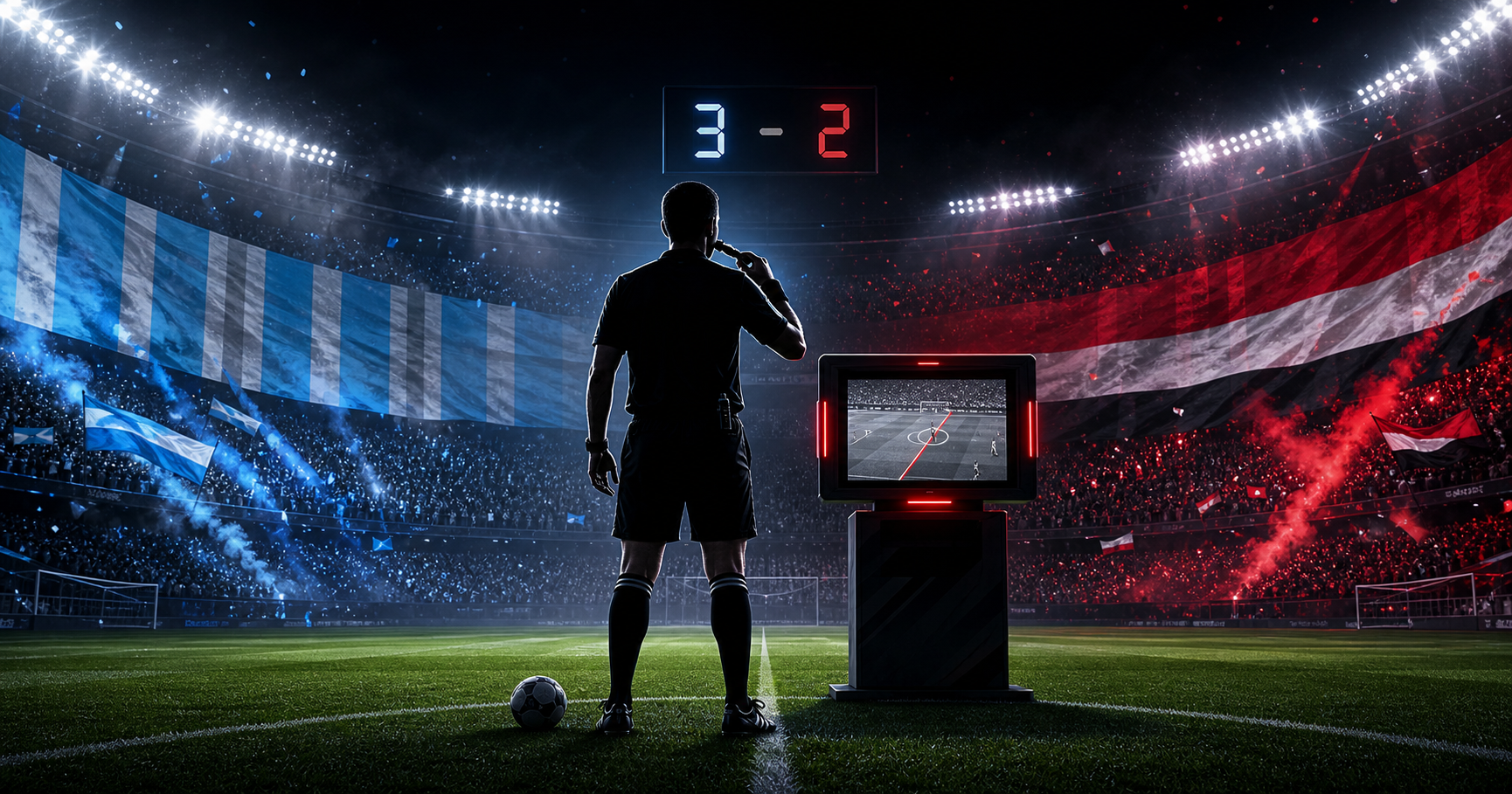
Argentina reached the World Cup quarter-finals with a stunning 3-2 comeback over Egypt, but this was not remembered only as a football result. For Egypt, it became a match defined by refereeing, VAR and the feeling that the same standard was not applied to both teams.
Egypt led through Yasser Ibrahim's 15th-minute goal and thought they had gone 2-0 up when Mostafa Ziko scored in the 58th minute. That moment is the first major controversy. VAR intervened, reviewed the build-up and ruled the goal out after Marwan Attia was judged to have tugged Lisandro Martinez and stepped on his foot deep inside Egypt's half. The goal was erased even though the contact happened far earlier in the move, before Egypt had broken forward and finished brilliantly.
That decision alone changed the emotional temperature of the match. Egypt had produced one of the best counter-attacking moves of the tournament, only to see it cancelled by a review that reached back into the previous phase of play. The referee and VAR were technically able to make that call, but the question Egypt will keep asking is simple: why was VAR so aggressive when Argentina were the damaged side, but so quiet when Egypt were asking for the same protection later?
Ziko eventually did make it 2-0 in the 67th minute, finishing another fast Egyptian counter after Mohamed Salah carried the ball forward and Haissem Hassan created the chance from the right. But Egypt's momentum did not last. Hassan, one of Egypt's most dangerous players on the day, was forced off injured in the 76th minute and replaced by Trezeguet. The available live reporting confirms the injury substitution, but does not clearly identify a card-worthy Argentina foul as the cause. Even so, for Egypt the moment added to a growing sense that physical pressure from Argentina was not being punished with the same urgency.
Argentina then came back through Cristian Romero in the 79th minute and Lionel Messi in the 83rd. The final and most explosive controversy came in stoppage time. In the 90+2 minute, Egypt attacked inside Argentina's box. Fathy appeared to be eased or tugged to the floor by Alexis Mac Allister, and Salah was then challenged by Julian Alvarez just inside the area. Egypt wanted a penalty check. Instead, play continued. Seconds later, Argentina went up the other end and Enzo Fernandez headed in the winning goal from Lautaro Martinez's cross.
This is the incident Egypt will find hardest to accept. Earlier, when Attia pulled Martinez in the build-up before Ziko's disallowed goal, VAR came in and overturned Egypt's strike. Later, when Fathy went down and Salah was challenged before Argentina's winner, there was no equivalent intervention, no long delay and no visible willingness to protect Egypt from a possible foul in the same way.
That is why Egypt's anger is not just about one whistle. It is about the pattern. When Egypt fouled, the punishment seemed immediate. After Argentina's winner, Mostafa Shobeir was booked for protesting in the 90+4 minute, Fathy was booked in the 90+6 minute, Marwan Attia was booked in the 90+8 minute and manager Hossam Hassan was booked in the 90+9 minute. A member of Egypt's staff was also sent off during the protests. Egypt left feeling that their emotional reaction was punished more sharply than the incidents that caused the reaction.
Hossam Hassan accused the officiating of injustice after the match and said Egypt had been treated unfairly. Ziko also questioned why his earlier goal had been disallowed and said that after Egypt went 2-0 up, everything seemed to go against them. Those comments are emotional, but they are not difficult to understand. Egypt were minutes away from a historic knockout win over Argentina, and the decisive moments all seemed to move in one direction.
To be clear, Argentina still showed championship quality. Coming back from 2-0 down in a World Cup knockout match takes belief, talent and nerve. Messi's influence was decisive, and Fernandez's header was a brilliant late finish.
But football is not only about what happens after the ball crosses the line. It is also about which fouls are reviewed, which contacts are ignored, which players are protected and which team is forced to keep playing while asking for justice. On that question, Egypt have a serious case.
The cruel part is that none of this changes the bracket. Argentina advance. Egypt go home. The official record will say 3-2. But for many Egyptian players, staff and supporters, this match will carry a different memory: a disallowed goal reviewed in detail, a late penalty appeal waved away, a possible foul before the winner left untouched, and a flood of cards after Egypt dared to protest.
That is why the controversy will not disappear. Egypt did not just lose a lead. They lost the feeling that the match was being judged equally. In knockout football, that can be as damaging as any goal.
Comments
Loading comments…