
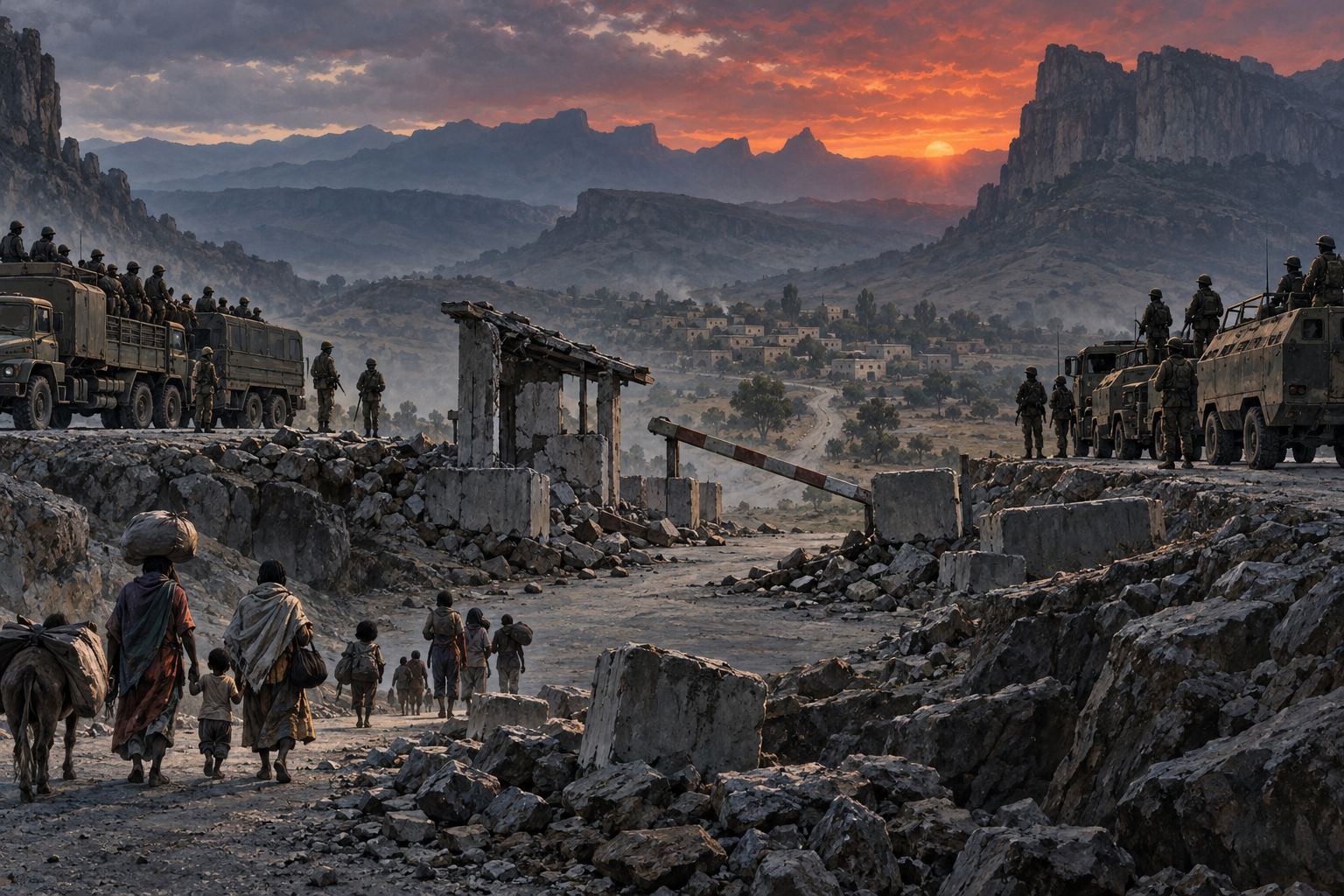
NAIROBI, Kenya - Ethiopia told the United Nations Security Council that it is taking measures in self-defense against Eritrea, escalating a confrontation between former battlefield allies as government forces regain ground in the northern Tigray region.
In a letter dated Friday, Ethiopian Foreign Minister Gedion Timothewos invoked Article 51 of the U.N. Charter and accused Eritrea of deploying infantry and mechanized units across the border, occupying Ethiopian territory and supporting armed groups. The letter did not identify the allegedly occupied areas or provide evidence for the claims, and the Associated Press said it could not independently verify them.
Eritrea rejected the accusations in its own letter to the Security Council. Foreign Minister Osman Saleh described Ethiopia's statement as a declaration of war, accused Addis Ababa of seeking sovereign access to the Red Sea by force and asked the council to condemn Ethiopia and consider deterrent measures.
The exchange came as Ethiopian military vehicles and troops entered Adigrat, about 25 kilometers from the Eritrean border. AP footage showed some residents welcoming the forces on Saturday, but it did not establish who previously controlled the city or whether Eritrean troops had participated in the fighting.
Residents described a worsening humanitarian emergency. Banks and government offices have been closed, food is running short and sick people lack medical care. Electricity, telecommunications and mobile banking have resumed only partially in parts of Tigray and remain vulnerable to interruption.
Government-allied forces also reported taking Idaga Hamus and Abiy-Adi. The Armed Conflict Location and Event Data project separately reported that Eritrean troops crossed near Zalambesa and came under Ethiopian drone attack, but those accounts have not been independently confirmed.
The latest fighting follows the collapse of a 2022 peace agreement. The Tigray People's Liberation Front joined six other opposition groups last month in an alliance seeking to remove Prime Minister Abiy Ahmed, and rebels briefly seized Mekelle and its airport before withdrawing on October 3. Federal police and allied forces have since moved into the regional capital, where a new administration has not yet taken office.
Relations between Ethiopia and Eritrea deteriorated rapidly despite their armies having fought together against the TPLF from 2020 to 2022. Eritrea severed diplomatic ties last week after Ethiopia expelled 10 Eritrean diplomats and closed its embassy in Asmara. Abiy has also repeated that landlocked Ethiopia needs access to the Red Sea, language Eritrea views as a threat to its sovereignty.
The previous Tigray war demonstrated the possible human cost. Researchers at Ghent University estimated that about 500,000 civilians died from violence, famine and the collapse of health services. Eritrean soldiers were accused of killings, rape and looting during that conflict; Eritrean President Isaias Afwerki has denied abuse allegations.
Self-defense claims can become a road to escalation
Both governments are now speaking the language used before interstate wars. Ethiopia cites a right to self-defense without describing its measures. Eritrea asks the Security Council for deterrence while accusing its larger neighbor of territorial ambition. Each statement can be presented domestically as caution even as it gives commanders political room to escalate.
The first requirement is independent verification. The Security Council should demand precise locations, troop movements and evidence from both governments, then support monitors with access to the border. Unverified accusations cannot be dismissed, but they also cannot become blank checks for military action.
Ethiopia has a legitimate interest in secure trade routes and reliable port access. That does not create a right to another country's coastline. Red Sea access must come through negotiated commercial agreements, regional investment and enforceable transit guarantees, not rhetoric that makes Eritreans fear annexation.
Eritrea, one of the world's most closed authoritarian states, also cannot hide military movements behind secrecy and sovereignty. If its forces crossed into Ethiopia or armed combatants, those actions require international scrutiny. Refusing transparency makes deterrence harder and propaganda easier.
Washington, the African Union and democratic partners should press for a monitored withdrawal from disputed positions, restoration of communications, humanitarian access and direct talks before either side creates facts on the ground. The 2022 agreement failed partly because armed actors and neighboring powers were never fully brought under a durable enforcement system.
The darker reality is that leaders can survive a border crisis more easily than civilians survive another war. Tigray's families are already losing food, banking and medical care before the competing allegations have been proved. Diplomacy must move faster than the military logic now taking hold.
Comments
Loading comments…