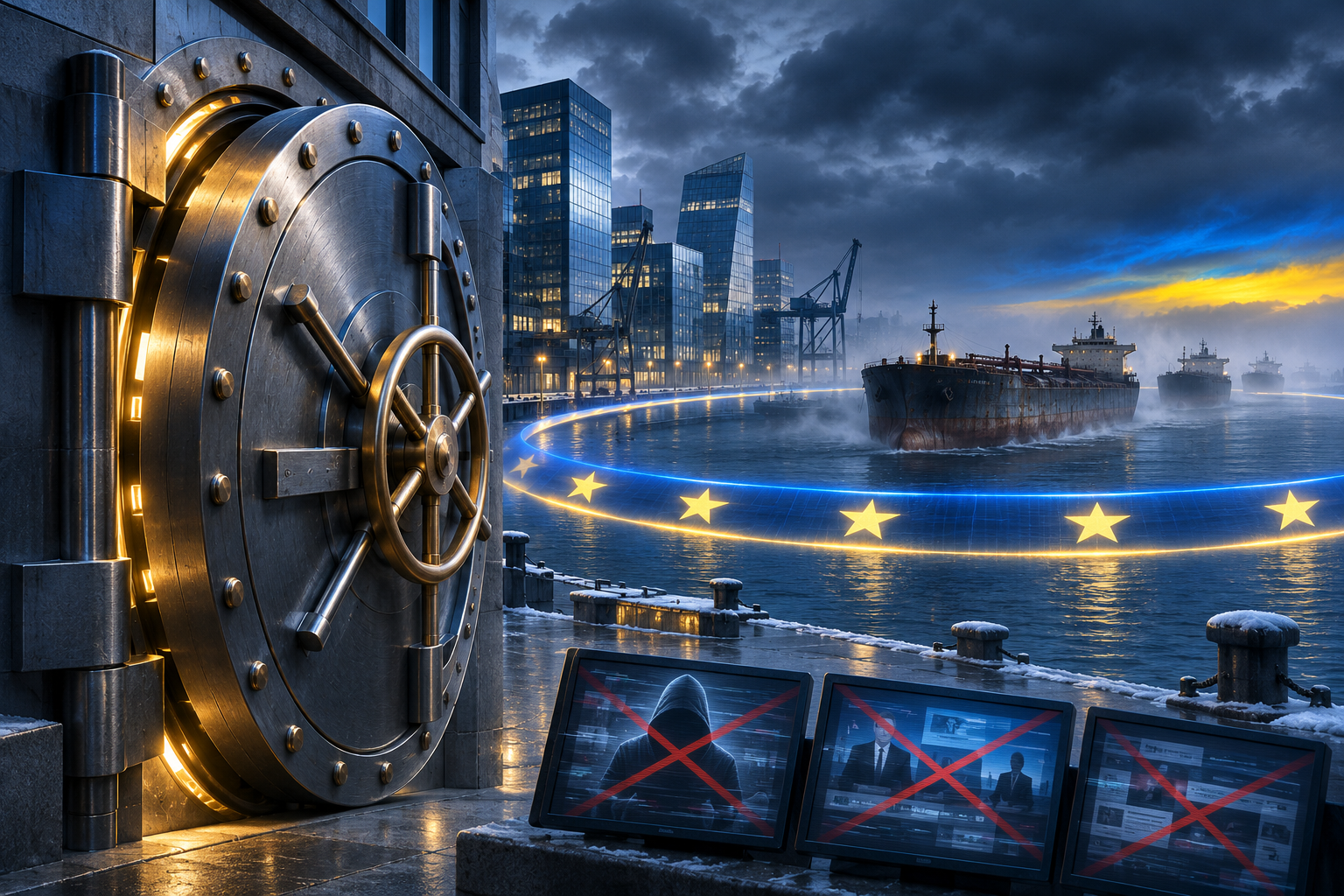
BRUSSELS - European Union governments are preparing to impose a new round of sanctions on Russia that would target 50 banks as well as companies and individuals linked to Moscow's oil-shipping, cyber and disinformation networks.
EU ambassadors provisionally agreed Wednesday to add 145 people and entities across several sanctions regimes, according to diplomats cited by Reuters. France's minister for Europe, Benjamin Haddad, described the package Thursday as covering about 150 additional targets and said formal approval was expected at a meeting of EU foreign ministers on Monday.
The difference between the two public totals appears to reflect rounding and the use of separate legal lists. The measures have not yet completed final adoption, and the names of all targets will become definitive only when the Council publishes the legal acts.
The main list contains 113 individuals and entities tied to Russia's war against Ukraine, diplomats said. It includes 50 Russian banks, energy businesses, operators that help Moscow's so-called shadow fleet and additional business figures.
Another group would be designated under the EU framework for Russian hybrid activities, which covers interference and disinformation. A separate cyber sanctions regime would also be used against an additional entity.
Haddad said France had proposed most of the names. He linked the move to Europe's determination to maintain economic pressure on Moscow and continue supporting Ukraine as Russia's war and covert activity strain European security.
The announcement came as Paris condemned Russia's decision to bar two French journalists and two lawmakers from entering the country. Moscow described its action as retaliation for France's July expulsion of Xenia Fedorova, the former head of RT France, whom French authorities accused of spreading Russian state narratives.
Russia has denied Western accusations that it directs destabilizing campaigns in Europe. Moscow has also argued that sanctions are illegitimate and has sought alternative markets, financial channels and shipping services to reduce their impact.
The EU has progressively widened its restrictions beyond prominent officials and state companies. Its existing measures include asset freezes, transaction bans, export controls and restrictions on hundreds of vessels accused of helping Russia move oil outside normal insurance and compliance systems.
The shadow fleet is important because energy exports remain a major source of revenue for the Russian state. Older tankers, opaque ownership structures, flags of convenience and ship-to-ship transfers can make cargoes harder to trace while also creating maritime and environmental risks.
The test is enforcement, not the length of the list
Europe's decision is a necessary response to a government that has combined conventional war with cyber operations, covert influence and economic evasion. Free societies cannot treat those activities as separate inconveniences when they serve the same strategic objective.
Targeting banks matters because sanctions evasion depends on payments, credit and settlement services. Targeting tankers matters because oil revenue finances the Russian state. Targeting disinformation operators matters because Moscow tries to weaken the political will that keeps Ukraine supplied.
Yet another list alone will not change the Kremlin's calculations. Sanctions work through accumulated friction: slower payments, higher insurance costs, fewer reliable intermediaries and greater risk for anyone helping a restricted network. That pressure requires customs officers, financial investigators and allied governments to follow the transactions after the announcement fades from the headlines.
The United States, Britain and the EU should align designations wherever evidence allows. A tanker denied European services but welcomed by another major port remains useful. A bank cut off from euros but able to route the same transaction through a lightly supervised intermediary can preserve the underlying trade.
Democratic governments must also show their evidence. Asset freezes and travel bans should be grounded in documented conduct and provide a lawful route for challenge. That transparency distinguishes sanctions imposed by a rules-based coalition from the arbitrary punishment used by authoritarian states.
Moscow will portray every new measure as proof of Western hostility while continuing to insist that its own intimidation has no connection to state policy. Europe should not be distracted by that script. The relevant question is whether a named actor helps finance aggression, evade restrictions, conduct cyberattacks or manipulate public debate.
The package expected Monday will be most effective if Europe treats implementation as a permanent security function rather than a diplomatic ceremony. Russia has spent years learning where enforcement is weak. Europe now has to demonstrate that every workaround carries a rising cost.
Comments
Loading comments…