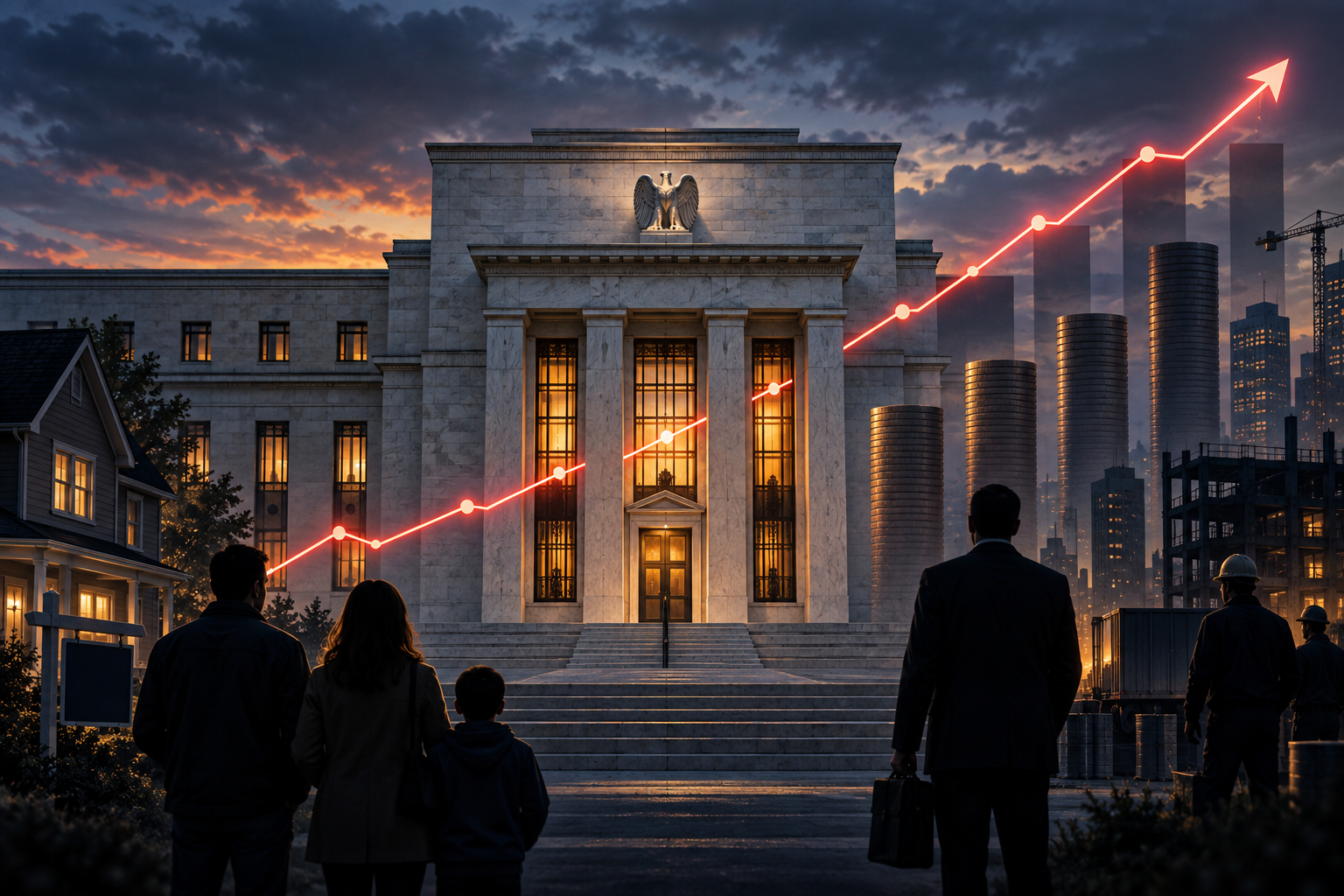
WASHINGTON - The Federal Reserve raised its benchmark interest rate by a quarter percentage point on Wednesday, its first increase since 2023, as policymakers moved to restrain inflation that remains above the central bank's 2% goal.
The Federal Open Market Committee voted 12-0 to lift the federal funds target range to 3.75% to 4%. The rate influences borrowing costs across the economy, including credit cards, business loans and, indirectly, mortgages and vehicle financing.
In its statement, the Fed said economic activity was expanding at a solid pace, domestic spending remained resilient, productivity growth was strong and capital investment was robust. It also said job growth had kept pace with the workforce and unemployment had changed little.
Those signs of economic strength gave officials room to tighten policy. The committee said inflation remained elevated and that the increase would support a faster return to price stability. Quarterly projections also indicated that another increase could occur later this year.
Chair Kevin Warsh said the central bank had not yet gained enough confidence that underlying inflation was moving toward its objective at a sufficient speed. The decision followed months of pressure from President Donald Trump, who had demanded lower rates and criticized the increase after it was announced.
For households, the immediate effect will vary. Borrowers with variable-rate debt are likely to face higher costs as lenders adjust. Savers may benefit from improved returns on some deposit accounts and certificates of deposit, although banks do not always pass rate changes through quickly or evenly.
Mortgage rates are not set directly by the Fed and also reflect longer-term Treasury yields, inflation expectations and demand for credit. Even so, tighter short-term policy reinforces the broader message that cheap money is not returning while price pressures remain stubborn.
The decision is painful precisely because inflation and high interest rates punish households in different ways. Inflation steadily erodes purchasing power, while higher borrowing costs arrive visibly in monthly payments. A central bank that delays action may spare borrowers today only to impose a larger correction later.
That is the harder reality behind the quarter-point move. There is no painless tool that can reverse a broad rise in prices. The Fed can reduce demand and reinforce confidence in the dollar, but it cannot produce more oil, build homes, repair disrupted trade routes or write a responsible federal budget.
Monetary policy therefore cannot carry the entire burden. Congress and the administration influence inflation through spending, taxation, tariffs, energy policy and regulation. Political leaders who demand low rates while pursuing policies that add to price pressure are asking the central bank to conceal a contradiction rather than solve it.
The unanimous vote also matters for American institutional credibility. Trump appointed Warsh, but the chair's duty is to the Fed's legal mandate, not to the president's preferred campaign message. Markets depend on the belief that rate decisions are based on economic evidence rather than political loyalty.
That independence should not place the Fed beyond scrutiny. Officials must explain why their forecasts changed, how they weigh energy shocks and whether tighter policy risks unnecessary job losses. Accountability is strongest when elected leaders question decisions without threatening the institution's ability to make them.
Businesses now face a more expensive environment for investment and refinancing. Companies with strong cash flow may continue expanding, while highly leveraged firms and speculative projects will feel the pressure first. That sorting process can improve capital discipline, but it can also expose weaknesses built during years of easier money.
For ordinary Americans, the decisive question is whether inflation begins falling before higher rates materially weaken employment and growth. If prices cool, the Fed may regain flexibility. If inflation stays high, another increase would deepen the tension between economic stability and household affordability.
The United States benefits when its central bank acts before inflation becomes entrenched, even when the decision is politically inconvenient. The rate increase is not proof that policy has succeeded. It is an admission that the inflation fight remains unfinished and that restoring durable price stability will require discipline from more than the Federal Reserve alone.
Comments
Loading comments…