
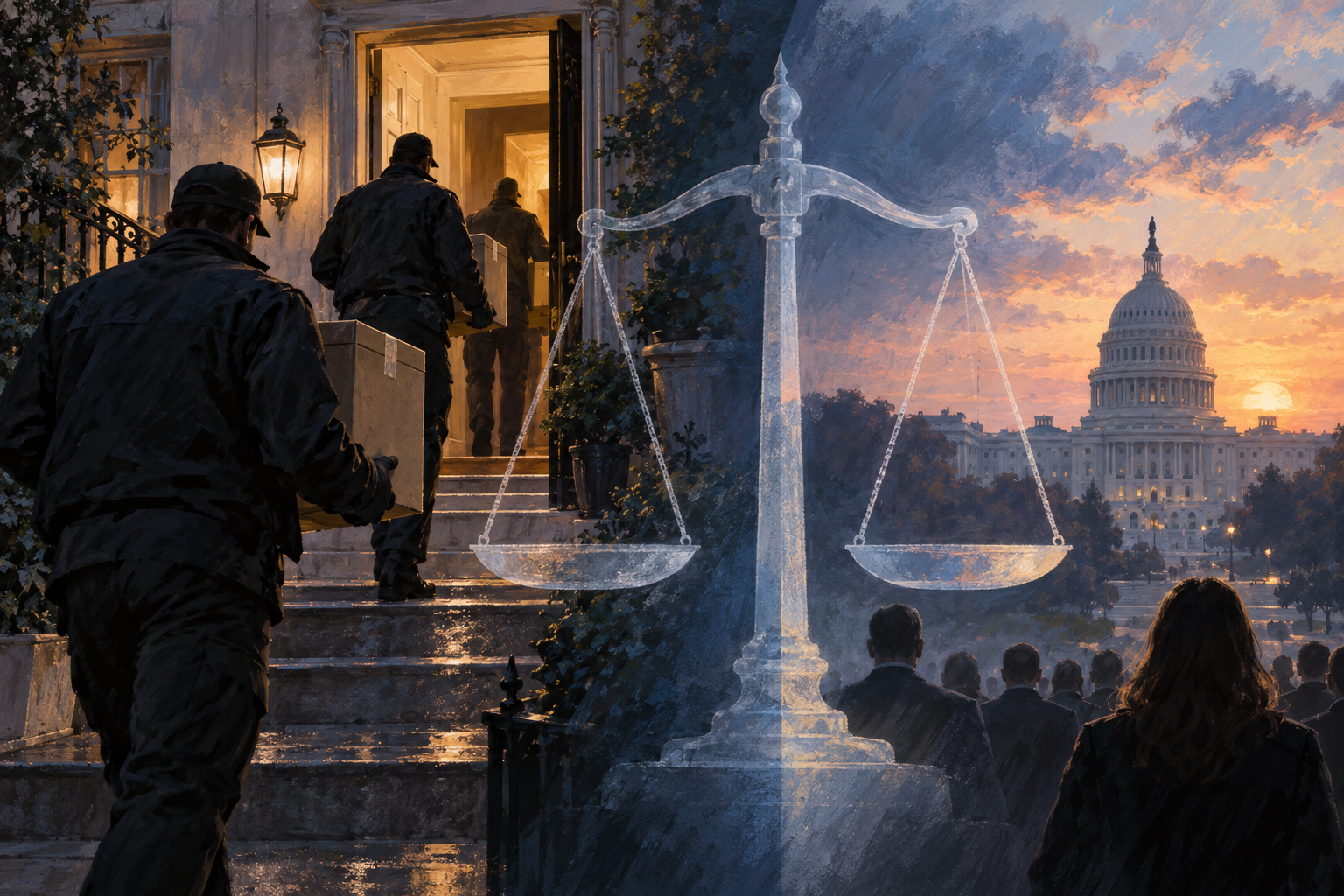
Federal agents searched Democratic Rep. Ilhan Omar's Washington home under a court-authorized warrant on Monday, opening an extraordinary new phase in an immigration-related investigation less than a month before the United States midterm elections.
Agents from Homeland Security Investigations carried out the pre-dawn search and removed boxes marked as seized evidence, according to reporting by The Associated Press, Axios and The Washington Post. The Justice Department said the warrant was connected to an ongoing federal criminal investigation but did not publicly describe the evidence, the suspected offense or whether Omar is a target.
The precise scope of the investigation remains unclear. The AP reported that it appeared to concern immigration and fraud allegations that Omar has repeatedly denied. A search warrant means a judge approved investigators' request after finding probable cause to believe evidence of a crime would be found at the specified location. It does not establish that the person whose property was searched committed a crime.
Omar called the operation political intimidation and said neither she nor her family had done anything wrong. She accused President Donald Trump's administration of using federal power against an opponent and said she would continue campaigning for reelection in Minnesota's 5th Congressional District.
Trump said he had nothing to do with the search, while again attacking Omar personally and calling her dishonest. The White House referred questions about the investigation to the Justice Department.
The timing is certain to intensify scrutiny. Justice Department practice has traditionally discouraged overt investigative steps involving candidates close to an election when those actions could affect the vote. That convention is internal policy rather than a law, and its application can depend on the urgency and circumstances of a case. The Washington Post reported, citing a Justice Department official, that the department's Public Integrity Section was consulted and Attorney General Todd Blanche approved the action.
Omar, a Somali refugee who became a naturalized U.S. citizen in 2000, was first elected to Congress in 2018. She has become one of the country's most prominent progressive lawmakers and a frequent target of Trump and Republican criticism.
Evidence must decide the case, not political loyalties
The public does not yet know what agents expected to find or what they actually collected. That uncertainty should restrain both sides. Omar's supporters cannot reasonably declare the investigation illegitimate merely because the administration is hostile to her. Her opponents cannot treat the sight of evidence boxes as proof of guilt.
A judicial warrant provides an important constitutional safeguard, but it is only one stage of the process. The affidavit supporting it may contain persuasive evidence, incomplete information or allegations that later fail under scrutiny. Prosecutors still have to decide whether charges are justified, and any accused person retains the right to challenge the government's case in court.
At the same time, the political context cannot be ignored. Trump has spent years denouncing Omar in unusually personal terms. When an administration searches the home of an opposition lawmaker weeks before voters cast ballots, it creates a burden of transparency that would not exist in an ordinary investigation. The department should disclose as much as it lawfully can without compromising evidence, witnesses or due process.
This is where American institutions are being tested. An independent judge authorized the search, Congress can demand oversight, journalists can investigate the government's account and courts can reject improperly obtained evidence. Those checks are more important than the identity of the politician involved. The standard should remain the same whether the subject is a progressive Democrat, a conservative Republican or an official inside the administration.
If investigators have credible evidence of immigration fraud, Omar should not receive special immunity because she is a member of Congress. The law must apply to powerful officials. If the search was accelerated, exaggerated or publicized to damage a political opponent, those responsible should face equally serious scrutiny. Selective enforcement can corrupt justice even when a technical legal basis exists.
The darkest outcome would be for Americans to decide in advance that every investigation of their own side is persecution and every investigation of the other side is proof. That turns law enforcement into another campaign slogan. The facts are currently incomplete; protecting the rule of law means demanding the evidence, testing it through institutions and refusing to let either loyalty or hostility write the verdict first.
Comments
Loading comments…