
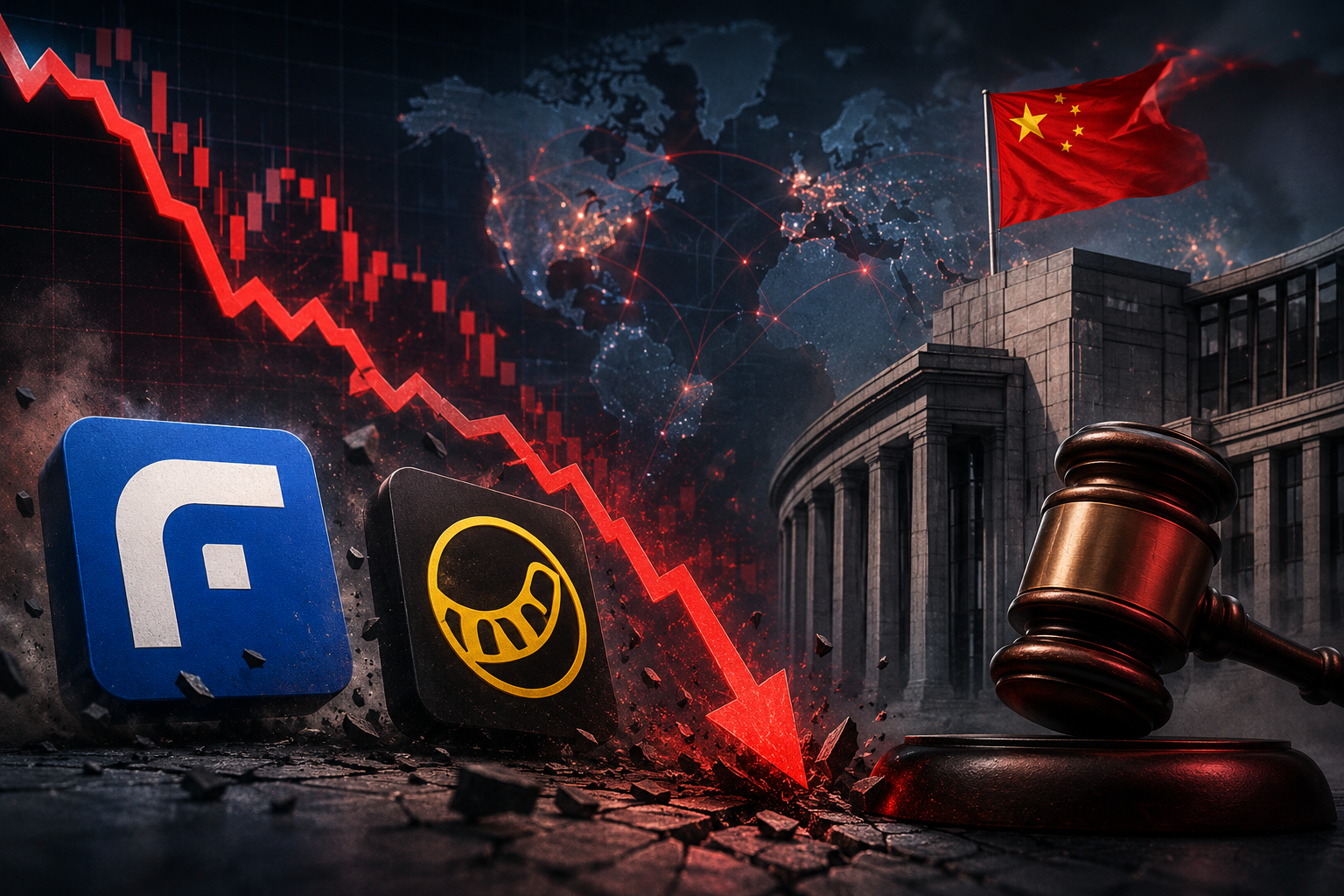
May 25, 2026 – Shares of online brokerage giants Futu Holdings (NASDAQ: FUTU) and UP Fintech Holding (NASDAQ: TIGR, parent of Tiger Brokers) tumbled sharply on Friday, May 22, following a major regulatory announcement from China’s securities watchdog. The sell-off continued to weigh on sentiment into the following week amid concerns over their core mainland China operations.
Futu’s U.S.-listed shares closed down approximately 27.5% at around $89.76 (from a previous close near $123.86), while UP Fintech (TIGR) fell about 25.3% to $4.36 (from $5.84). Pre-market trading saw even steeper declines, with Futu dropping as much as 35% and Tiger Brokers’ parent plunging up to 47% at one point.
The trigger: The China Securities Regulatory Commission (CSRC), along with seven other government agencies including the central bank, escalated its long-running campaign against unlicensed cross-border securities, funds, and futures brokerage activities targeting mainland Chinese investors.
In formal notices and pre-notification letters for administrative penalties, the CSRC named Futu Securities International (Hong Kong), Tiger Brokers (via UP Fintech subsidiaries), and Longbridge Securities. The regulator accused the firms of soliciting business, promoting trading, processing orders, and offering related services in mainland China without the required onshore licenses — activities deemed illegal under Chinese capital control rules.
Proposed Penalties and Operational Restrictions
- Futu: Faces a proposed fine of approximately RMB 1.85 billion (about $271 million) plus a personal penalty of RMB 1.25 million on CEO Li Hua. Illegal gains from both domestic and overseas entities will be confiscated.
- UP Fintech / Tiger Brokers: Penalties totaling RMB 308.1 million plus confiscation of RMB 103.1 million in illegal income, with a similar personal fine on its CEO.
- A two-year rectification (wind-down) period has been granted: Mainland clients are barred from making new investments or receiving new fund inflows. They may only sell existing holdings and withdraw funds. After the period, the firms must fully shut down relevant domestic websites, trading apps, and supporting servers in China.
Both companies emphasized that operations outside mainland China remain unaffected and that client funds and assets are safe. Futu stated it has maintained high compliance standards, stopped accepting new mainland client accounts years ago (following 2022 warnings), and rejected tens of thousands of non-compliant applications. Mainland investors reportedly accounted for about 13% of its customer base at the end of Q1 2026. Tiger Brokers said compliance remains a top priority and that it will fully cooperate with regulators.
Background and Broader Impact
This move marks a significant escalation from late 2022, when the CSRC first labeled such cross-border activities illegal, prompting the firms to halt new mainland client onboarding. The latest action aims to curb unregulated capital outflows, protect the “healthy development of the capital market,” and channel overseas investments through licensed domestic channels.
The news also pressured other U.S.-listed Chinese stocks popular among these brokers’ clients, including Alibaba, PDD Holdings, and JD.com, which fell 1–6% on the day. Hong Kong futures also dipped.
Analysts view the penalties as relatively measured but note uncertainty around long-term revenue impact, given mainland China’s importance to these brokers’ growth. Both firms have built substantial client bases and underwriting businesses in recent years by facilitating access to global markets (including Hong Kong and U.S. stocks) for Chinese retail investors.
What’s Next?
Markets will closely watch the companies’ formal responses, any further regulatory details, and their upcoming earnings (Futu’s Q1 2026 results are scheduled for late May). Investors are also monitoring whether the crackdown signals broader tightening on offshore investment channels.
Futu and Tiger Brokers have positioned themselves as leading digital platforms for global investing, but this regulatory headwind highlights the persistent risks of operating in China’s tightly controlled financial sector.
This article is based on official CSRC statements, company disclosures, market, and other sources as of May 24-25, 2026. Stock prices are as reported at Friday’s close; always verify latest quotes and consult professional advice before making investment decisions.
Comments
Loading comments…