
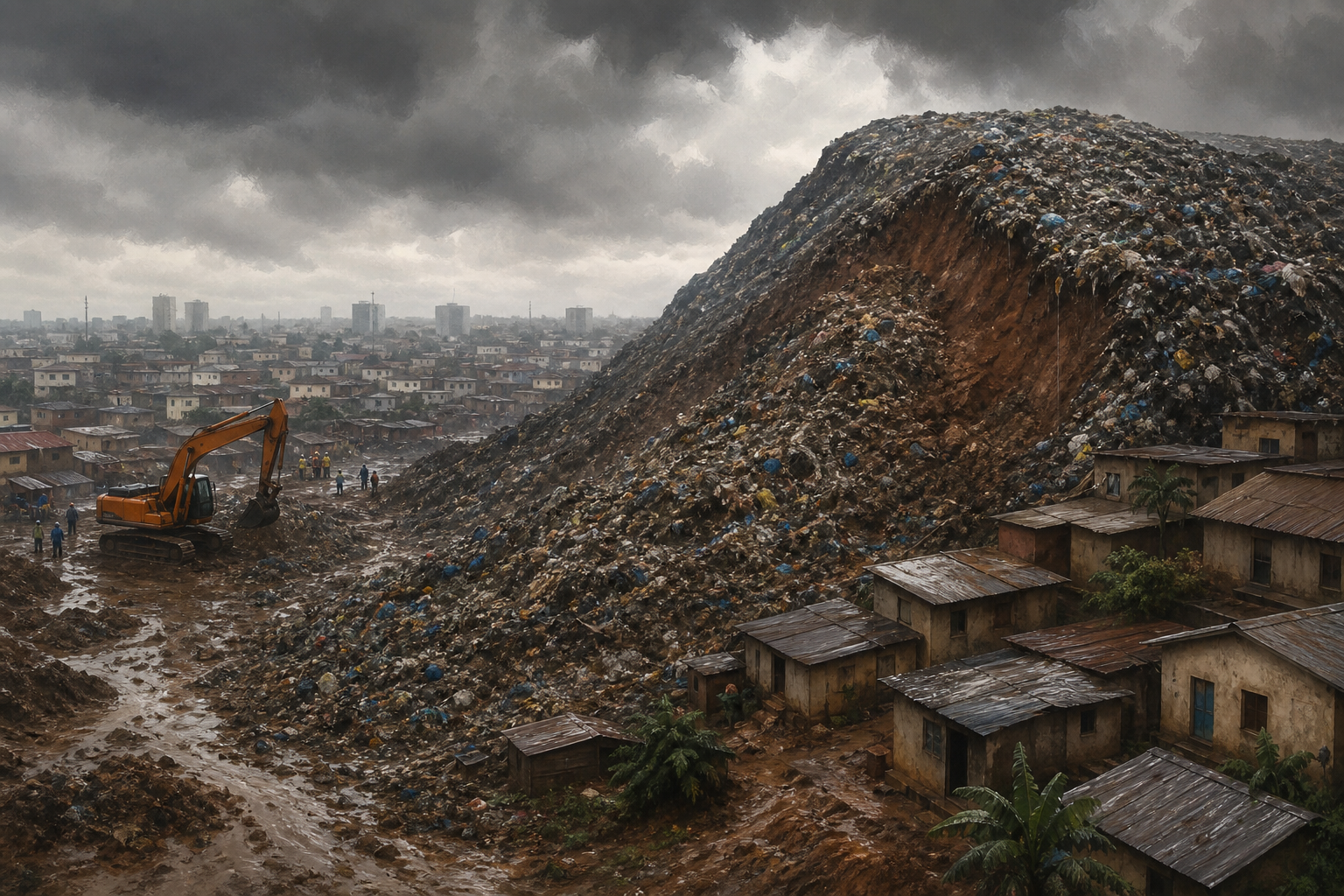
CONAKRY, Guinea - A massive mound of refuse collapsed onto homes beside the largest landfill in Guinea's capital early Sunday, killing 30 people as rescue crews searched through unstable debris for anyone still trapped, according to the government.
The collapse occurred at about 2 a.m. in Conakry's Gbessia commune after hours of heavy rain soaked the Dar Es Salam dump. The sliding waste engulfed tents, shacks and other homes built close to the site. Witnesses told Reuters the collapse was large enough to bury an apartment building as well as more fragile dwellings.
The government's updated toll listed six people as seriously injured and 16 as lightly injured. Excavators and rescue workers continued clearing the area Sunday, while officials warned that the number of victims could change as the operation proceeded.
The timing sharpened questions about whether the danger had been addressed quickly enough. Authorities had announced plans to close the open-air landfill and move its waste because it posed a particular threat during the rainy season. The site had been designated for closure on Sunday, the same day it collapsed, according to an officer with the military engineering battalion cited by The Associated Press.
Officials said eviction notices had prompted some families living around the dump to leave, but others remained when the landslide struck. Territorial Administration Minister Dienabou Toure said the remaining families would be relocated. That promise now carries the weight of a disaster that residents had been living beside before the rain arrived.
Seasonal downpours regularly expose weak drainage, unsafe construction and overcrowding in fast-growing West African cities. In this case, rain was the immediate trigger, but the mound itself was a man-made hazard: years of accumulated waste standing over homes occupied by people with few safer options.
Guinea's wider economic reality makes the contrast difficult to ignore. The country possesses enormous bauxite deposits and the rich Simandou iron-ore resource, yet poverty remains widespread and basic urban infrastructure is weak. Mineral wealth measured in export value does not protect a family living beneath an unstable landfill.
That is the harder truth behind this tragedy. Disasters are often described as natural because rain, wind or earth movement begins the final chain of events. But the death toll is shaped by political decisions made long beforehand: where waste is placed, whether drains are maintained, whether warnings produce action and whether displaced families receive a realistic alternative.
Closing a dangerous dump is not as simple as locking a gate. Conakry still produces waste every day, and moving the problem without a safe disposal system could create another hazard elsewhere. A credible response requires engineered landfill management, drainage, slope monitoring, controlled access and regular inspection. It also requires housing and compensation that people can actually use, not an eviction order that leaves them choosing between danger and homelessness.
The government should publish a clear timeline of what officials knew, when closure was ordered and why residents were still exposed. Procurement for any replacement site should be transparent, and independent engineers should assess other waste mounds before the next storm. Those steps would not undo Sunday's loss, but they would show that public safety is being treated as an obligation rather than a statement delivered after bodies are recovered.
Accountability matters especially when institutions are weak. Democratic oversight, a free press and access to public records can feel procedural during an emergency, but they are how citizens discover whether warnings were ignored and money was spent as promised. Without scrutiny, the same conditions can be rebuilt under a new name a few kilometers away.
International partners also have a role. Development lenders and mining companies that benefit from Guinea's resources should support modern waste systems and resilient urban planning, while leaving control and public oversight with Guinean communities. Charity after a collapse is necessary; investment that prevents the next one is more honest.
For now, the priority remains the search, medical care and safe shelter for families forced from the area. But once the excavators stop, the landfill cannot be allowed to become only another place of mourning. Dar Es Salam was known to be dangerous. The measure of the response will be whether that knowledge finally changes how Conakry protects the people living closest to its waste.
Comments
Loading comments…