
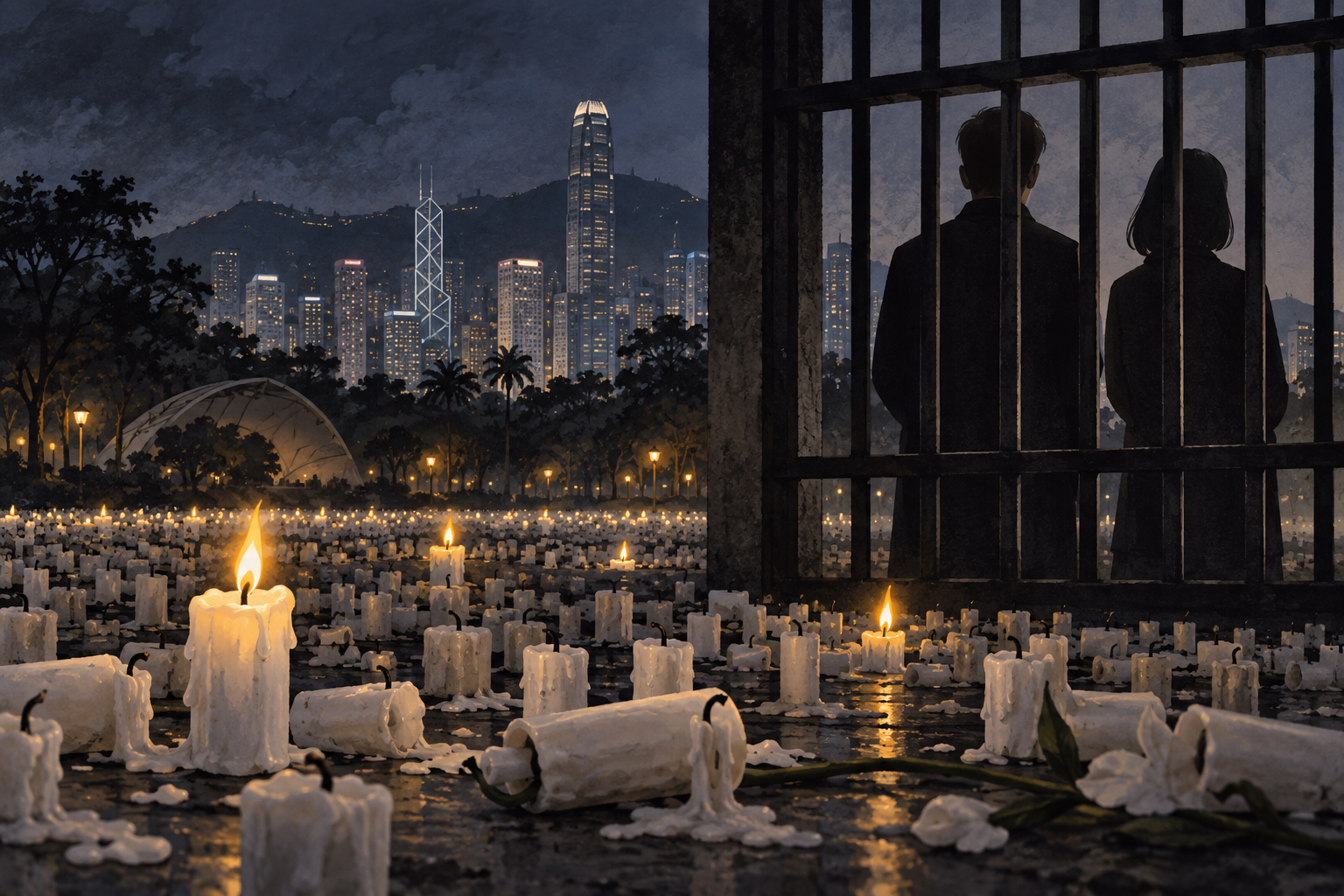
HONG KONG - A Hong Kong court sentenced two prominent pro-democracy activists to more than seven years in prison after convicting them of inciting subversion, in a national-security case rooted in the movement that organized the city's annual Tiananmen Square remembrance vigil.
Lee Cheuk-yan, 69, received a seven-year sentence. Chow Hang-tung, 41, was sentenced to seven years and three months. Both had pleaded not guilty and have been held in custody since 2021, Reuters reported.
Albert Ho, a 74-year-old former lawmaker and former leader of Hong Kong's Democratic Party, pleaded guilty in January and received five years and two months. The now-disbanded Hong Kong Alliance in Support of Patriotic Democratic Movements of China was fined HK$1.5 million.
Lee and Chow were former leaders of the Alliance, which organized candlelight vigils in Victoria Park for decades to remember those killed when Chinese troops crushed pro-democracy demonstrations in Beijing on June 4, 1989. The gatherings were once legal and drew large crowds.
The case focused in part on the Alliance's long-used call to end one-party dictatorship. Prosecutors argued that Communist Party leadership is protected by Article 1 of China's constitution. The judges rejected defense arguments that the activists believed they were exercising rights to speech and assembly.
Public Tiananmen commemorations effectively ended after Beijing imposed its national security law on Hong Kong in 2020 following mass anti-government protests the previous year. The Alliance disbanded in 2021 under mounting legal and political pressure.
Hong Kong authorities say the security law restored stability after unrest and targets only a small number of people who threaten national security. Human Rights Watch and foreign governments criticized the sentences, arguing that peaceful political expression was punished as a serious crime.
The length of the prison terms is especially significant because the defendants were not accused of bombing a building, stealing state secrets or directing an armed revolt. The case was built around political advocacy, organizational work and a demand that China become more democratic.
That distinction should concern anyone who relies on Beijing's assurance that normal expression remains protected. Once criticism of one-party rule is defined as an effort to subvert the state, there is almost no meaningful space left for peaceful opposition to seek change.
The sentences reveal the central mechanism of authoritarian control: the law does not merely prohibit violence. It changes the meaning of ordinary words and peaceful rituals until memory itself can be presented as a threat to the state.
For years, the Victoria Park vigil demonstrated the difference between Hong Kong and mainland China. Residents could publicly mourn an event Beijing sought to erase from national discussion. That narrow space was a practical test of the freedoms promised under one country, two systems.
That test has now produced a harsh answer. A slogan used openly for decades became evidence of subversion once the political boundary moved. When citizens cannot know whether lawful speech today will be treated as a prison offense tomorrow, self-censorship becomes more powerful than any police order.
Beijing and Hong Kong officials will point to courtroom procedures, written judgments and statutory language. Formal process matters, but legality is not the same as liberty. Authoritarian systems often use courts to give predictable punishment the appearance of neutral administration.
The case also shows why the free world should judge Chinese promises by enforceable conduct rather than diplomatic wording. Beijing pledged Hong Kong a high degree of autonomy. The disappearance of its largest annual Tiananmen vigil and the imprisonment of its organizers demonstrate how little protection that promise provides when Communist Party authority is challenged.
The United States, Britain and democratic partners cannot restore Hong Kong's freedoms by statement alone. They can document political prosecutions, offer safe routes to people at risk, target officials responsible for serious abuses and protect universities and media from pressure to repeat Beijing's version of events.
China's leaders may suppress a gathering and imprison those who organized it, but they cannot make the historical question disappear. The candles in Victoria Park mattered because they carried memory across generations. The severity of these sentences shows that Beijing still fears that memory, and that preserving it remains an act of democratic resistance.
Comments
Loading comments…