
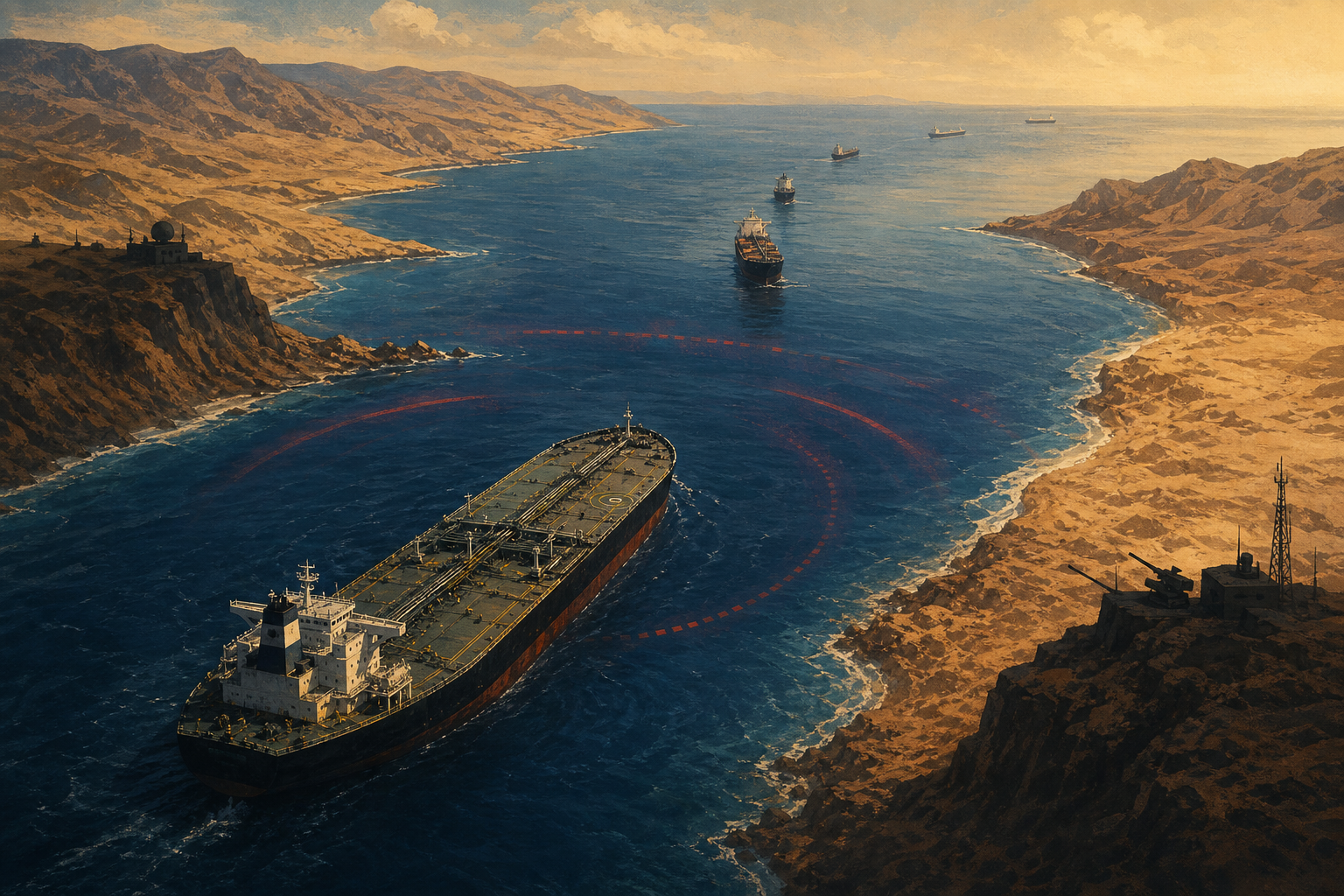
CAIRO — Yemen’s Iran-aligned Houthi movement announced an immediate maritime embargo against Saudi Arabia on Monday, July 20, threatening vessels linked to the kingdom at Bab el-Mandeb, the narrow gateway between the Gulf of Aden and the Red Sea.
Houthi military spokesman Yahya Saree described the action as retaliation for what the group calls a Saudi blockade of Yemen. Another Houthi official said the strait would be closed to Saudi vessels. The announcement followed renewed fighting, including a recent attack on Sanaa International Airport blamed by the Houthis on Saudi Arabia and Houthi missile launches toward the kingdom.
The declaration is serious, but it is not the same as a confirmed closure. Reporting on Monday said the group had provided few operational details, and analysts cautioned that it remained unclear whether the Houthis would begin sustained attacks on vessels headed to Saudi ports. That distinction matters: a threat can raise insurance and freight costs immediately, while an enforced blockade would create a much larger military and economic crisis.
Saudi Arabia’s coalition in Yemen said it would respond firmly and had begun measures to protect commercial ships using the passage. It described threats to shipping as a violation of international law. Any attempt to enforce the embargo could shatter the relative calm created by a 2022 truce in Yemen’s civil war, which began after the Houthis seized Sanaa and much of the country’s north in 2014.
Bab el-Mandeb is only about 32 kilometres wide at its narrowest navigable area, but its importance is global. Around 12% of world trade and roughly a quarter of container trade normally pass through the route on the way to or from the Suez Canal, according to Associated Press reporting. The Houthis have already shown they can disrupt the corridor, attacking more than 100 vessels during an earlier campaign linked to the Gaza war.
The new threat is especially dangerous because Saudi Arabia has used its East-West pipeline and the Red Sea port of Yanbu as an alternative to exports through the Strait of Hormuz. Shipping through Hormuz has already been constrained by the war involving Iran and the United States. If Saudi cargo also faces serious danger at Bab el-Mandeb, two of the world’s most important energy chokepoints would be under pressure at the same time.
Reuters analysis said a complete closure could cut available global oil supply by about 7%, while tankers forced to sail around the Cape of Good Hope could add roughly a month to some deliveries to Asian refiners. Oil moved less than 1% after the announcement and traded around $89 a barrel, suggesting markets were waiting to see whether the Houthis would act on the threat.
The harder reality is that a relatively small armed movement can impose costs far beyond the territory it controls. Modern commerce depends on narrow waterways, predictable insurance and crews willing to sail. Missiles and drones do not need to sink every vessel to alter behaviour; a credible risk can be enough to reroute ships, lengthen voyages and raise prices for people thousands of kilometres away.
That is coercion, not legitimate regulation of trade. Freedom of navigation cannot depend on whether an Iranian-aligned armed group approves of a ship’s destination. Saudi policy in Yemen deserves scrutiny, including the human cost of years of war and restrictions. But civilian shipping and the global energy system should not become bargaining chips in a regional power struggle.
For the United States and its partners, the challenge is to defend navigation without turning every threat into an uncontrolled escalation. Naval protection, intelligence sharing and clear warnings can reduce the Houthis’ leverage, but military action alone has not removed their ability to launch low-cost attacks. Diplomacy aimed at preventing a new Saudi-Houthi war remains necessary even as commercial vessels receive credible protection.
The Houthi announcement also demonstrates how Iran’s regional network can widen pressure on Washington and its allies without Tehran itself controlling every tactical decision. The group is aligned with and supported by Iran, but claims about direct Iranian orders should still be proven rather than assumed. Precision about responsibility strengthens the case for a firm response; exaggeration weakens it.
For now, the central question is whether the declaration becomes an operational campaign. If ships continue to pass safely, there is space for de-escalation. If attacks begin, the consequences could quickly move from higher freight premiums to disrupted oil supply, renewed war in Yemen and another test of whether the international community can keep a vital waterway open.
Comments
Loading comments…