
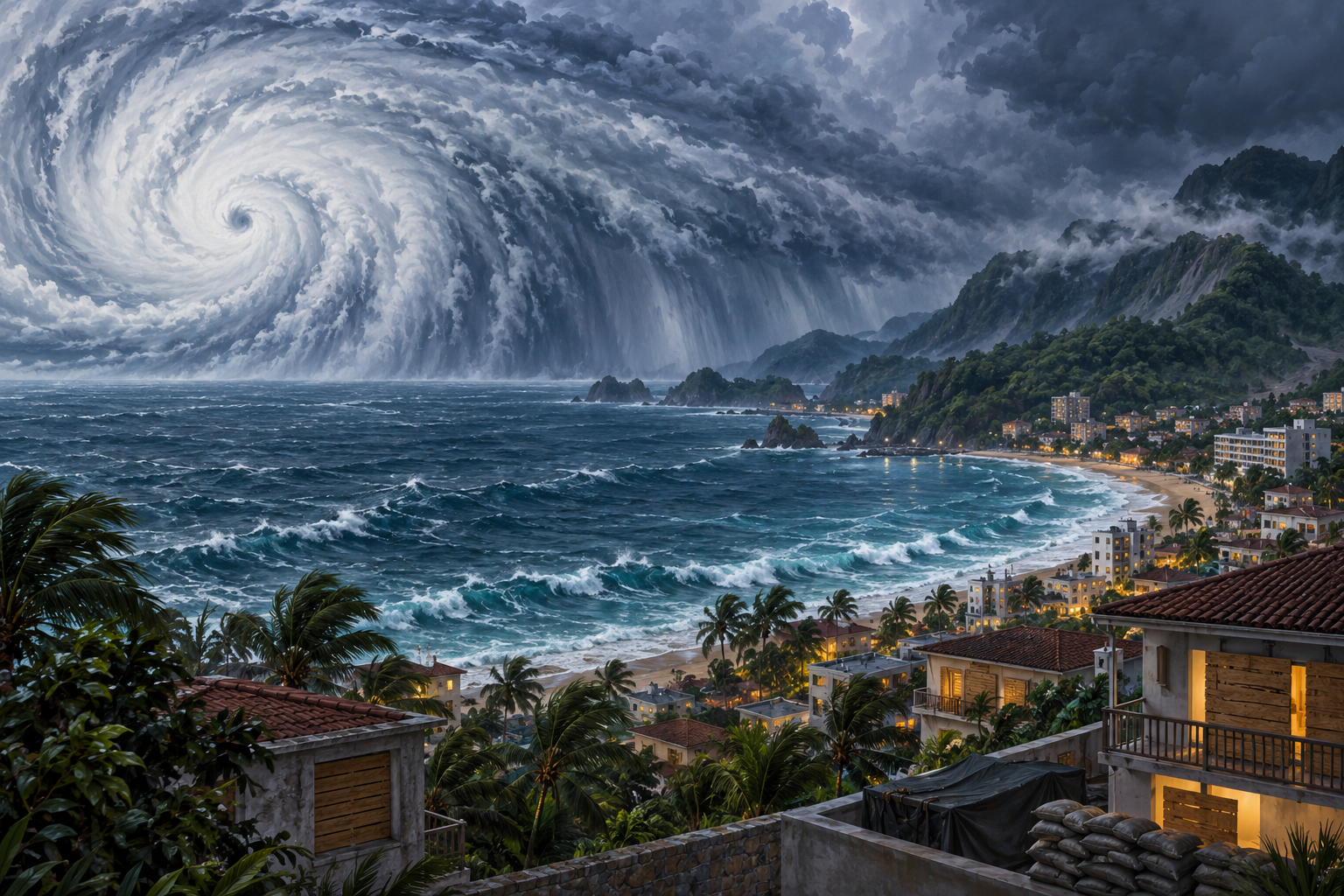
PUERTO VALLARTA, Mexico - Hurricane Simon strengthened into a powerful Category 4 storm Saturday as it moved slowly toward Mexico's west-central Pacific coast, threatening communities and resort areas with catastrophic winds, storm surge, flooding and mudslides.
The National Hurricane Center said Simon had maximum sustained winds of 150 mph during the afternoon and was moving north near 5 mph. Forecasters expected the center to be near or just inland of the coast on Sunday, but warned that damaging conditions would arrive before the eye.
A hurricane warning covered the coastline from Punta San Telmo to Punta Mita. The center urged residents to complete preparations immediately, saying a small change in the track could sharply alter where the most destructive winds reach land. Emergency planning extended beyond the forecast center line because Simon's hazards cover a wider area.
Simon was forecast to produce 10 to 20 inches of rain across parts of southwestern Mexico through Sunday, with isolated totals reaching 30 inches in Michoacan, Colima and Jalisco. The hurricane center warned that the rainfall could trigger life-threatening flash floods and mudslides, particularly in steep terrain.
A dangerous storm surge was expected near and east of the landfall point, accompanied by large and destructive waves. Swells were already affecting parts of the southwestern and west-central coast, creating hazardous surf and rip currents beyond the area likely to receive the strongest winds.
Jalisco suspended classes in 22 coastal municipalities for Friday and Monday and began moving people from vulnerable locations. Officials instructed hotels and tourism operators in Puerto Vallarta to ensure that workers and visitors could reach shelters or other safe areas.
Businesses boarded windows, hotels placed sandbags and boat owners secured vessels as skies darkened Saturday. Puerto Vallarta remained relatively calm during the morning, but authorities warned residents and tourists not to interpret the delay in severe conditions as evidence that the danger had passed.
Simon intensified rapidly after forming during an active eastern Pacific season. Hurricane Hunter aircraft and satellite data showed a compact but extremely strong core. The storm's small size also makes short-term changes in intensity possible, while its slow movement increases the risk of prolonged rain near the coast.
The greatest danger may extend far beyond the eye
Headlines naturally focus on a 150 mph wind speed, but water is likely to determine much of Simon's human toll. A family outside the narrow zone of strongest winds can still be trapped by a flooded road, a landslide or a river rising many miles from the coast.
That distinction matters in a tourism center. Visitors may not speak Spanish, understand local geography or know whether a hotel sits below a flood channel. Employers and hotel operators carry a responsibility to move staff as well as guests before transport shuts down. Safety cannot become a privilege reserved for paying customers.
Mexico has extensive hurricane experience and strong civil-protection institutions, but preparation remains uneven. Informal housing, hillside construction and isolated communities turn rainfall into a social risk as much as a meteorological one. Forecast skill cannot strengthen a roof or reopen a road after the slope above it fails.
Residents should follow Mexican civil-protection instructions, remain away from beaches and river channels, avoid flooded roads and preserve phone power. People in low-lying or landslide-prone areas should not wait for the final track before moving when authorities tell them to leave.
No single storm proves a climate trend. Scientists evaluate patterns over time, and Simon's rapid strengthening will require later analysis. But warmer ocean water can provide hurricanes with more energy when other atmospheric conditions cooperate, making investment in drainage, warning systems and resilient construction increasingly important.
The darker reality is that a technically accurate forecast can still end in preventable deaths when warnings do not reach everyone or when people lack the money and transport to act. Simon has provided limited but real advance notice. The measure of preparedness will be whether institutions turn that notice into protection for the most exposed.
Comments
Loading comments…