
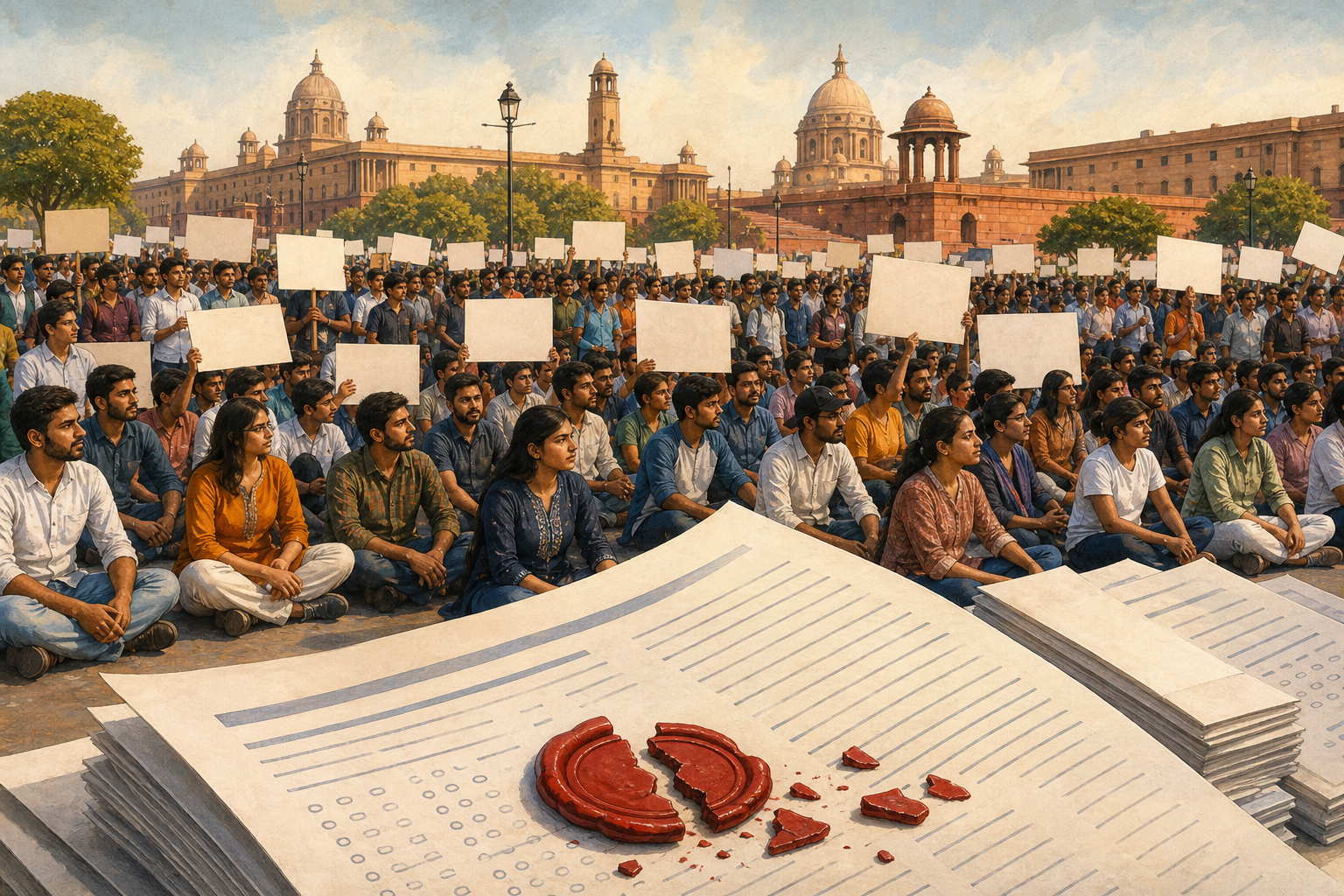
NEW DELHI — India’s education minister, Dharmendra Pradhan, resigned on Saturday, July 25, after weeks of youth-led protests over alleged leaks and irregularities in some of the country’s most competitive entrance examinations. His departure delivered the first major concession from Prime Minister Narendra Modi’s government to a movement that grew from a student campaign into a broader demand for accountability.
India’s president accepted Pradhan’s resignation from the Union Council of Ministers with immediate effect, acting on the prime minister’s advice under Article 75 of the Constitution. An official statement from Rashtrapati Bhavan said Cabinet Minister Pralhad Joshi had been assigned additional charge of the Education Ministry, providing interim leadership while the government decides its next steps.
The immediate controversy centred on irregularities in the National Eligibility-cum-Entrance Test for undergraduate medical courses, known as NEET-UG. In his resignation letter, Pradhan said the May 3 examination was cancelled after problems came to light, the investigation was transferred to the Central Bureau of Investigation and a new test was held on June 21 for more than two million candidates. He also said the examination would move to computer-based testing next year.
Those measures did not end the anger. The self-styled Cockroach Janta Party, a youth movement rather than a conventional political party, sustained demonstrations, sit-ins and hunger strikes for more than a month. Its main protest camp at Jantar Mantar in central New Delhi drew students, professionals, families and activists, while related rallies spread to other cities. Protesters linked the exam scandal to wider fears about scarce jobs, unequal opportunity and weak government accountability.
Tensions rose sharply when police used tear gas and batons against demonstrators trying to march toward Parliament on July 20. Several students were injured, according to Associated Press reporting. The crackdown did not disperse the movement for long; instead, it widened public attention and made Pradhan’s removal the protesters’ central demand.
After the resignation, movement organisers said the government had accepted their remaining demands and called off the protests. Those demands included broader reforms to the examination system, compensation for families of students who died by suicide following alleged paper leaks, and assurances that participants would not face legal action. The organisers’ declaration of victory was their account of the agreement; implementation will determine how much was actually secured.
The government had already moved toward a tougher legal response. A day before Pradhan stepped down, the Union Cabinet approved a draft bill providing penalties of up to 10 years in prison and fines of up to 100 million rupees for exam-leak offences, along with statutory support for fast-track courts. Strong punishment may deter organised cheating networks, but legislation alone cannot substitute for secure test design, transparent investigations and reliable administration.
The dispute matters because high-stakes examinations sit at the centre of India’s promise of social mobility. When millions of young people compete for a limited number of university places and public-sector opportunities, even the suspicion that a paper was leaked can destroy confidence far beyond one test. Students who spend years preparing need to believe that effort, rather than money or connections, determines the outcome.
Pradhan’s resignation is therefore significant not because changing one minister will repair the system, but because sustained peaceful pressure forced the state to acknowledge a failure at the top. Democracies retain legitimacy when citizens can organise, criticise and win a response without having to abandon constitutional politics. Modi’s government has rarely yielded so visibly to a protest campaign, making this outcome a reminder that public accountability remains possible even under a powerful administration.
That democratic lesson comes with a warning. Police have a duty to keep access to Parliament and public roads secure, but force against largely peaceful young demonstrators can turn an administrative scandal into a crisis of trust. Pradhan’s suggestion that “anti-national forces” might exploit the unrest also risked casting legitimate dissent as disloyalty. A confident government should distinguish opportunistic agitation from citizens demanding that public institutions work.
The harder work now falls to Joshi, investigators and Parliament. They must establish how examination material was compromised, identify who benefited, protect whistleblowers, publish credible findings and build safeguards that can be independently tested. Compensation and withdrawn cases, if formally agreed, should be documented rather than left as political promises. Reform also has to address the intense scarcity and pressure that make every examination failure feel catastrophic to young Indians.
The protesters have ended their occupation, but the government has not yet earned closure. Pradhan’s departure creates an opening for reform and demonstrates the corrective power of organised civic action. Whether it becomes a durable democratic success will depend on what follows: clean examinations, accountable prosecutions, restrained policing and a system in which India’s youth can trust that the rules apply equally to everyone.
Comments
Loading comments…