
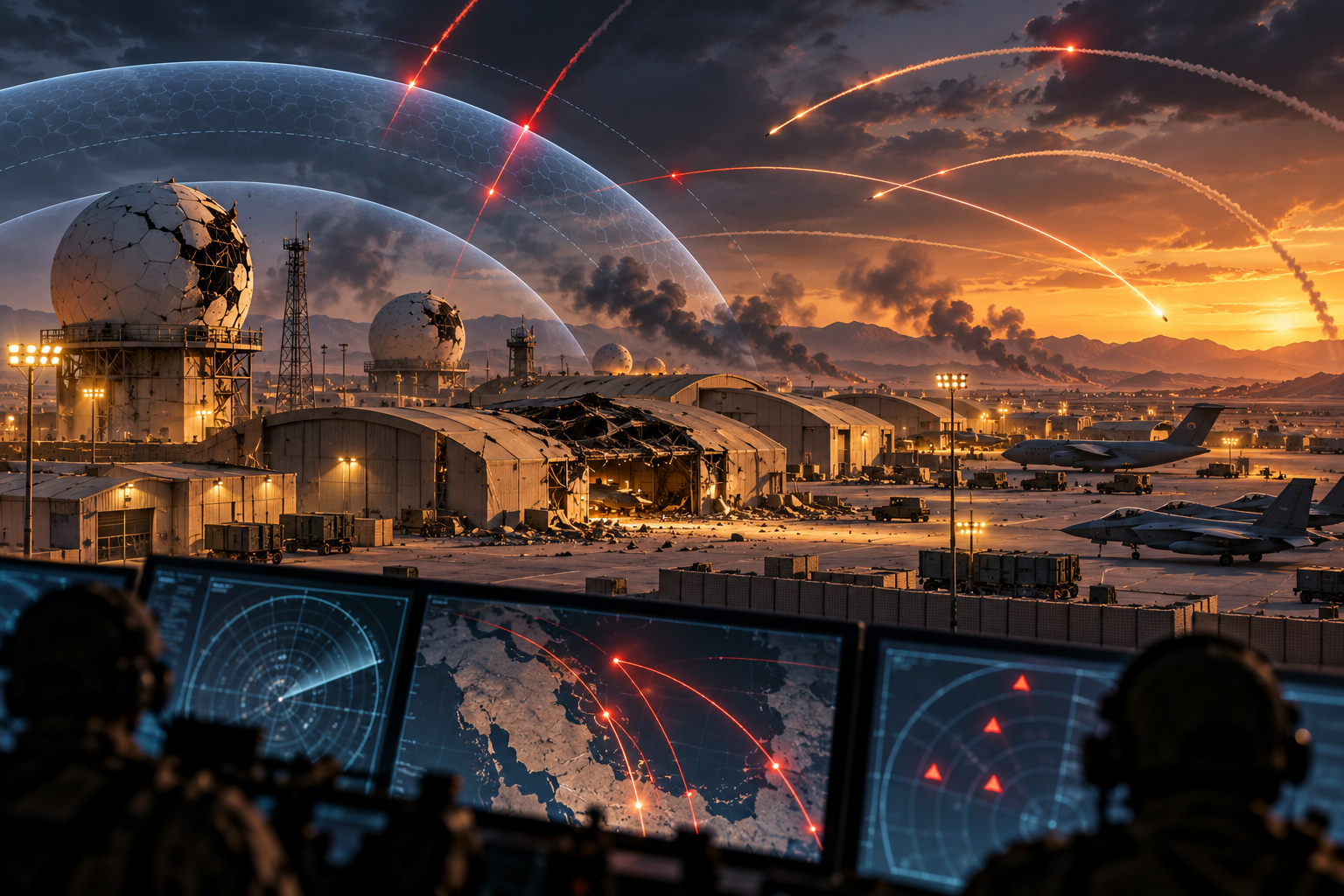
WASHINGTON - Iranian missile and drone attacks damaged early-warning systems before hitting aircraft, hangars and other facilities at U.S. bases across the Middle East, according to an Associated Press analysis of satellite imagery and interviews with regional officials.
The AP said it independently verified damage at 26 military bases and other sites holding American equipment. Through August, more than 115 attacks claimed by Iran or Iranian-backed groups damaged or destroyed structures at those locations, the news organization reported.
The apparent sequence matters. Early strikes focused on radars and systems used to detect incoming threats, according to the analysis. Later attacks reached aircraft shelters, warehouses, troop housing and communications equipment, suggesting that Tehran sought to weaken the warning network before pressing attacks against other targets.
At Ali Al Salem Air Base in Kuwait, the AP counted at least 30 strikes that damaged or destroyed at least 15 aircraft hangars, warehouses and 10 buildings near a residential area. At Al Dhafra Air Base in the United Arab Emirates, satellite imagery showed three significantly damaged hangars after attacks in March.
The deadliest known strike on American personnel occurred at Kuwait's Port Shuaiba on March 1, when a drone attack killed six U.S. soldiers. Other attacks damaged high-value equipment without producing the same human toll, but they imposed repair and replacement costs measured in billions of dollars.
A Congressional Research Service report updated in October listed 81 U.S. military aircraft and drones reportedly lost or damaged during operations against Iran. That broader count includes combat losses, accidents, friendly fire and aircraft struck on the ground. The report said 15 aircraft were damaged by Iranian strikes at regional bases, including F-15E fighters and A-10 attack aircraft.
The Congressional Budget Office estimated equipment losses through August 1 at between $1.9 billion and $3.3 billion, depending on replacement plans. Those estimates remain subject to revision because some information is classified and the conflict has continued.
The AP based its new findings on imagery from multiple satellite providers and four regional officials who were briefed on, or had direct knowledge of, the damage. The Pentagon has not released a complete public inventory matching every site and strike in the analysis.
The findings arrive as President Donald Trump considers further military action after Tuesday's U.S. midterm elections and Iran threatens a larger response. Any renewed campaign would place the same bases, warning systems and host countries under fresh pressure.
American power needs defenses built for a sustained missile war
Iran is responsible for choosing to attack American troops and facilities. Its authoritarian government has used missiles, drones and proxy forces to impose costs across borders while limiting accountability at home. Recognizing weaknesses in U.S. defenses does not excuse that aggression; it is necessary to stop the next strike.
For decades, many American bases in the region were designed primarily as platforms from which U.S. forces could operate. The current war has turned them into targets inside a dense missile and drone threat zone. A large fixed base offers logistics, maintenance and command capacity, but it also concentrates aircraft, fuel, communications and personnel in locations an adversary can map.
The answer is not simply to add one more interceptor to every site. Defenses must combine hardened shelters, dispersed aircraft, redundant sensors, mobile command systems, electronic warfare and the ability to repair runways and communications quickly. Expensive interceptors also have to be reserved for threats that matter most while cheaper defenses handle drones and decoys.
Allies and host countries are central to that strategy. Iran's attacks do not threaten only the United States; they endanger neighboring cities, civilian aviation and the governments that permit American forces to operate. Washington should deepen joint warning networks while being candid about the risks those partners accept.
Congress also needs a clear accounting. Classification can protect tactics, but it should not become a shield against oversight of losses, readiness and replacement costs. Lawmakers cannot judge whether another round of strikes is sustainable if they receive only fragments of the damage picture.
The darker lesson is that military superiority does not make fixed infrastructure invulnerable. Iran cannot match the United States aircraft for aircraft, but it can exploit geography, mass-produced drones and repeated salvos to force costly defensive choices. American strength will depend on adapting faster than Tehran can learn from each attack.
Comments
Loading comments…