
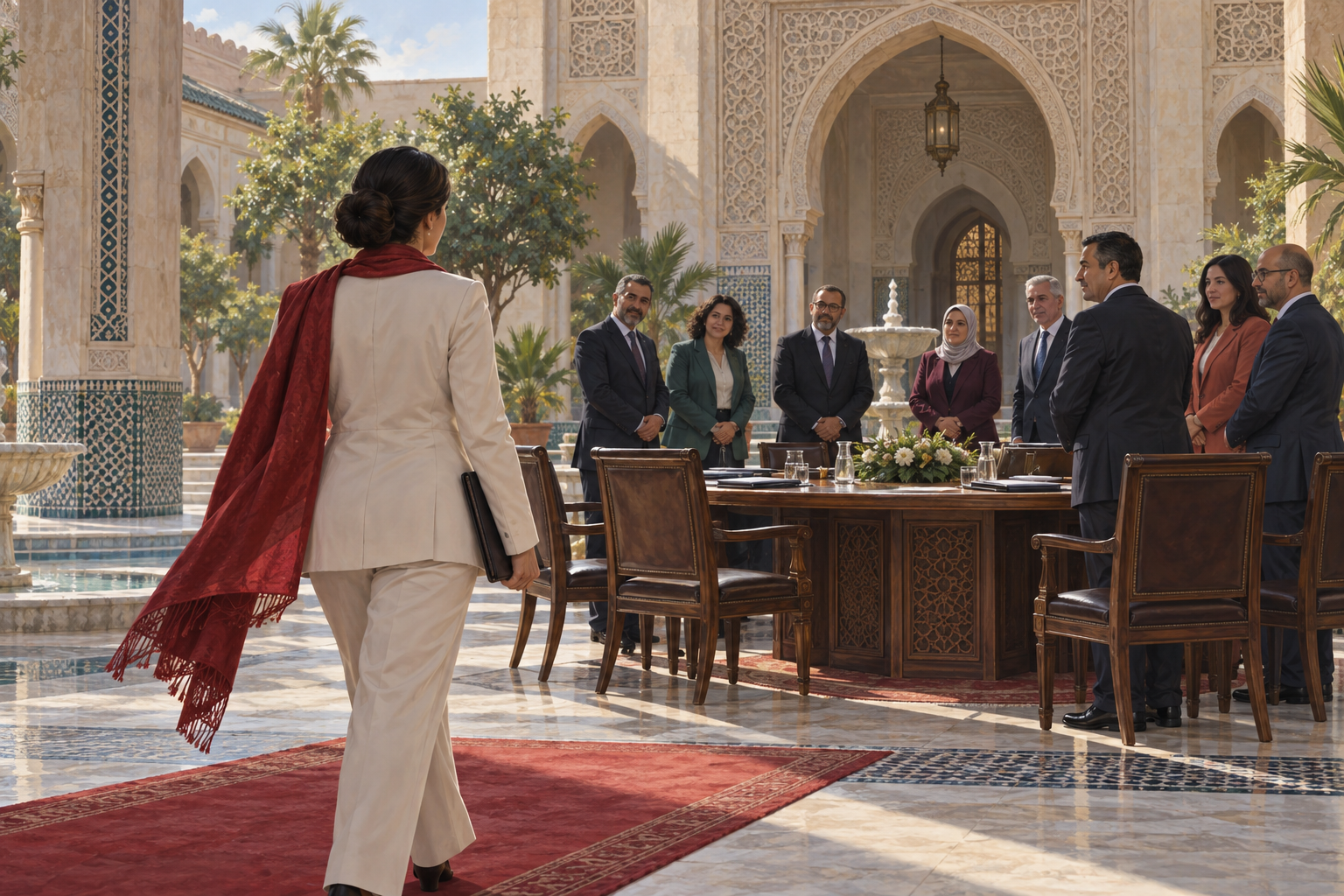
RABAT - King Mohammed VI has appointed Fatima Ezzahra El Mansouri as Morocco's head of government, making the 50-year-old attorney the first woman to lead a government in the kingdom's history.
The Royal Palace said the king received El Mansouri in Rabat on Tuesday and appointed her under Article 47 of the Constitution. She was entrusted with forming a new government after her Authenticity and Modernity Party, known as PAM, won the most seats in the September 23 parliamentary election.
El Mansouri began consultations with political leaders on Wednesday as she worked to assemble a coalition. PAM won 97 of the 395 seats in the House of Representatives, well short of a majority. Morocco's electoral system makes coalition government the normal path to power, requiring negotiations over ministries and policy priorities.
The appointment elevates one of Morocco's most prominent politicians. El Mansouri served as minister of national planning, urban planning, housing and city policy and was mayor of Marrakech until her nomination. She joined PAM when it was created in 2008, became part of its senior leadership and has also served in parliament.
PAM describes itself as a liberal-centrist and modernizing party. It emerged as a counterweight to the Islamist Justice and Development Party, which has said it will remain in opposition along with the left-wing Federation of Democratic Left. PAM has said it is willing to hold coalition discussions with all parties.
The new government will inherit immediate economic and social tests. Morocco is preparing billions of dollars in infrastructure investment for the 2030 FIFA World Cup while voters are demanding action on inflation, wages and employment. The election followed deadly youth-led protests and a migration crisis around the Spanish enclave of Ceuta, both signs of frustration that cannot be answered by symbolism alone.
Under Morocco's Constitution, the king appoints the head of government from the party that wins the most seats. That requirement was introduced after Arab Spring protests in 2011. The monarch nevertheless remains the country's highest authority and retains sweeping influence over defense, foreign affairs and other strategic areas.
El Mansouri's appointment is therefore both a genuine political milestone and the beginning of a difficult institutional test. She must build a workable coalition, propose ministers acceptable within Morocco's constitutional structure and show that the government can improve daily life.
Historic representation must become accountable power
A woman leading Morocco's government matters. Political systems change not only through laws but through examples that alter what citizens believe is possible. Girls growing up in Marrakech, Rabat and rural communities can now see the country's top government post occupied by a woman with experience in law, municipal leadership, parliament and the Cabinet.
Yet democratic progress cannot be measured by biography alone. The central question is how much authority El Mansouri will be able to exercise, how transparently her coalition will govern and whether voters can hold it responsible for results. A historic appointment should not become a shield against scrutiny.
Morocco sits between reform and concentrated royal power. The 2011 constitutional change linked the premiership to election results, giving the ballot greater consequence. But the king's continuing control over major national portfolios limits the space in which an elected government can act. Western partners should welcome social progress without pretending that it completes the country's democratic development.
The coalition negotiations will offer an early signal. Deals made only to divide offices could reproduce public cynicism. A published governing program with measurable commitments on jobs, wages, education, housing and World Cup spending would give citizens a standard against which to judge the new administration.
The World Cup is a particular opportunity and risk. Infrastructure can create employment, improve transport and strengthen Morocco's international position. It can also produce opaque contracts, prestige projects and benefits concentrated among well-connected interests. Transparent bidding, independent audits and public reporting would help turn global attention into lasting value.
El Mansouri will also have to respond to young Moroccans who believe formal politics has not delivered opportunity quickly enough. Repression may quiet demonstrations temporarily, but it does not create jobs or confidence. A stable ally of the United States and Europe becomes stronger, not weaker, when peaceful criticism is protected and institutions can correct failure.
The appointment deserves recognition because it breaks a barrier. Its deeper significance will depend on what follows: whether coalition government becomes more accountable, whether public money is handled openly and whether citizens gain a stronger voice alongside the monarchy. History records who enters the office. Democracy is judged by what power does once the door closes.
Comments
Loading comments…