
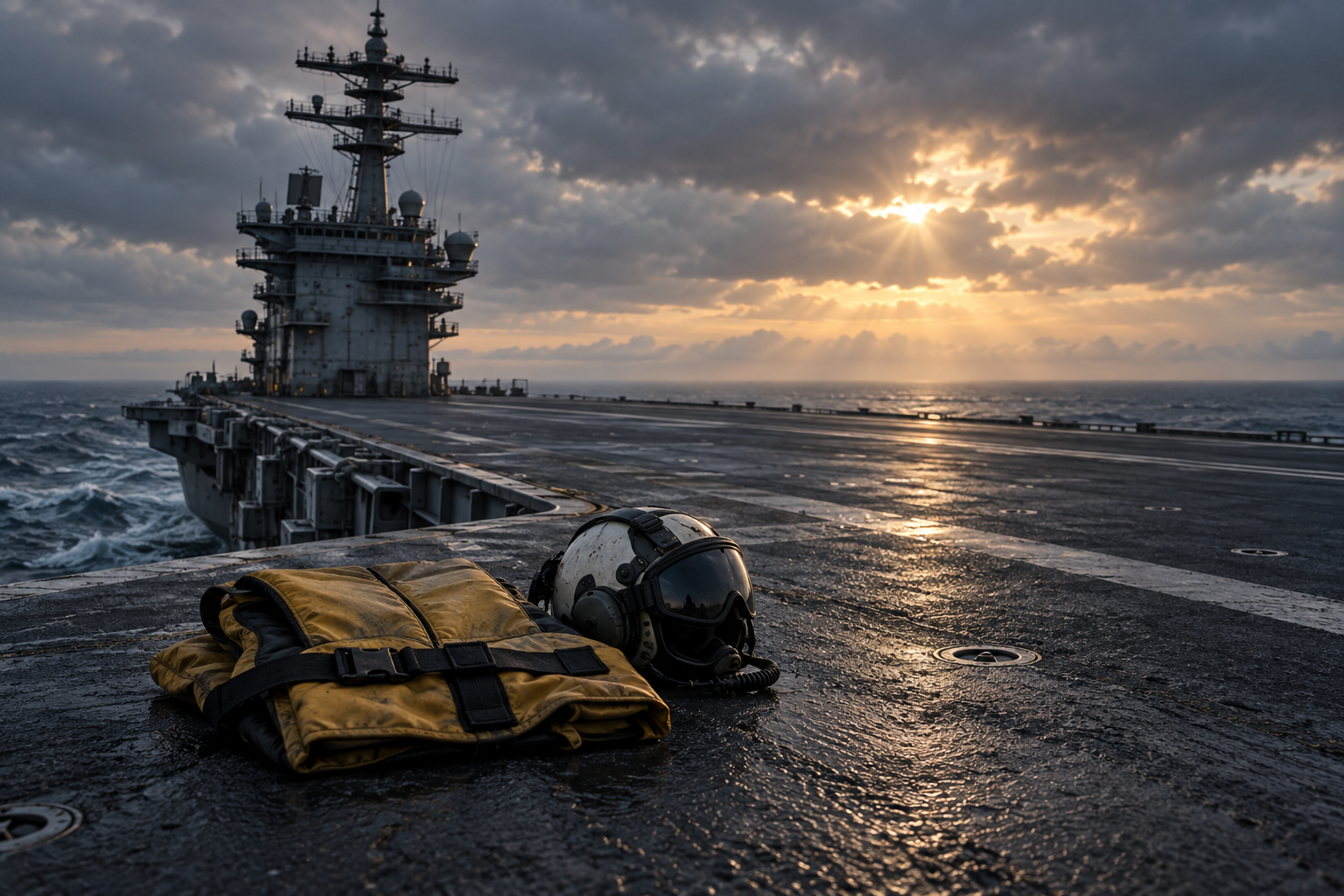
WASHINGTON - Eight U.S. service members assigned to the USS Abraham Lincoln carrier strike group attempted suicide during its extended deployment, Acting Navy Secretary Hung Cao disclosed in a letter to Sen. Kirsten Gillibrand.
Cao said the figure covered the entire strike group, including the aircraft carrier's crew, its air wing, embarked aviation squadrons, staff and sailors aboard escorting destroyers. He said there had been no deaths by suicide aboard the carrier during the deployment.
The letter, dated September 22 and released by Gillibrand's office, provided details about two incidents. One sailor who attempted to go overboard in March was stopped by shipmates, received immediate medical care and returned to home port. Another sailor who went overboard in August was recovered and transferred off the ship for follow-up care, according to reporting on the letter. Details of the other cases were not publicly released, appropriately preserving medical privacy.
The Lincoln strike group deployed in November 2025 and spent a record-setting stretch at sea while supporting U.S. operations in the Iran war. The carrier remained underway for more than 200 days of combat operations and went for months without a port visit. Between 6,000 and 7,000 sailors served across roughly half a dozen ships, according to reports citing military officials.
Gillibrand, a New York Democrat on the Senate Armed Services Committee, had joined 14 colleagues in seeking answers about mental health, food, communications and other conditions. She accused the administration of dismissing warnings from sailors and families. Cao's letter followed earlier Navy statements saying officials had not observed an increase in suicidal ideation or attempts aboard the carrier.
The new total does not by itself establish why each person reached a crisis. Suicide is rarely attributable to one factor, and no responsible account should claim that a deployment alone caused all eight attempts. The length and intensity of the mission are nevertheless essential context: crews faced combat operations, repeated schedule changes, limited time ashore and prolonged separation from their families.
America asks extraordinary things of its military. Carrier groups deter adversaries, keep sea lanes open and give presidents options that do not depend on foreign bases. That strength, however, rests on people rather than steel. A ship can continue launching aircraft while strain accumulates invisibly among the sailors who keep it operating.
The disclosure therefore demands more than a partisan exchange. Congress should seek an independent review of staffing, rest cycles, mental-health access, food supply, communication with families and the command climate across the strike group. The Navy should publish aggregate findings without identifying patients. Commanders also need authority to adjust operations when exhaustion becomes a readiness threat, not only after a crisis becomes public.
Military culture can make seeking help difficult. Sailors may worry that treatment will harm a clearance, qualification or career. Leaders must make clear that asking for care is an act of judgment, not disloyalty. Confidential counseling, enough trained clinicians and reliable evacuation pathways are operational necessities during a long deployment.
The administration also should resist treating criticism as an attack on the mission. President Trump's earlier dismissal of reports about conditions as fake news may have projected confidence, but it risked telling families that their concerns were unwelcome. Strong civilian leadership can defend the purpose of a deployment while acknowledging that its burden has become dangerous.
Adversaries benefit when the United States appears unable to sustain its forces. That makes troop welfare a national-security issue, not a concession to weakness. Honest reporting, early intervention and realistic rotation plans protect both sailors and the credibility of American power.
The eight service members survived, according to the information made public. The obligation now is to learn what failed before another sailor reaches the same point. Anyone in the United States who is in crisis or concerned about someone else can call or text 988 to reach the Suicide and Crisis Lifeline; service members and veterans can press 1 for specialized support.
Comments
Loading comments…