
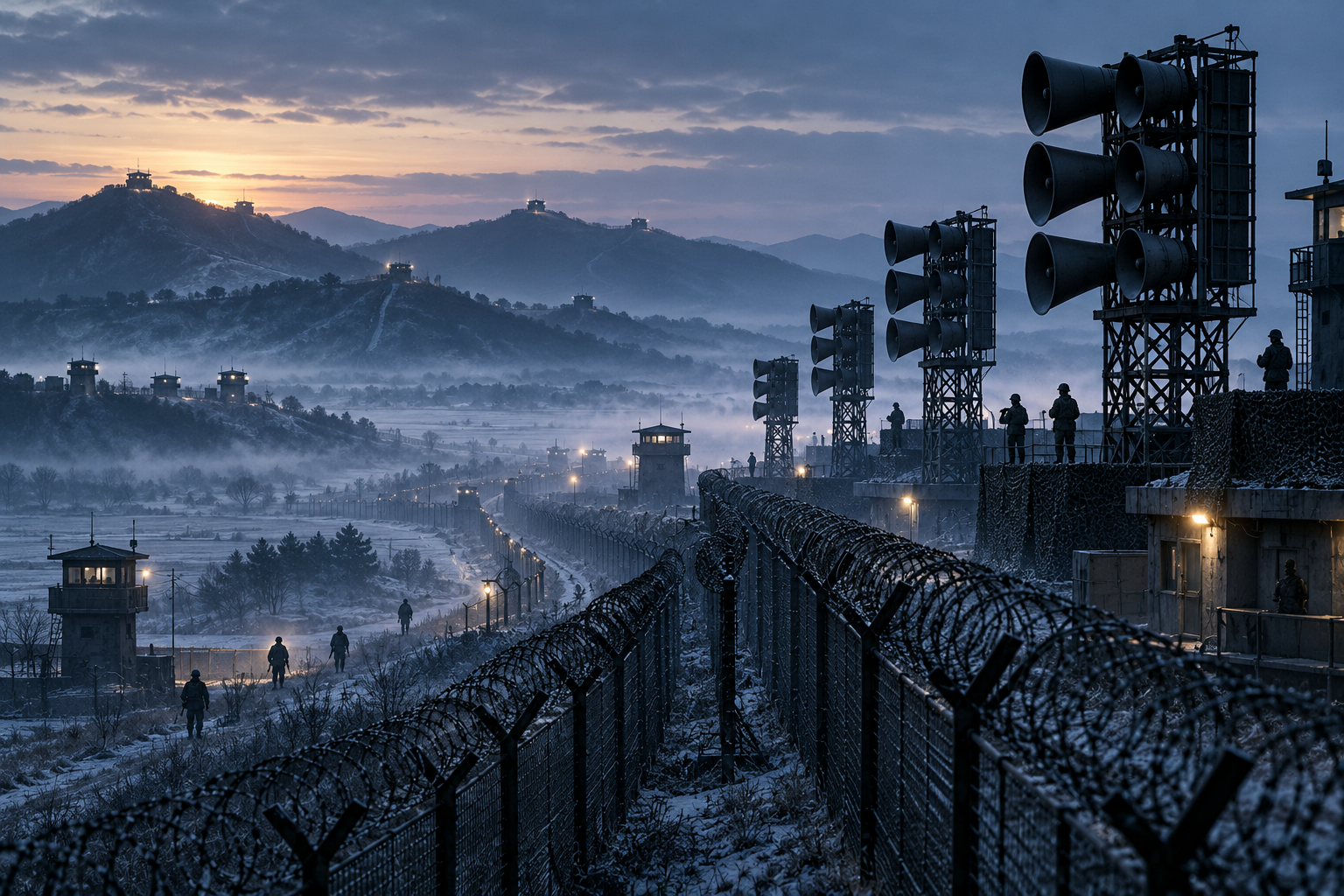
SEOUL - North Korea said it will prepare anti-South Korean loudspeakers across the entire inter-Korean border within days and activate them by the end of October, reviving a psychological-warfare campaign as military tension rises along one of the world's most heavily armed frontiers.
Kim Yo Jong, the influential sister of North Korean leader Kim Jong Un and a senior ruling-party official, announced the plan after inspecting border fortifications with military leaders. She said North Korean tactical units were taking new positions and warned that unspecified countermeasures were being placed on alert.
Pyongyang accused South Korean troops of making warning broadcasts and firing warning shots near North Korean soldiers working on the frontier. South Korea described its actions as legitimate defensive measures intended to prevent troops from crossing the military boundary and said it would respond proportionately if the North carried out its threats.
South Korea's military and Unification Ministry urged North Korea to return to talks. Seoul's defense ministry said no decision had been made about its own response, leaving open whether the South could restore loudspeaker operations that President Lee Jae Myung's government halted last year as part of an attempt to reduce hostility.
Both Koreas have used powerful speakers to project propaganda, news and music across the Demilitarized Zone. South Korean broadcasts have included outside news and K-pop, material the tightly controlled North considers threatening. The North has responded with its own broadcasts, creating a cycle of noise, threats and military alerts around communities near the border.
The new confrontation follows explosions in the DMZ on Sept. 21 that injured three South Korean soldiers. Seoul has attributed the blasts to mines planted by North Korea during recent fortification work and called for an apology and the removal of other mines. Pyongyang denies responsibility and says the accusation was fabricated. Reuters reported that two of the soldiers were seriously wounded.
North Korea has reinforced the border with mines, fencing and anti-tank barriers since 2024, after Kim Jong Un abandoned the longstanding goal of peaceful reunification and designated South Korea a hostile state. The Korean War ended in 1953 with an armistice rather than a peace treaty, leaving the two countries technically at war.
Lee's administration suspended South Korean loudspeaker broadcasts and dismantled fixed speakers after taking office, describing the measures as confidence-building steps. North Korea then suspended its own broadcasts, but it refused Seoul's broader offers of engagement. The latest order threatens to erase one of the few visible results of Lee's de-escalation policy.
An authoritarian regime is exploiting restraint
Loudspeakers may look primitive beside missiles and cyber weapons, but Pyongyang's reaction to them exposes a central weakness of the North Korean state: information. A regime that controls newspapers, broadcasts and internet access cannot easily tolerate its soldiers hearing uncensored news about the outside world or the prosperity and freedom available across the border.
That does not make every broadcast wise. Equipment operating beside armed patrols and minefields can contribute to miscalculation, and civilians living near the frontier bear the immediate cost of sleepless nights and heightened danger. South Korea has good reason to calibrate its response and avoid giving the North a pretext for violence.
But restraint works only when it is backed by credible deterrence. Seoul removed speakers and pursued dialogue, while Pyongyang fortified the border, rejected talks and now threatens to resume propaganda across its full length. Concessions made without reciprocal, verifiable steps can teach an authoritarian government that intimidation produces benefits.
The mine dispute shows why evidence and allied coordination matter. South Korea should publish as much technical information as security permits about the explosions and fortification activity, work with the United Nations Command and keep Washington closely involved. A transparent case is more persuasive than rhetorical escalation and makes it harder for North Korea to rewrite events.
The United States and South Korea should maintain military readiness while preserving channels that can prevent accidental clashes. Warning procedures at the boundary must be clear, surveillance should document incursions, and any response should be proportionate. Strength is most effective when it is disciplined enough that allies and neutral observers can distinguish defense from provocation.
Seoul must also resist the temptation to silence independent activists or media simply to satisfy Pyongyang. Democratic governments can regulate genuinely dangerous conduct near a military line, but they should not accept the North's demand for control over what free citizens say. The contrast between an open society and a closed dictatorship is part of the conflict, not an inconvenience to hide.
North Korea's threatened broadcasts are meant to pressure Lee into choosing between his engagement policy and a firmer response. The better answer is neither panic nor appeasement: protect the border, document the facts, coordinate with the United States and leave a diplomatic door open without paying for dialogue in advance. Peace requires restraint from both sides, not unilateral quiet while an armed dictatorship raises the volume.
Comments
Loading comments…