
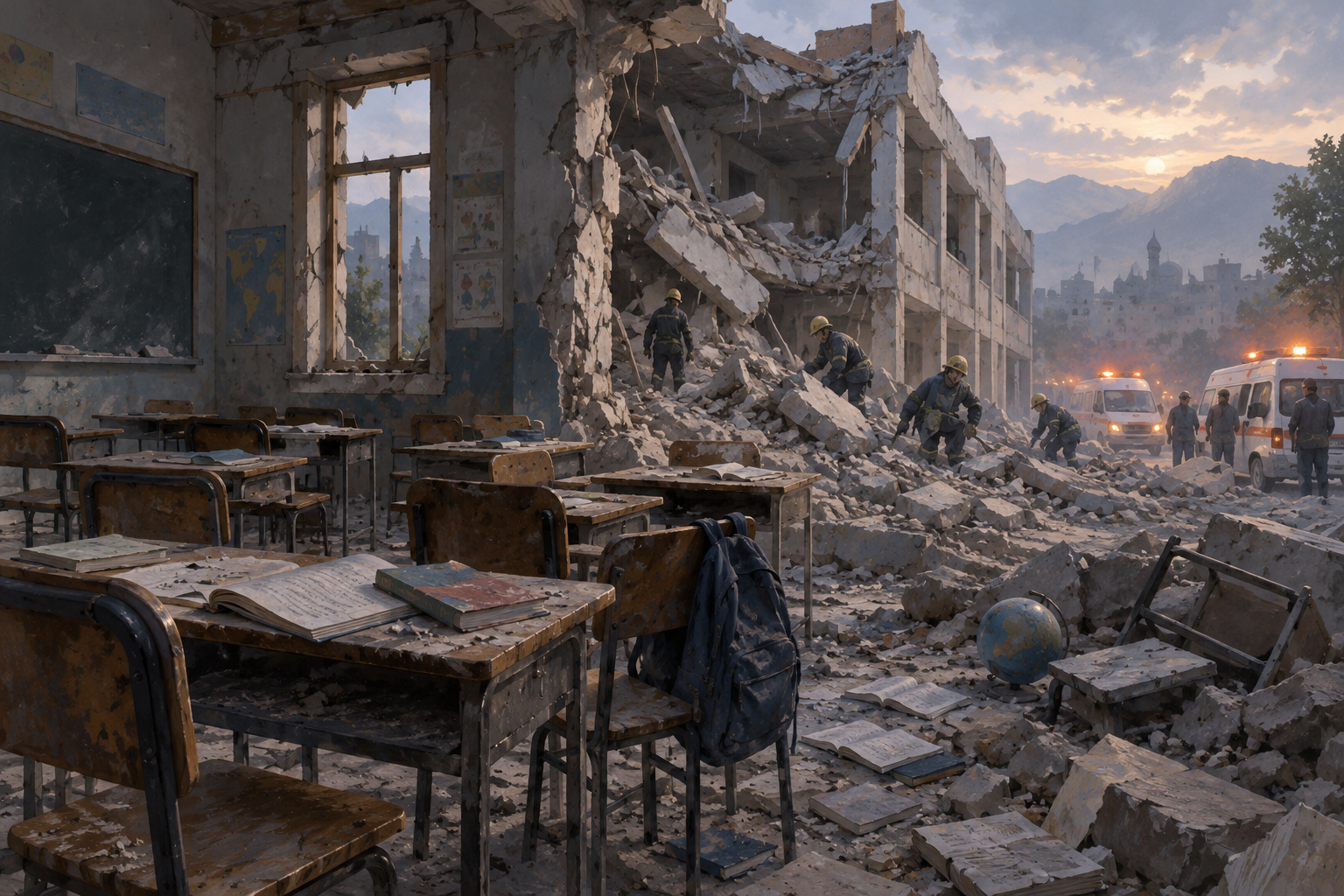
At least 35 people were killed and more than 50 injured when classroom roofs collapsed at a private school in the northwestern Pakistani city of Peshawar on Thursday, authorities said.
The dead included 34 children and a teacher at Al-Khair school, The Associated Press reported. The pupils were mainly between 6 and 12 years old, with the oldest reported victim aged 14. Several injured children were in critical condition as hospitals activated emergency procedures.
Two classroom roofs came down while second- and third-grade lessons were under way, trapping children and staff beneath concrete and debris. Nearly 100 rescuers took part in the operation. Emergency officials said crews arrived within about five minutes and credited rapid evacuation efforts with saving at least 40 people.
Authorities said everyone trapped had been removed and the debris cleared by later Thursday. Relatives gathered at hospitals and the school as rescuers searched the damaged rooms and ambulances carried the injured away.
Police arrested the school's owner and said an initial inspection found the building structurally weak. The owner blamed recent heavy rain, but authorities have not announced a final cause. An investigation is examining the construction, maintenance and approvals connected to the property.
Pakistan's president, Asif Ali Zardari, called for a comprehensive investigation and stronger implementation of safety standards in educational buildings, according to state-run Radio Pakistan. Prime Minister Shehbaz Sharif ordered officials to provide medical treatment to the injured and support the rescue effort. The provincial government also formed a committee to investigate.
Building collapses occur repeatedly in Pakistan, where weak enforcement, unapproved alterations and substandard materials have been blamed in past disasters. The Peshawar deaths will intensify questions about how a building used every day by young children could remain open if it was unable to carry ordinary loads or withstand seasonal weather.
A school should not require luck to remain standing
The investigation must establish the precise technical cause before responsibility is assigned. Heavy rain may have added stress, faulty construction may have existed for years, maintenance may have been neglected, or several failures may have combined. Those possibilities require engineering evidence, records and testimony rather than speculation.
But uncertainty about the final cause cannot excuse a system that discovers weakness only after children are buried beneath a classroom. Schools are not obscure private structures. They are predictable gathering places where parents are compelled to trust owners, inspectors and local authorities with lives that cannot protect themselves.
Arresting one owner may be justified if evidence shows negligence or unlawful construction, yet it cannot become a substitute for examining public responsibility. Investigators should determine who approved the building, when it was last inspected, whether warnings were recorded, what repairs or additions were made and whether officials had the authority and resources to close it.
The records should be made public. Families deserve more than condolences and a committee report that disappears after attention moves elsewhere. Transparent inspection histories, named responsible agencies and deadlines for corrective work would allow parents and journalists to see whether other schools face the same danger.
There is also a cruel economic pattern behind unsafe construction. Private operators can collect fees while shifting hidden structural risk onto families. Contractors can save money through weaker materials. Officials can avoid conflict by overlooking violations. Each decision may appear small until a roof falls, when the full cost is paid by people who had no role in creating the risk.
Pakistan's leaders have promised investigation and stricter standards. The meaningful test is whether those promises produce inspections before another collapse, not arrests afterward. Authorities should urgently audit schools built to similar designs or operating in older, modified structures, beginning with areas affected by heavy rain.
Rescuers deserve recognition for reaching the site quickly and pulling survivors from the rubble. Their speed reduced the toll, but emergency bravery is the final defense after prevention has failed. A society protects children most effectively through boring, visible systems: honest permits, qualified engineers, routine inspections and consequences imposed before a weak building becomes a mass grave.
Comments
Loading comments…