
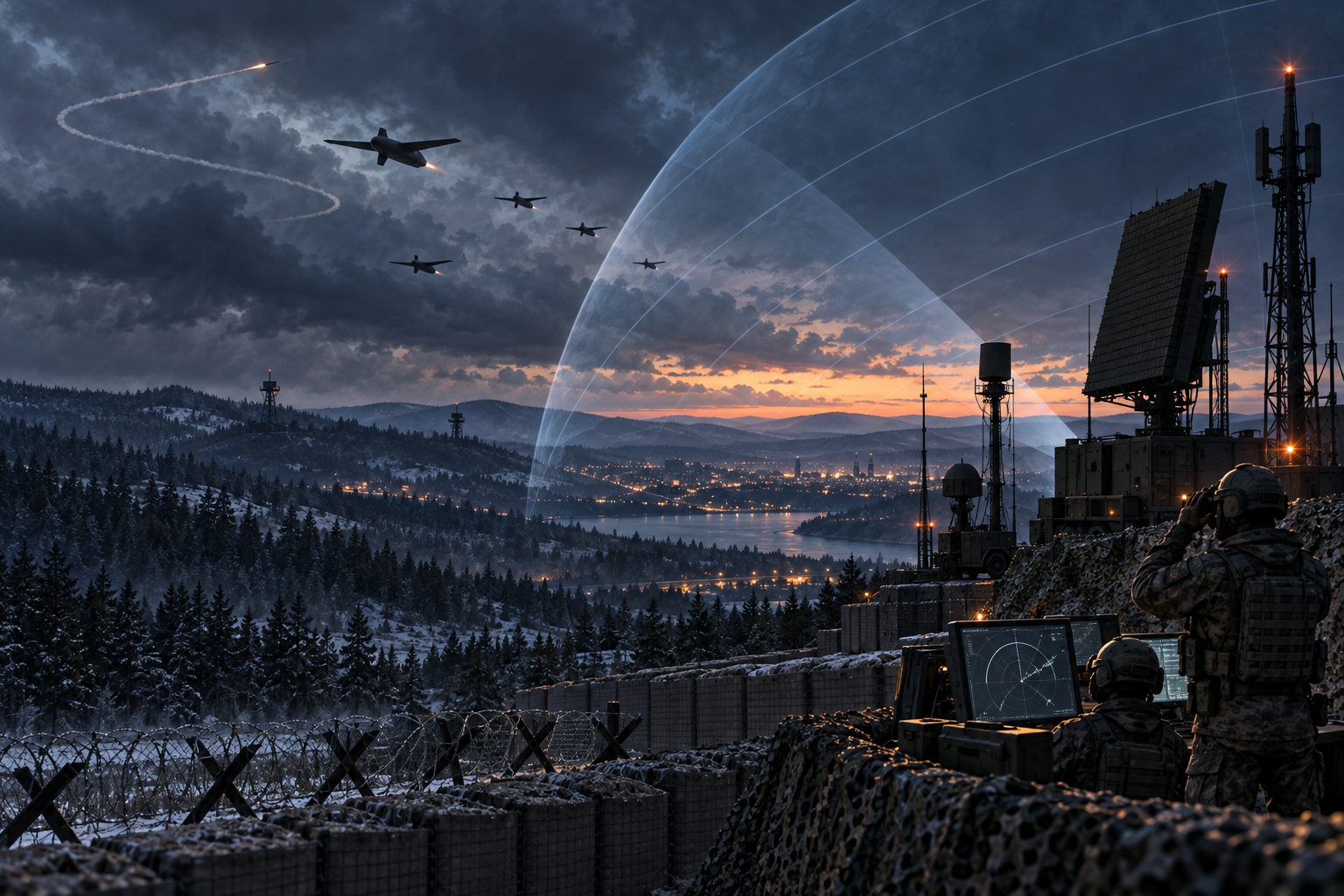
Polish Prime Minister Donald Tusk warned parliament Thursday that Russia may be preparing hybrid drone or missile strikes against European countries supporting Ukraine, including Poland, while presenting any incursion as an accident intended to confuse and divide NATO.
Tusk said the risk was based on intelligence shared by Polish, Ukrainian, NATO and U.S. services. According to the Polish government's account of his speech, assessments indicate that hybrid attacks on Ukraine's supporters are among Moscow's plans as the war approaches a critical autumn and winter. He cautioned that a projectile could cross into one or more countries on NATO's eastern flank and cause damage.
The prime minister described a strategy of plausible deniability: Russia could characterize an incursion as a mistake and use the uncertainty to weaken allied willingness to respond. He said the political objective would be to undermine confidence in NATO's collective-defense commitment, particularly Article 5, which treats an attack on one ally as an attack on all.
Tusk also drew attention to Russia's increasing use of jet-powered drones. Those systems can fly higher and faster than many earlier designs, shortening the warning time available to air defenses. Poland said it is strengthening military infrastructure at border crossings to improve protection for soldiers and other personnel as Russian strikes move closer to supply routes linking Europe with Ukraine.
Four incidents had occurred around crossings on the Polish-Ukrainian border during the previous week, Tusk said, while other incidents were reported near Ukraine's border with Moldova. He warned that attacks on crossing points could obstruct weapons, electricity equipment, fuel and humanitarian supplies during winter, when damage to Ukraine's energy infrastructure would be especially dangerous.
Tusk traveled to Ukraine for talks with President Volodymyr Zelenskyy and other regional leaders. He said Poland would discuss cooperation on missile defense, methods for countering new drones and further sanctions on Russia. The warning came as Trump said progress was being made toward establishing a permanent U.S. Army base in Poland, a step Warsaw has long sought as a stronger security guarantee.
The public warning does not prove that a specific Russian strike has been scheduled, and intelligence claims disclosed by governments rarely reveal the underlying evidence. That uncertainty must be stated plainly. But uncertainty is also the space in which hybrid warfare operates. A deniable provocation is useful precisely because democratic governments demand proof before escalating and authoritarian states can exploit the delay.
Publicly exposing the suspected method can itself be defensive. If allied governments have already described the expected claim of an accident, a later incident becomes harder for Moscow to isolate from the wider pattern. The warning also pressures NATO capitals to decide in advance what information they would share and what proportionate steps they would take before a crisis removes the luxury of time.
NATO therefore faces a problem deeper than air defense. Interceptors can stop some drones, but they cannot by themselves settle the political question of attribution. Moscow benefits if allies argue over whether an intrusion was deliberate, whether damage was sufficient to justify a response, and which institution has enough evidence to say so publicly. The military event may last minutes while the alliance dispute lasts weeks.
The most effective deterrence is to reduce that ambiguity in advance. NATO members need shared thresholds for consultation, common forensic teams, integrated radar data and rapid public disclosure when evidence can safely be released. A coordinated response does not have to mean immediate war. It can include air-defense reinforcement, sanctions, cyber measures and faster support for Ukraine, calibrated to the evidence.
Poland's warning is also a reminder of why the U.S. alliance network matters. European states closest to Russia carry immediate risk, while American intelligence, logistics and military capacity give the alliance credibility that no eastern-flank member can reproduce alone. Washington should demand greater European responsibility, but it should not leave doubt about collective defense. Deterrence fails when an aggressor believes ambiguity will paralyze the democracies it is testing.
Comments
Loading comments…