
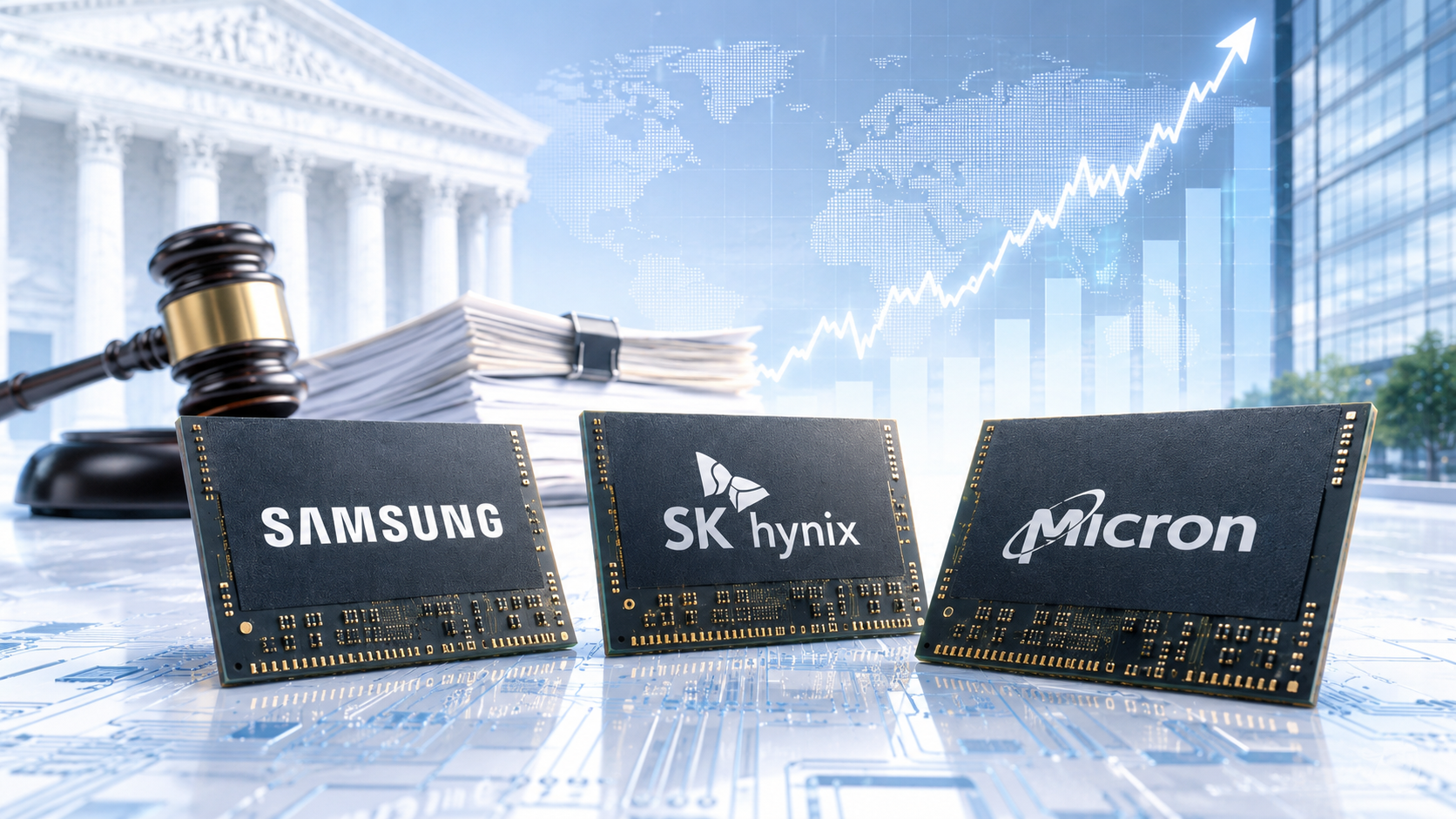
Samsung Electronics, SK hynix and Micron are facing a new U.S. class-action lawsuit accusing the world’s three dominant DRAM makers of restricting memory supply and driving prices sharply higher.
The lawsuit was filed in the United States and claims the companies deliberately reduced the supply of traditional DRAM, including DDR3 and DDR4 memory, while shifting capacity toward high-bandwidth memory, or HBM, used in artificial intelligence systems.
The plaintiffs allege that the three memory giants used the AI-driven HBM boom as a reason to limit commodity DRAM supply, creating a shortage that pushed prices up dramatically. TrendForce reported that the lawsuit claims DRAM prices rose by about 700% over four years.
The companies have not been proven guilty. The case is still at the allegation stage, and the court will need to determine whether the companies acted illegally or whether the price surge was mainly caused by real market demand from AI data centers.
The timing is important. AI has changed the memory market. HBM is now one of the most important components for advanced AI chips, and Samsung, SK hynix and Micron are all investing heavily to meet demand from companies building large AI data centers.
That shift has created a wider shortage in the memory market. As more production capacity moves toward premium AI memory, supply for normal PC, server and consumer DRAM can become tighter. Reuters reported that Micron recently secured $22 billion in long-term customer commitments for memory chips and said supply tightness could continue through at least 2027.
For consumers and businesses, the concern is simple: RAM is becoming more expensive. Higher memory prices can affect laptops, desktops, servers, smartphones, gaming PCs and data-center hardware.
If the lawsuit succeeds, it could become a major antitrust case for the semiconductor industry. It may also increase pressure on regulators to examine whether the global memory market is too concentrated in the hands of only a few companies.
Samsung, SK hynix and Micron dominate the advanced DRAM industry, especially at the high end. That makes the lawsuit politically and economically sensitive. When only a few companies control most of the market, even normal business decisions can have huge effects on global prices.
The AI boom has created real demand for HBM and advanced memory. But consumers also deserve a fair market. If prices rose because of genuine demand, that is one thing. If supply was intentionally restricted to inflate prices, that would be a serious problem.
For now, the lawsuit does not prove wrongdoing. But it highlights a bigger issue: the world is becoming heavily dependent on a small number of memory suppliers at the exact moment AI is consuming more chips than ever.
The case will be closely watched by consumers, PC makers, AI companies and investors. A ruling against the memory giants could reshape how DRAM supply, pricing and AI memory production are handled in the years ahead.
Comments
Loading comments…