
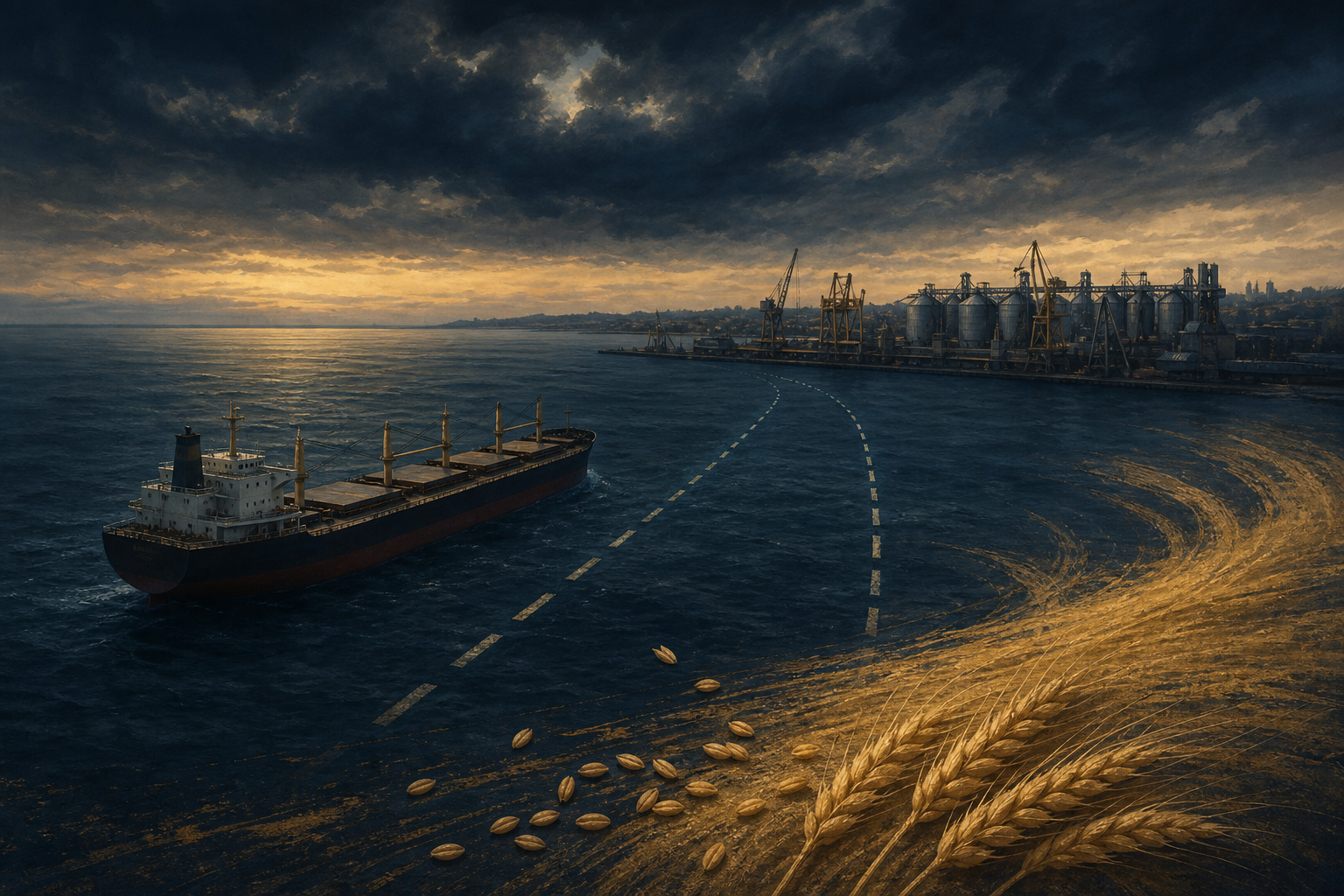
Commercial vessel calls at Ukraine’s Black Sea ports have been temporarily suspended by shipowners after a sharp intensification of Russian attacks on port infrastructure and merchant shipping. The disruption has brought inbound traffic to a standstill during Ukraine’s peak harvest period, but it is not a formal closure or government-imposed blockade: Ukrainian officials say the ports remain open and Kyiv has placed no restrictions on arrivals.
Taras Vysotskyi, Ukraine’s minister responsible for agricultural policy, said shipowners made the decision because of the heightened danger. Reuters reported on July 23 that vessels due to collect agricultural products had stopped arriving. President Volodymyr Zelenskyy said no ship entered the ports on the previous day and warned that Russia could further intensify its campaign against shipping.
Russian missiles and drones have repeatedly struck logistics facilities and ports in the southern Odesa region in recent weeks. Ukrainian officials said a missile hit a corn-carrying vessel near Odesa on Sunday, killing 10 people, most of them foreign nationals. Odesa regional prosecutors, cited by local media, said 28 civilian vessels were struck and 21 people killed between June 20 and July 20.
The distinction between an official closure and a commercial suspension matters. Ukraine has not legally barred vessels from entering, and port authorities could theoretically continue handling ships. Instead, owners, charterers and insurers are responding to the risk faced by vessels and crews. Traffic could therefore resume if operators judge the danger to have eased, although the immediate practical effect is that Ukraine’s main deepwater export route has stopped receiving ships.
Reuters reported that traders and analysts estimate Ukraine has lost about one-third of its capacity to export grain through its Black Sea ports because of attacks and the resulting war-risk concerns. That figure is an industry estimate rather than a final government assessment, and it does not mean one-third of all Ukrainian agricultural exports has already been permanently lost. Alternative routes remain available, including Danube ports, rail links and inland “dry ports.”
The timing adds to the pressure. During the harvest, grain must move rapidly from farms into storage and onward to buyers. A short interruption can create local congestion and weaken the prices offered to producers even if annual export volumes eventually recover. Vysotskyi urged farmers and traders not to rush sales, arguing that a disruption lasting days or weeks need not alter the year’s total exports, while acknowledging that a pause lasting several months would have a more serious effect.
Ukraine is a major supplier of wheat, corn and vegetable oils to markets in Asia, Africa and the Middle East. The present suspension does not by itself signal an immediate global food shortage: buyers can draw on inventories, change suppliers or use other transport routes. A prolonged disruption, however, could reduce available Black Sea supply, increase freight and insurance costs and add volatility to food prices, with import-dependent countries most exposed.
Acting Ukrainian Foreign Minister Andrii Sybiha said no vessels passed through the maritime corridor on July 22 and accused Russia of deliberately targeting global food markets. He also said Kyiv had requested an urgent United Nations Security Council meeting for July 27. His description of the attacks as economic and humanitarian pressure represents Ukraine’s assessment of Russia’s intent, rather than an independently established finding.
Moscow says it attacks port infrastructure and vessels that support the Ukrainian military. It has not accepted Ukraine’s characterization of the campaign as an effort to halt grain exports. Determining the status, cargo and use of individual vessels remains important when assessing specific incidents, but the growing number of reported strikes has already changed the calculations of commercial operators regardless of the competing claims.
The disruption is part of a widening maritime contest. Ukraine has increased attacks on Russian-linked vessels, including fuel carriers, in the Sea of Azov and the Black Sea as it seeks to isolate occupied Crimea and reduce Russian revenue. Russia has also introduced temporary nighttime restrictions on vessel movements at Novorossiysk, its largest port by volume and a major outlet for Russian grain.
Danube and overland routes can soften the impact on Ukraine, and Vysotskyi said some alternative infrastructure is not yet being fully used. Those routes generally carry less cargo at higher cost than large ships loading at deepwater ports, however. Greater reliance on them could create bottlenecks and reduce the prices Ukrainian farmers receive even if exports continue through Romania, Poland and other neighbouring states.
The clearest indicators in the coming days will be whether ship arrivals resume, how insurers adjust war-risk terms, whether attacks on civilian shipping continue and what action follows Ukraine’s Security Council request. For now, the most accurate description is an effective commercial pause caused by shipowners’ safety decisions, not a formal Ukrainian shutdown. Its wider food-security consequences will depend chiefly on how long that pause lasts.
Comments
Loading comments…