
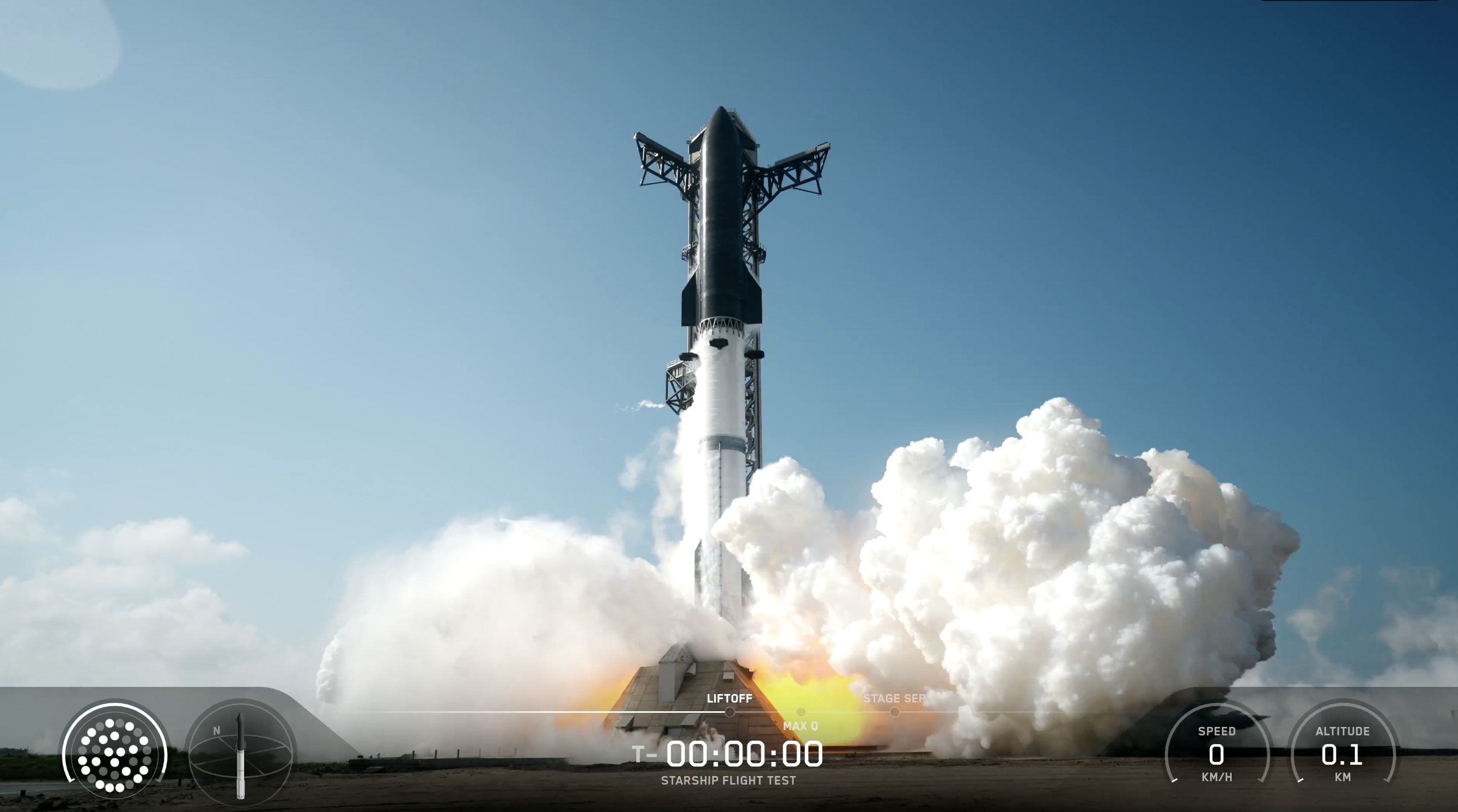
SpaceX’s Starship Flight 12 has completed a major uncrewed test flight from Starbase, Texas, marking the first flight of the upgraded Starship V3 system.
The rocket lifted off successfully and the Super Heavy booster separated from the Starship upper stage. During the flight, Starship carried out several test objectives, including deployment of test Starlink payloads, re-entry through Earth’s atmosphere, and a planned splashdown in the Indian Ocean.
The flight was not completely perfect. Reports said one of the upper-stage engines did not perform as expected. However, the spacecraft still continued through the mission and completed several important milestones.
Starship is central to SpaceX’s long-term plan for reusable space transportation. The system is designed to carry large amounts of cargo and, eventually, people to orbit, the Moon, and Mars. NASA is also working with SpaceX on Starship Human Landing System technology for future Artemis Moon missions.
The significance of this test goes beyond SpaceX. If Starship becomes fully reusable and reliable, it could lower the cost of launching satellites, scientific equipment, space stations, and future lunar or Mars infrastructure. This could change how humanity accesses space, making large-scale space projects more realistic.
At the same time, the flight also shows that Starship is still in a testing phase. Engine performance, re-entry protection, landing reliability, and reusability still need to be proven through more flights. Flight 12 is therefore an important step forward, but not the final destination.
This is important because Starship is not just another rocket. SpaceX says Starship is designed to carry more than 100 metric tonnes to orbit in a fully reusable configuration, while NASA says SpaceX’s Starship Human Landing System is being developed to carry astronauts between lunar orbit and the Moon’s surface for Artemis missions. If the system works as planned, it could help reduce launch costs, support bigger satellite networks, make Moon missions more practical, and eventually support Mars missions.
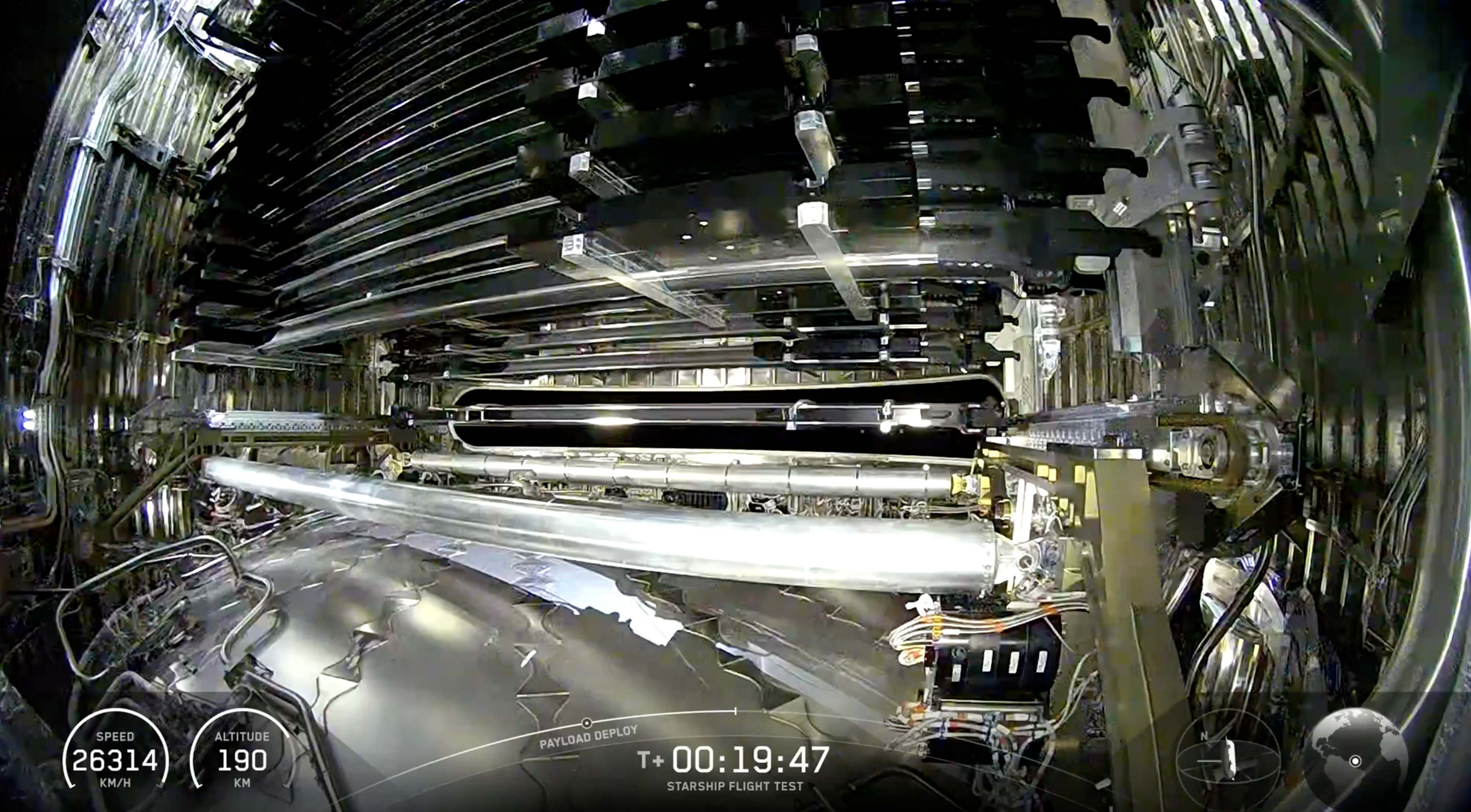
This view shows the inside of SpaceX Starship’s payload bay during Flight 12. SpaceX was testing whether Starship could release Starlink test satellites in space. It showed Starship moving closer from an experimental rocket into a working space transport system capable of carrying large payloads for future satellite, Moon and Mars missions.
Comments
Loading comments…