
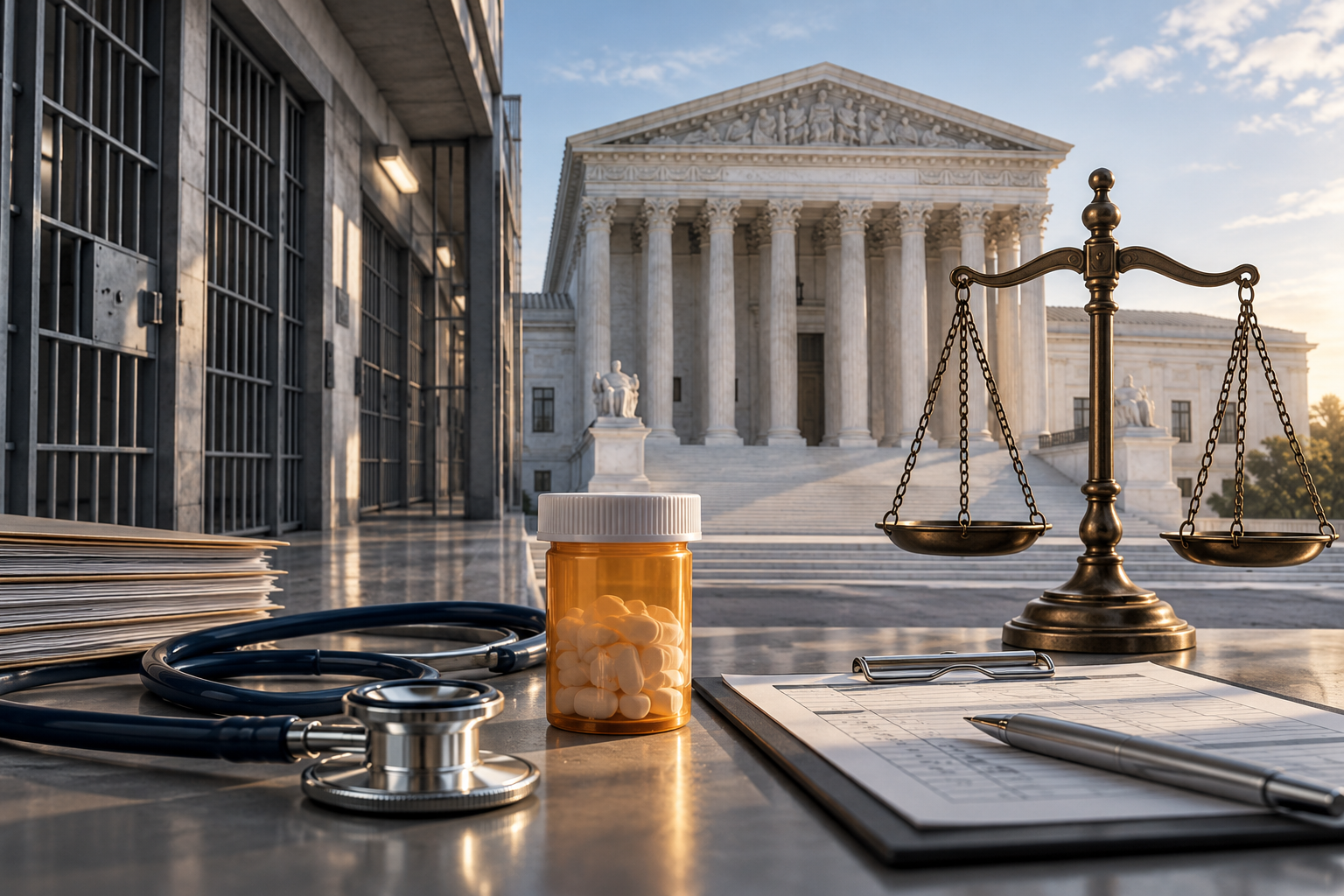
WASHINGTON - The Supreme Court on Wednesday refused to let the Trump administration immediately enforce new restrictions on medical care and other accommodations for transgender people in federal prisons, leaving a lower-court order in place while the underlying lawsuit continues.
The court denied the Justice Department's emergency application in Trump v. Kingdom without explaining its reasoning, as is common in emergency matters. Justices Clarence Thomas and Samuel Alito said they would have granted the stay. The order does not decide whether the Bureau of Prisons policy is ultimately lawful or establish a final constitutional rule.
The disputed policy was issued in February after President Donald Trump directed federal agencies to recognize two sexes and ordered the prison system to stop using federal funds for treatments intended to align an inmate's appearance with a gender identity different from sex at birth.
According to court filings and reporting by Reuters, the policy would prohibit medical and surgical treatment related to gender transition and end social accommodations such as certain clothing and hair-removal devices, while continuing psychiatric services. The plaintiffs say the federal system has provided hormone treatment for gender dysphoria since at least 1992.
Three transgender prisoners held in New Jersey, Florida and Minnesota filed a proposed class action challenging the restrictions. They argued that abruptly ending treatment could cause severe and irreparable harm, including depression, anxiety, self-harm and suicidal thoughts. The administration described the disputed interventions as medically unproven and said prison security, administration and a new assessment of medical necessity supported the change.
U.S. District Judge Royce Lamberth blocked implementation in June. He concluded that the plaintiffs were likely to show the Bureau of Prisons acted arbitrarily and capriciously under federal administrative law by disregarding its own evidence and experience while moving to implement the president's order. The U.S. Court of Appeals for the District of Columbia Circuit refused in September to lift that block.
The Justice Department then asked the Supreme Court for emergency relief. Wednesday's denial means the previous care rules remain in effect for the covered class during the litigation. Reuters cited a 2025 government figure showing more than 2,000 transgender people in federal prisons and halfway houses.
The result stands apart from several recent emergency decisions in which the court allowed other Trump administration restrictions affecting transgender people to operate while legal challenges proceeded. That difference does not necessarily predict the final outcome because emergency applications turn on factors including likely success, irreparable harm and the balance of consequences before a complete appeal.
Government power still requires a reasoned record
Federal officials have broad authority to manage prisons, protect staff and inmates, control spending and set medical standards. Courts should not casually replace professional prison judgments with their own preferences. But broad authority is not unlimited authority, and confinement does not erase the government's duty to provide necessary care or follow the law when changing policy.
The central democratic issue is not whether every citizen agrees about gender medicine. It is whether an administration can reverse a longstanding practice through a categorical order without honestly confronting the medical evidence, the experience of its own agency and the specific harm to people already receiving treatment.
That requirement protects everyone. Administrative law forces agencies to explain themselves, consider relevant evidence and avoid decisions built to reach a predetermined political result. A government that can ignore its record when targeting an unpopular group can use the same method against veterans, religious minorities, disabled people or any other community with limited political power.
The plaintiffs also remain prisoners under federal control. They cannot choose another doctor, insurer or pharmacy. When the government takes away a person's freedom, it assumes unusual responsibility for basic safety and health. Medical treatment should therefore be determined through evidence, individualized clinical judgment and legitimate security needs, not slogans from either side of a cultural conflict.
At the same time, the Supreme Court's silence should not be exaggerated into a sweeping endorsement. The justices did not write an opinion accepting the plaintiffs' arguments, and two publicly recorded dissents show the emergency request divided at least part of the court. Lower courts must still examine the administrative record and legal claims, and either side may seek later review after a fuller decision.
The responsible path is transparent adjudication. The Bureau of Prisons should present its clinical and security evidence, the prisoners should be able to test it, and judges should explain which legal requirements govern. If the agency's concerns are genuine, a reasoned record will make them stronger. If the policy was reverse-engineered to satisfy political instructions, the courts are right to stop it.
Wednesday's order preserves the status quo while that work continues. In a constitutional system, delay can be frustrating, but preventing irreversible harm before the law has been tested is one of the reasons independent courts exist.
Comments
Loading comments…