
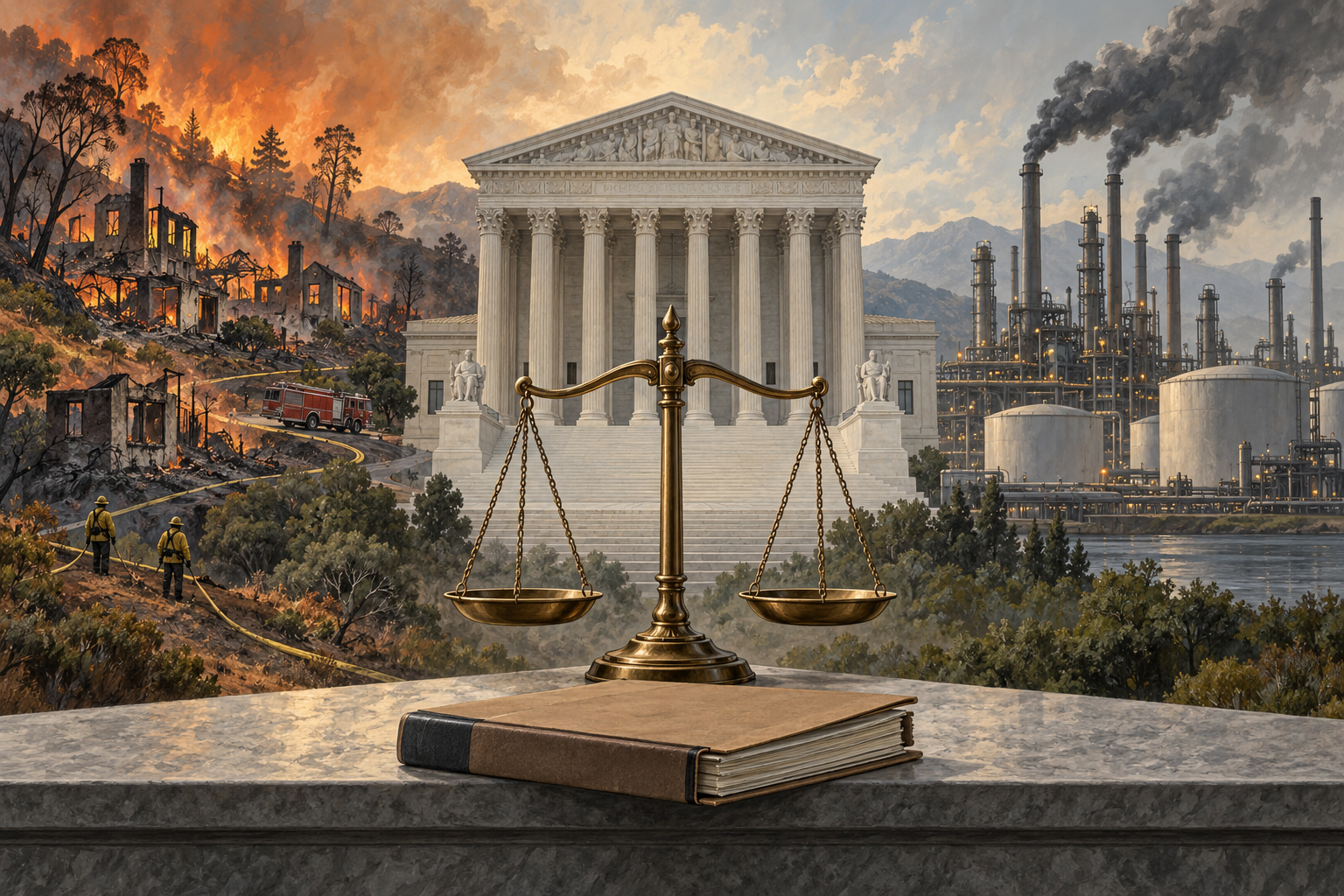
WASHINGTON - The U.S. Supreme Court opened its new term Monday by wrestling with whether Boulder, Colorado, can use state law to seek climate-related damages from ExxonMobil and Suncor Energy, a case that could determine the future of dozens of similar lawsuits.
The city and county of Boulder sued the companies in 2018. They allege that the producers knowingly contributed to climate change, concealed risks associated with fossil fuels and misled the public. The local governments are seeking unspecified monetary damages for costs tied to wildfires, drought, floods, extreme heat, health effects and infrastructure.
Exxon and Suncor argue that climate change is global and that federal law, not a patchwork of state lawsuits, must govern claims connected to interstate greenhouse-gas emissions. The Trump administration backed the companies, arguing that federal authority over air pollution displaces Boulder's state-law claims.
The Colorado Supreme Court allowed the lawsuit to proceed in 2025, finding that federal law did not preempt the claims at this stage. The U.S. Supreme Court is reviewing that decision, not deciding whether the companies ultimately caused particular damages or how much money, if any, they must pay.
Questions from the justices showed concern about both sides. Chief Justice John Roberts pressed government lawyers on why state lawsuits should be barred when state courts may hear other disputes involving conduct with effects across state lines. He also asked Boulder's lawyer how courts would manage the flood of claims that could follow a local-government victory.
Justice Brett Kavanaugh emphasized Supreme Court precedents treating interstate air and water pollution as questions of federal law. Justice Sonia Sotomayor questioned why state-law claims should be excluded under the Clean Air Act when the court has allowed some state actions under the Clean Water Act. Justice Ketanji Brown Jackson suggested the case might have reached the justices too early.
Justice Samuel Alito recused himself, leaving eight justices to decide the case. A 4-4 split would leave the Colorado ruling in place without creating a nationwide Supreme Court precedent. A decision is expected by the end of June.
Nearly 60 state and local governments have brought dozens of climate-related cases, according to the companies. A broad ruling for Exxon and Suncor could halt many of them. A broad ruling for Boulder could encourage additional lawsuits and expose energy producers and potentially other businesses to claims worth billions of dollars.
Accountability cannot replace governing
Boulder's argument has democratic force. Local taxpayers face real costs when communities rebuild roads, expand fire protection or respond to floods. If a company knowingly misled consumers and policymakers about a danger linked to its products, ordinary state law should not automatically disappear merely because the industry is powerful or the harm crosses borders.
The companies' warning is also serious. Climate change is produced by billions of decisions involving producers, governments and consumers across the world. Allowing each locality to impose its own version of national energy policy through damages litigation could create contradictory rules without a vote in Congress. Courts are designed to decide legal responsibility, not to write a comprehensive carbon policy.
This tension is what makes the case more important than a dispute over two corporations. Americans increasingly ask judges to resolve questions elected officials have failed to settle. Litigation becomes attractive when legislation is slow, but judicial power is a blunt substitute for accountable lawmaking. A courtroom can assign liability between parties; it cannot by itself balance energy reliability, prices, emissions, jobs and national security.
Congress has the constitutional tools to create clear national standards, fund resilience and define whether climate-related claims belong in federal or state court. Its failure to provide durable rules pushes power toward judges and regulators. That may produce temporary wins for one side, but it leaves policy vulnerable to the composition of a court rather than the consent of voters.
There is also a transparency question. Energy is essential to modern life, and the United States remains stronger when it can produce reliable power at home rather than depend on authoritarian suppliers. That strategic value does not excuse deception. Domestic energy companies should be able to defend their conduct with evidence, and public institutions should distinguish allegations about misleading statements from a demand to punish lawful production retroactively.
The best outcome is a narrow, legally coherent ruling that clarifies jurisdiction without pretending to solve climate policy from the bench. If Boulder's claims fit established state causes of action, they should be tested through evidence. If federal law clearly preempts them, the court should explain the boundary so Congress and voters can respond.
The harder reality is that every institution is trying to transfer responsibility. Local governments point to corporations, corporations point to federal law, and federal lawmakers leave the conflict unresolved. The justices can decide who may enter the courtroom. Only democratic government can decide the national bargain that should exist outside it.
Comments
Loading comments…