
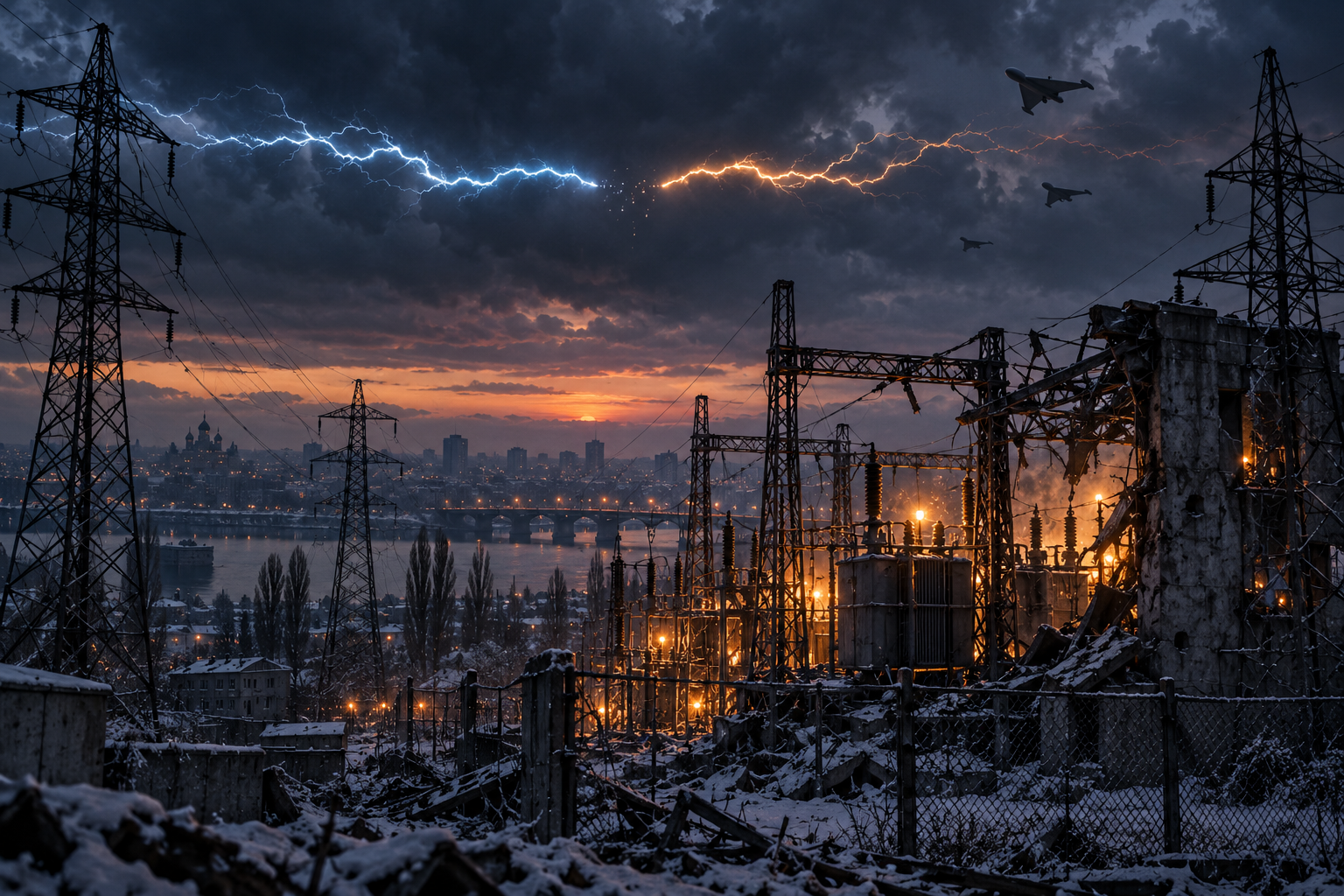
WASHINGTON - President Donald Trump announced Sunday that Russia and Ukraine had agreed to an immediate "energy ceasefire," but the declaration was followed by Russian attacks on Ukrainian power facilities and no public confirmation from Moscow.
Trump disclosed the purported agreement in a brief social media post, saying both sides had accepted it and warning them not to break it. He did not publish terms, a start time, a monitoring system or an account of what infrastructure would be protected.
Ukrainian President Volodymyr Zelenskyy welcomed the prospect of a reciprocal halt but said the announcement was news to him. He said Ukraine was ready to refrain from striking Russian energy infrastructure if Russia did the same, and that Ukrainian forces had received corresponding orders.
That reciprocity was not visible on Sunday. Zelenskyy said Russian drones and glide bombs remained active and that a thermal power plant in Kharkiv was hit after Trump's statement. Ukraine's presidential office also reported a strike on a Kyiv power plant and subsequent attacks on energy facilities in the Kharkiv region.
Kyiv said Russia had carried out more than 200 attacks on Ukrainian electricity generation and transmission sites during the previous week, along with 17 attacks on domestic gas and oil facilities. Those figures came from the Ukrainian government and could not immediately be independently verified.
Russia did not immediately announce that it had accepted a ceasefire. A White House official told Axios that the proposal under discussion would initially stop attacks on oil refineries, with power plants and electrical grids potentially covered later. The official described Russia as still considering the idea.
That distinction matters because the two countries do not face equal exposure. Russia operates a broad refinery network that Ukraine has targeted with long-range drones. A Ukrainian official told Axios that Ukraine's only refinery has been repeatedly attacked and is not fully operational, while Ukraine depends heavily on its electricity system surviving Russian strikes as winter approaches.
Zelenskyy had said earlier Sunday that Kyiv would stop hitting Russian refineries if Moscow stopped attacking Ukraine's energy system. He appealed to Trump to send the Kremlin a direct signal. In his evening address, Zelenskyy said Ukraine supports any real and reliable ceasefire but is waiting to see whether Russia will comply.
The episode follows an unsuccessful September effort. Trump then said both countries had agreed not to strike each other's energy infrastructure, but no durable arrangement emerged and the attacks continued.
An announcement is not yet an enforceable ceasefire
The United States is right to pursue even a limited agreement that could keep heat and electricity flowing to civilians. A verified pause on energy attacks would reduce suffering, lower escalation risks and create a practical test of whether a wider peace process is possible.
But American authority is weakened when a ceasefire is announced before the public record shows that both belligerents have accepted the same terms. Diplomacy depends on more than forceful language. It requires a written scope, a precise starting point, shared definitions and consequences for violations.
The current ambiguity could favor Moscow. If Washington focuses first on protecting Russian refineries while treating Ukrainian power plants as a later issue, Russia would gain immediate relief for infrastructure that finances and supplies its war while Ukrainian civilians remain exposed. That would not be a balanced energy ceasefire.
Russia has repeatedly used attacks on Ukraine's grid to place pressure on households far from the front. When power, water and heating fail, the military effect is mixed with a deliberate burden on civilian endurance. The darker reality is that a vague truce can become another weapon: one side gains political credit for peace while continuing operations that the agreement was supposed to stop.
Washington can prevent that outcome by publishing the full terms, requiring a simultaneous halt across refineries, power stations, substations and transmission networks, and establishing independent monitoring using satellite data and national reporting. Violations should be documented rapidly and attributed on evidence, not political convenience.
Ukraine should also be held to the same clear standard once Russia accepts and observes it. Reciprocity is the only structure likely to survive. Until Moscow confirms the deal and the attacks actually stop, Trump's announcement should be treated as an important diplomatic proposal, not a completed ceasefire.
Comments
Loading comments…