
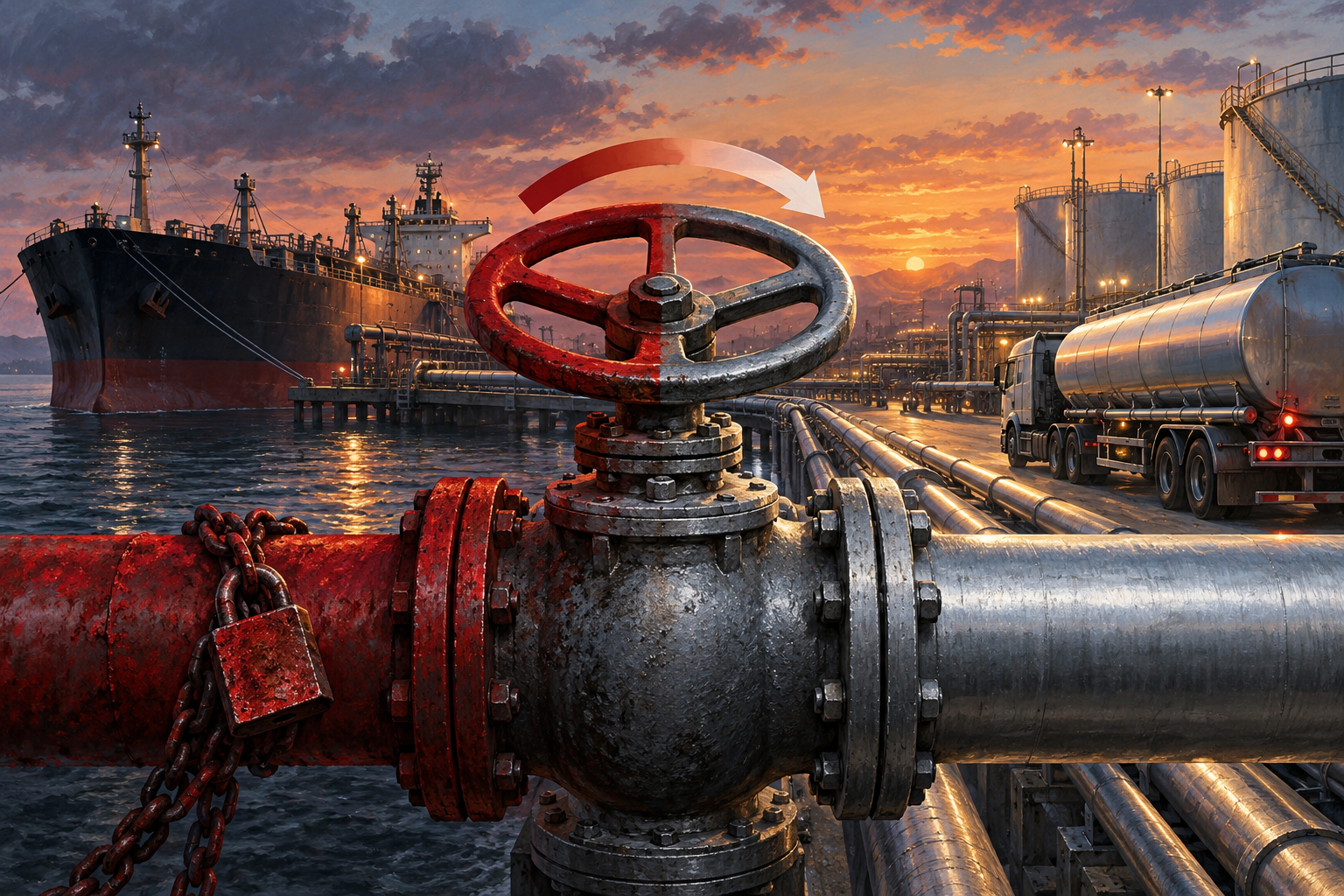
WASHINGTON - President Donald Trump announced an agreement with Russian President Vladimir Putin to release millions of tons of Russian diesel into the United States and global markets, reversing years of American pressure on Moscow as high fuel prices squeeze truckers, farmers and consumers.
Trump said Russia would immediately supply more than 300,000 metric tons of diesel, add 500,000 tons in November and provide another 1 million tons soon afterward. He said a further 3 million tons could follow within a short period, bringing the announced total to more than 4.8 million tons.
The Treasury Department moved quickly to make the plan possible. The Office of Foreign Assets Control issued General License 135 on Friday, authorizing transactions connected to the sale, delivery, offloading and importation of diesel of Russian origin. Associated Press reporting said the license protects qualifying cargoes loaded by Friday from U.S. sanctions until April 2027.
The change came only weeks after Trump signed a broad Russia sanctions law intended to restrict the energy revenue that helps finance Moscow's war in Ukraine. That law targets Russian officials, banks and shadow-fleet tankers, bans new U.S. investment in Russia and directs the administration to consider tariffs on major buyers of Russian oil and gas.
Ukrainian President Volodymyr Zelenskyy called the diesel agreement a weak decision and said his negotiating team had been used as a smokescreen. Trump announced it while U.S. envoys Steve Witkoff and Jared Kushner were meeting Ukrainian officials in Miami about possible steps toward ending the war.
Moscow confirmed its readiness to supply oil products to American and global markets, but neither government immediately disclosed the commercial terms, the buyers or what Russia might receive beyond sanctions relief. A Kremlin aide declined to say whether Washington had offered concessions.
The market response was immediate but the longer-term effect remains uncertain. Diesel futures fell after the announcement, while the U.S. national average remained about $6.28 a gallon, according to AAA data cited by the Associated Press. Energy specialists told the AP that redirecting Russian cargoes may mostly reshuffle existing global supply rather than create enough new supply to transform prices.
Russia has restricted diesel exports since July after Ukrainian attacks reduced refinery output. The International Energy Agency estimates that Russian diesel production has fallen by about 30%. Moscow says its domestic market will remain supplied while export restrictions are lifted ahead of schedule.
Relief at the pump carries a strategic price
The administration is right to treat diesel costs as a national problem. Nearly every American household pays them indirectly through food, freight, construction and farm expenses. A president cannot dismiss a price shock because it began abroad, and using diplomacy to increase supply is not automatically a concession of principle.
But the method matters. Washington spent years telling allies that Russian energy purchases financed aggression, then opened a large exception for itself when domestic pressure became acute. That contradiction will be noticed in Europe, India and every other capital asked to accept economic pain in support of sanctions.
The most troubling feature is not trade alone but the absence of visible conditions. Russia has not announced a ceasefire, a withdrawal or even a return to serious negotiations. If sanctions relief arrives before a verifiable concession, Putin receives revenue, legitimacy and proof that endurance can outlast Western resolve.
There is also a credibility problem at home. Congress approved the new sanctions framework with broad support, expecting the executive branch to squeeze Moscow's war economy. A six-month license that reaches into 2027 may be legally available, but it weakens the political message before the law has had time to work.
Trump can still turn the deal into leverage if each extension is tied to measurable results: protected Ukrainian energy infrastructure, resumed negotiations, prisoner releases or enforceable limits on attacks. Without such terms, temporary affordability risks becoming strategic dependency.
The darker reality is that authoritarian governments exploit urgent needs. Putin does not have to defeat U.S. sanctions outright if a fuel shortage persuades Washington to relax them first. Lower diesel prices would help Americans, but the country should not pretend that every cheaper gallon is free of geopolitical cost.
Comments
Loading comments…