
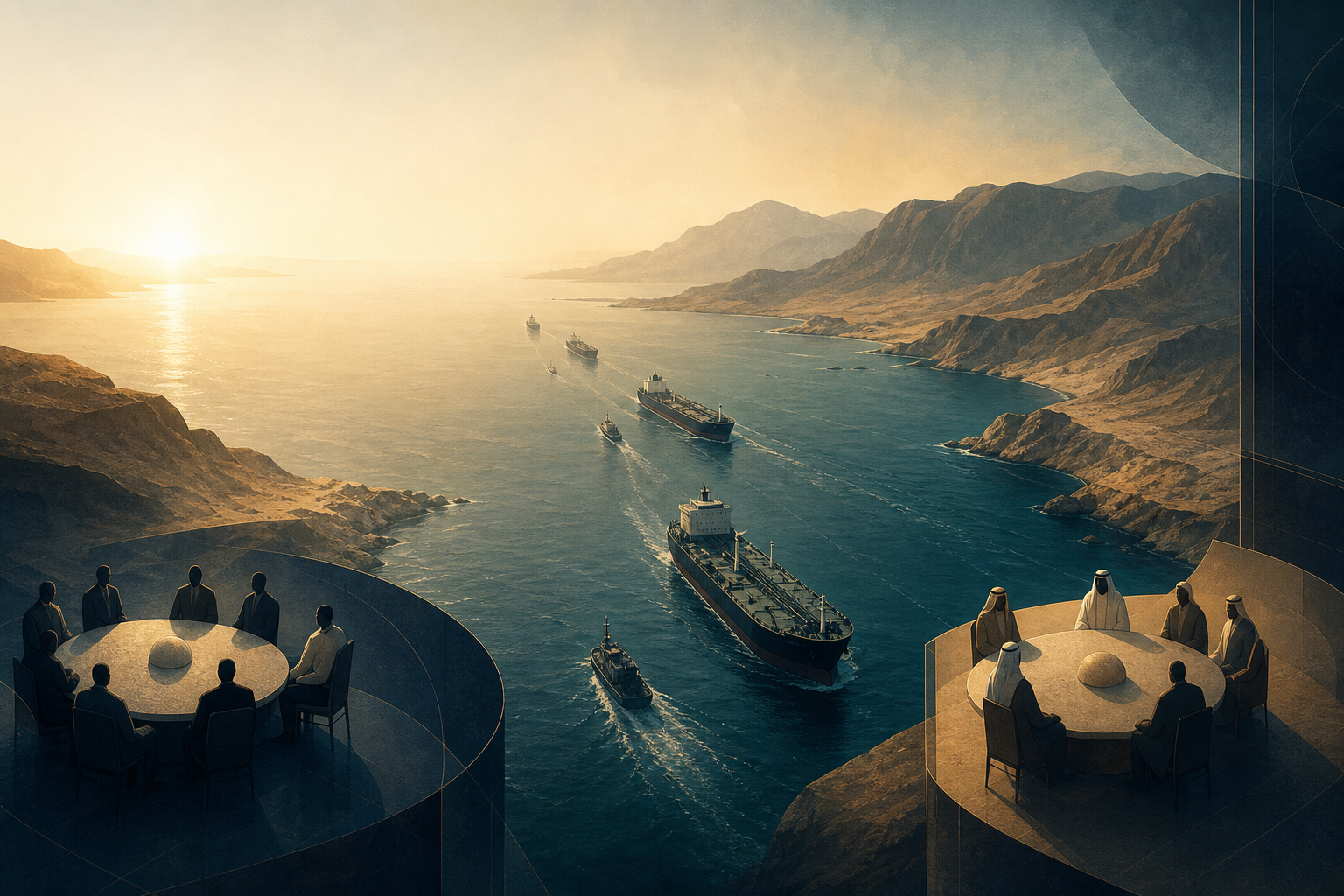
President Donald Trump said Saturday evening that the United States would hold off on a potential new attack on Iran while regional governments try to turn broad diplomatic parameters into an agreement. The announcement created an immediate pause in the threat of further escalation, but it did not amount to a signed deal, a new ceasefire or an Iranian commitment to the terms Trump described.
Trump said the emerging framework included the complete reopening of the Strait of Hormuz and an end to the nuclear threat posed by Iran. He presented the parameters as the product of talks involving regional parties and said Washington would give diplomacy a chance to move quickly. Iran had not publicly confirmed an agreement by the time of publication, leaving the central question — whether Tehran will accept verifiable limits and restore safe passage through the strait — unresolved.
The statement followed a Saturday call between Trump and Saudi Crown Prince Mohammed bin Salman. The White House confirmed that conversation, while reporting by Axios said the Saudi leader had warned about the danger that another attack could trigger retaliation against regional energy infrastructure. That concern is shared across the Gulf, where even governments that distrust Tehran have strong incentives to prevent a wider conflict from damaging ports, refineries and shipping lanes.
The latest opening comes after months of war that began on February 28 and after an interim agreement reached in June broke down. The United States had again threatened strikes as attacks and counterattacks raised risks to civilians and commerce. Washington also issued security alerts affecting Americans in 10 countries, a reminder that military escalation around Iran rarely stays confined to one battlefield.
Hormuz gives the confrontation consequences far beyond the region. Tanker crews, port operators, insurers and governments all make decisions based on whether the waterway appears predictably safe, not merely on what leaders say at a podium. Even a limited interruption can force ships to wait, raise transport costs and inject uncertainty into energy markets. A credible agreement therefore has to change conduct at sea, not just the tone of official statements.
For now, the most important word is conditional. A pause in planned action can create leverage and time, but only if negotiations produce enforceable results. Reopening Hormuz requires more than a political declaration: commercial operators need sustained evidence that ships will not be attacked, detained or used as bargaining chips. Nuclear assurances likewise need measurable limits, credible inspections and consequences for violations.
The episode also shows how Gulf partners can shape American choices without dictating them. Saudi Arabia and its neighbors depend on U.S. security power, yet they also bear the first economic and physical risks of a regional war. Their diplomacy is therefore not simply restraint for its own sake. It is an attempt to preserve deterrence while preventing Iran from converting escalation into leverage over the global energy system.
American strength is most useful when it creates a realistic choice for an adversary: comply with verifiable rules or face mounting isolation and pressure. Holding fire temporarily is not weakness if the pause is tied to clear benchmarks. But Washington should resist the temptation to treat a presidential announcement as a completed settlement. Congress, allies and the public need a transparent account of any commitments, enforcement mechanisms and concessions.
Iran's leaders face their own decision. They can reduce the danger to their population by accepting meaningful nuclear transparency and freedom of navigation, or they can continue a confrontation that has already exposed the country's vulnerabilities. Tehran's public silence on the emerging parameters leaves room for competing interpretations. Any durable arrangement must close that space through independent verification rather than trust in official rhetoric.
Diplomacy deserves room because the alternative could be catastrophic, especially around the world's most important oil transit route. Yet peace built on vague promises would only defer the next crisis. The test of this pause will not be whether headlines become calmer for a few days. It will be whether Iran, the United States and regional governments can convert pressure into rules that protect civilians, shipping and international security.
Comments
Loading comments…