
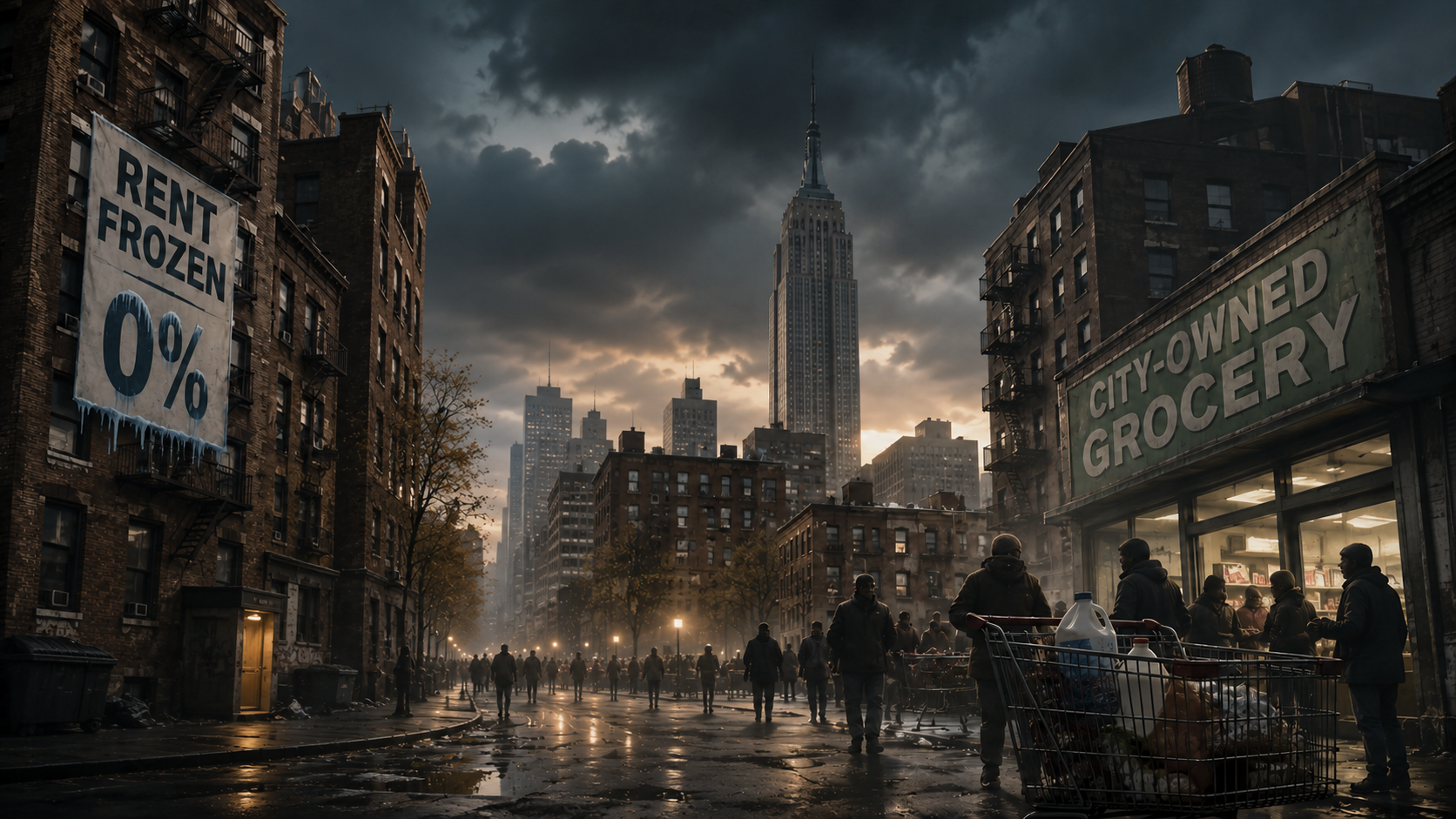
President Donald Trump has issued a sharp warning after New York City moved forward with one of Mayor Zohran Mamdani’s biggest campaign promises: a freeze on rent increases for rent-stabilized apartments.
In a new social media post, Trump wrote that “the Communists are finally making their move,” arguing that the promise of giving people “everything” ultimately means taking from others who earned it. His message appears to target the growing influence of socialist-style policies in New York City, including rent control expansion and government-run services.
The immediate trigger is New York City’s Rent Guidelines Board vote to freeze rent increases for both one-year and two-year rent-stabilized leases starting October 1, 2026. The decision affects roughly one million apartments and represents a major political victory for Mamdani.
For current tenants, the rent freeze offers short-term relief. In a city where housing costs are extremely high, a 0% increase sounds attractive and politically powerful.
But the economic problem is clear: rents are frozen, while building costs are not.
The Rent Guidelines Board’s own 2026 operating-cost data showed that costs for buildings containing rent-stabilized apartments rose sharply this year. Maintenance, insurance, utilities and fuel all increased, with insurance and fuel among the biggest cost pressures.
That creates a basic financial squeeze. If a building’s revenue is frozen but its operating costs keep rising, owners have fewer choices. They can absorb losses, delay repairs, reduce investment, borrow more money, sell the building, or raise rents more aggressively on unregulated units where possible.
This is why the downside is not simply “landlords make less money.” The broader risk is that less money goes back into the buildings themselves. Over time, that can mean slower repairs, weaker maintenance, fewer upgrades and more pressure on older rent-stabilized housing stock.
The policy also favors people already inside rent-stabilized apartments more than people still searching for housing. Current tenants receive protection, but future renters may face fewer available units, tighter competition and higher market-rate rents.
That is the classic problem with rent freezes: they help insiders today, but can make the market worse for outsiders tomorrow.
There is also a political concern. A rent board is supposed to balance tenant affordability with building costs and housing supply. But after Mamdani appointed most of the board, critics argue the process has become more political and less data-driven. A landlord representative resigned before the vote, saying the result appeared predetermined.
Mamdani’s broader agenda also includes city-owned grocery stores, another policy that sounds attractive at first but could carry serious long-term consequences.
A government-run grocery store may promise lower prices, but the risks are obvious. If the city uses taxpayer support, cheap rent, subsidies or regulatory advantages to compete with private supermarkets, it could weaken small grocers and independent businesses already operating on thin margins.
If private stores close because they cannot compete with city-backed shops, New Yorkers may end up with fewer choices, not more. And once the government becomes both regulator and competitor, the market becomes less fair.
There is also the question of efficiency. Government-run stores may struggle with staffing costs, political pressure, procurement problems, waste, and weak accountability. If losses appear, taxpayers may be forced to cover them. If prices are kept artificially low, the real cost does not disappear — it simply moves from the checkout counter to the public budget.
This is the deeper issue Trump is pointing to. Socialist-style policies often begin with a popular promise: cheaper rent, cheaper groceries, more government protection. But the cost usually appears later through reduced supply, weaker private investment, higher taxes, lower service quality, or political control over markets.
New York’s rent freeze may be popular today, but the long-term question is whether it will preserve affordable housing or slowly damage the housing system that millions of residents depend on.
A more balanced solution would target help directly to low-income renters, support building preservation, reduce construction barriers, and increase housing supply. Freezing rents across the board may win applause, but it does not freeze insurance, repairs, labor, utilities, fuel, taxes or debt payments.
Trump’s warning may sound dramatic, but the debate behind it is real. New York is becoming a national test case for whether socialist-style city policy can deliver affordability without damaging the private systems that keep housing and food available.
For now, the rent freeze gives tenants immediate relief. The real test will come later — when buildings need repairs, investors reconsider New York, and taxpayers are asked to fund the next promise.
Comments
Loading comments…