
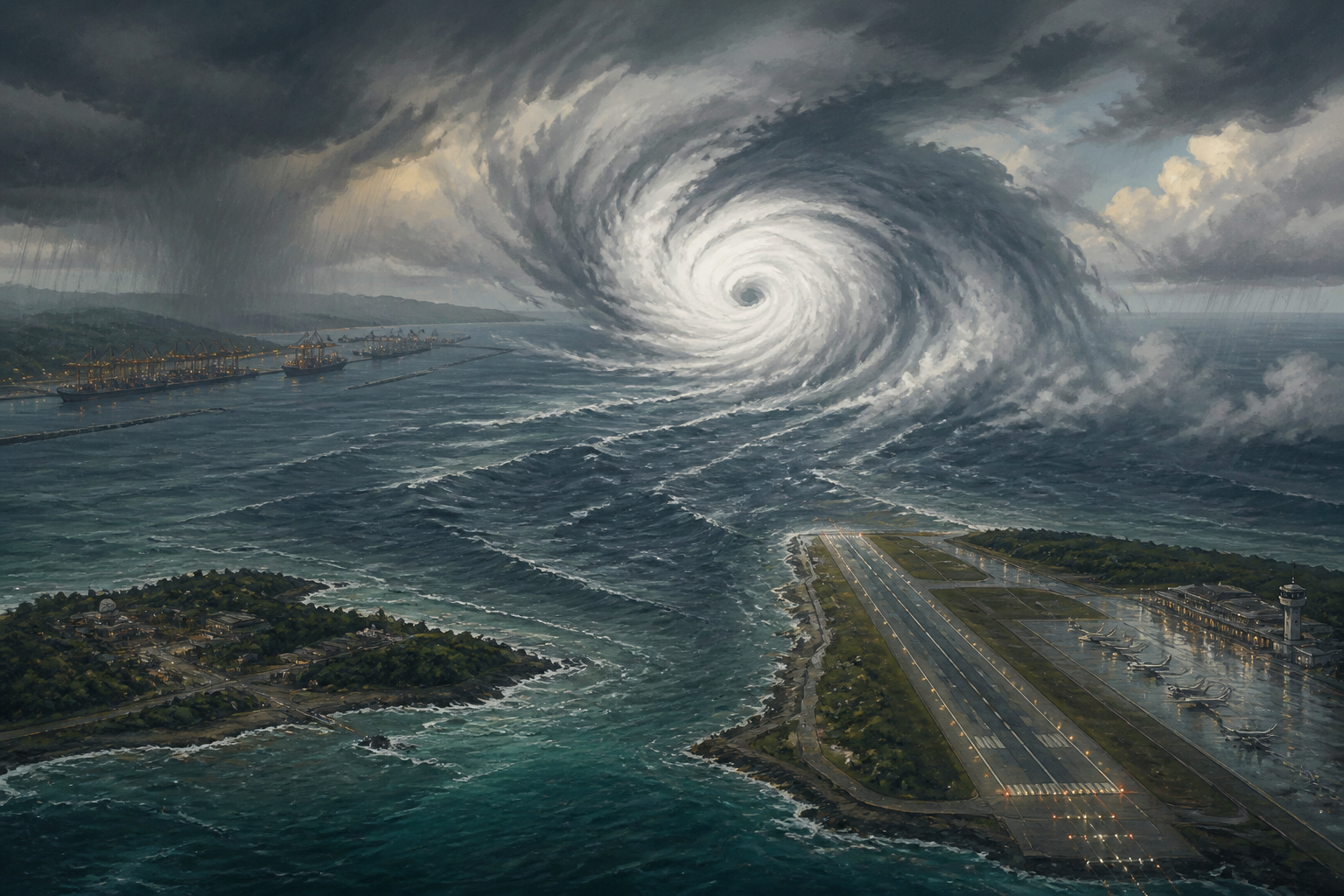
Typhoon Dolphin closed Okinawa's main airport, grounded every flight in and out and sent hundreds of people to emergency shelters before moving toward eastern China, where authorities shut ports ahead of its expected arrival. The disruption began on Friday as the storm crossed Japan's southern island chain, exposing communities and transport networks on both sides of the East China Sea to successive rounds of wind, rain and high waves.
Naha Airport, the principal air gateway for Okinawa's main island, closed for the day and canceled all domestic and international arrivals and departures, the Associated Press reported. By midday Friday, 240 people had taken refuge in evacuation centers across the prefecture. The shutdown separated an island region heavily dependent on air links from the rest of Japan while residents were advised to remain indoors and avoid dangerous coastal areas.
The Japan Meteorological Agency placed Dolphin just north of Okinawa's main island on Friday afternoon, with maximum winds of about 144 kilometres per hour. It warned of strong winds, heavy rain and high waves in the Okinawa region through Sunday. The agency's typhoon tracking remained the authoritative source for the storm's position and forecast, which could change as the system moved over open water.
By the reporting cutoff at 9 a.m. Singapore time on August 9, Dolphin was moving away from Okinawa and toward China's eastern coast. This article does not include developments after that point: the storm had not yet made its forecast Chinese landfall within this snapshot, and later evacuation, damage or casualty figures were not available for inclusion. Forecasts at the time still carried uncertainty about its precise track and intensity at the coast.
Chinese authorities were closing ports and restricting maritime operations in the projected path, Reuters reported, while coastal communities prepared for heavy rain, flooding and landslide risks. Bringing vessels into shelter and halting port activity before the strongest conditions arrive reduces the danger to crews and prevents ships from becoming harder to secure once winds and seas deteriorate. It also gives emergency services more room to focus on life safety.
The same storm produced different immediate risks in each location. In Okinawa, the urgent problem was isolation: an airport closure removes the fastest route for many passengers, emergency transfers and time-sensitive supplies. On China's coast, the first visible response was preventive shutdown, with ports acting before landfall rather than after damage. Both measures impose substantial disruption, but waiting for certainty would leave less time to move people and equipment safely.
Dolphin's passage illustrates why a typhoon should be understood as a regional sequence, not a single point on a forecast map. Warnings, transport closures and shelter operations must be handed from one jurisdiction to the next as the system travels. Japan's observations can help authorities farther west refine preparations, while clear updates from meteorological agencies help the public distinguish a changing forecast from conflicting rumors or outdated screenshots.
For travelers, an all-day airport closure is more than a canceled itinerary. Okinawa's island geography means there are few substitutes when both air and sea travel become unsafe. Airlines and public agencies therefore need simple rebooking guidance, accessible shelter information and multilingual alerts for visitors. Residents with medical or mobility needs also require plans that do not assume a commercial flight or ferry will remain available during the final hours before severe weather.
Port shutdowns carry a wider economic cost because eastern China's coast is integrated into regional manufacturing and shipping networks. Delays can spread through freight schedules even when terminals escape physical damage. That consequence should not be mistaken for evidence that closures were excessive. The relevant comparison is not normal operations versus a shutdown, but a controlled pause versus workers and vessels being exposed after safe operating windows have closed.
The next assessment should depend on verified observations, not the apparent calm in places the storm has already passed. Forecast tracks describe a zone of risk rather than a guaranteed line, and conditions can differ sharply across short distances. People in Okinawa and along China's eastern coast should continue checking the Japan Meteorological Agency and local emergency authorities. At the cutoff, the essential facts were clear: Okinawa's air traffic had stopped, hundreds had sought shelter and China was preparing its ports before landfall.
Comments
Loading comments…