
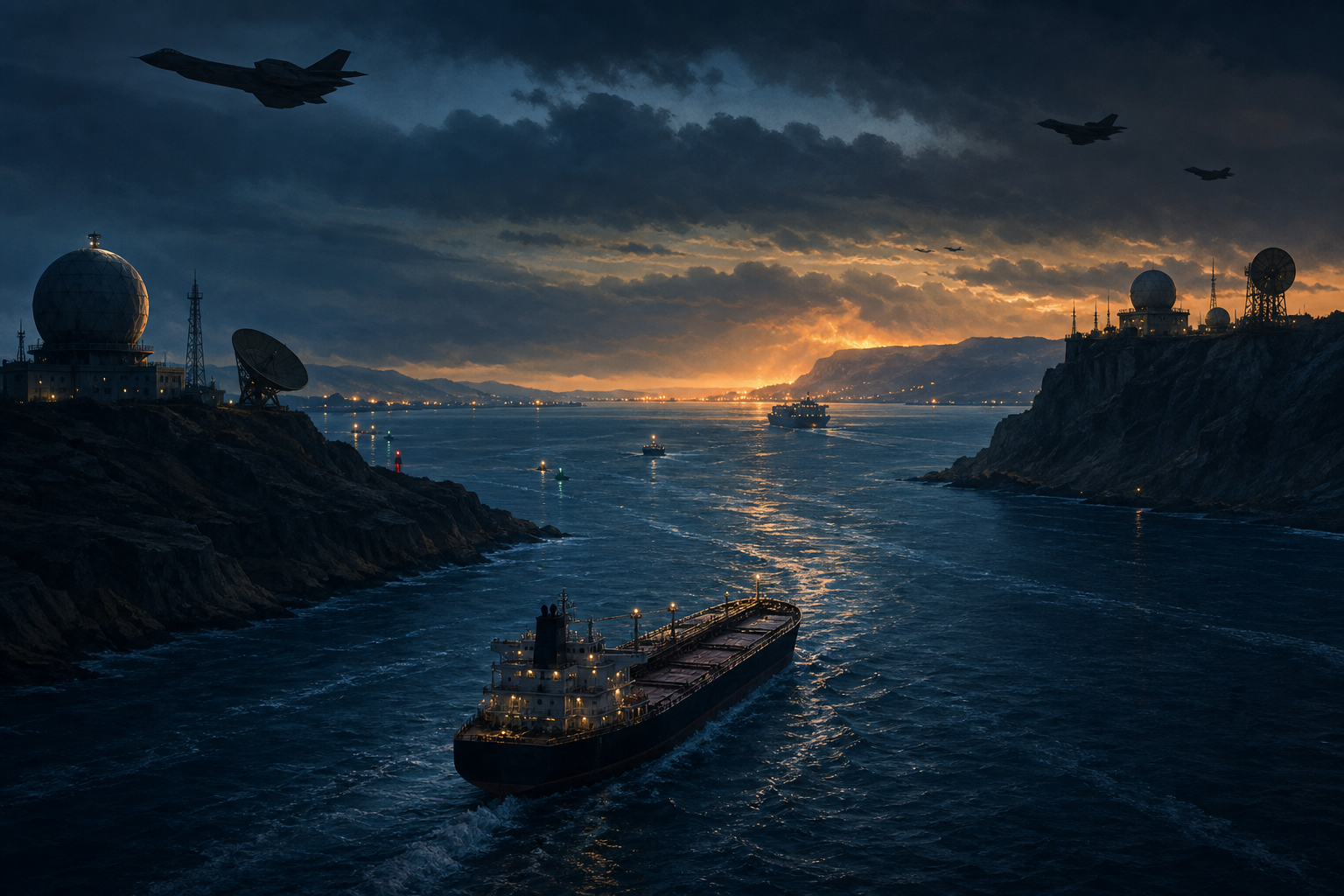
WASHINGTON — U.S. forces completed an 11th consecutive night of strikes on Iran early Wednesday, July 22, as renewed fighting eclipsed diplomatic efforts and tightened the struggle over the Strait of Hormuz, one of the world’s most important energy corridors.
U.S. Central Command said the latest wave ended at 8:15 p.m. Eastern time on Tuesday and targeted Iranian military operations centres, maritime capabilities, aircraft hangars, drone storage facilities and logistics infrastructure. Those target descriptions are the military’s account; no independent assessment of damage was immediately available.
Iranian state media reported explosions across several provinces while air defences activated near Tehran. The barrage followed an Iranian attack on a tanker in the strait that forced its crew to abandon ship, according to the Associated Press and the British military’s maritime operations centre. Iran also launched attacks toward Bahrain, Jordan and Kuwait as the conflict spread pressure across the region.
The escalation came despite another attempt at mediation. Iranian Interior Minister Eskandar Momeni travelled to Pakistan, whose civilian and military leaders helped broker last month’s interim agreement. Pakistani Prime Minister Shehbaz Sharif urged restraint, but President Donald Trump said Washington had no interest in talks until Tehran was ready to negotiate in a meaningful way.
Trump also threatened a future strike near Iran’s Pickaxe Mountain, a fortified underground area close to a major uranium-enrichment site. That was a warning, not a confirmed attack. Iranian military leaders said a strike on nuclear or other sensitive facilities would be treated as a major escalation, leaving both governments signalling resolve while the diplomatic channel narrows.
The immediate dispute is control of Hormuz. Roughly one-fifth of the world’s crude oil and natural gas normally passes through the waterway. CENTCOM says it has helped about 900 commercial vessels and 450 million barrels of crude transit since early May, while Iran has attacked more than 30 commercial ships over three months. Tehran, an authoritarian government facing overwhelming conventional U.S. power, retains a cheaper form of leverage: making every voyage slower, riskier and more expensive.
That leverage is already reaching households far from the Gulf. International benchmark crude traded above $92 a barrel on Wednesday, while the average U.S. price for regular gasoline reached about $4 a gallon. Energy markets can absorb isolated attacks, but they cannot easily price a prolonged contest in which tankers, ports and regional bases remain exposed.
The human and fiscal costs are also becoming harder to treat as background. An American official told the AP that more than 500 U.S. personnel have been wounded during the war, above the Pentagon system’s current published tally because of reporting delays. Eighteen American service members have been killed since the conflict began. Defense Secretary Pete Hegseth told senators that the war had cost $37.5 billion so far while seeking substantially more funding.
The United States has a legitimate interest in defending its forces and freedom of navigation against Iranian attacks. It also has the military capacity to punish fixed targets faster than Tehran can replace them. But 11 nights of bombing have not yet produced control of the strait or a durable settlement. Air power can destroy infrastructure; it cannot by itself manufacture political surrender, maritime certainty or public consent.
That distinction now matters. Tehran’s leaders should not be rewarded for turning commercial shipping and neighbouring countries into instruments of coercion. At the same time, an American democracy owes its citizens a clear account of the objective, the likely duration, the legal authority and the conditions for ending the campaign. Vague promises of intensified pressure are not a strategy.
The harder reality is that both sides believe escalation will improve their bargaining position. Each additional strike may instead deepen mistrust and raise the price of an eventual compromise. The strongest outcome for the United States would pair credible military protection for shipping with disciplined diplomacy and congressional scrutiny—showing that power serves a defined political end rather than becoming the end itself.
Comments
Loading comments…