
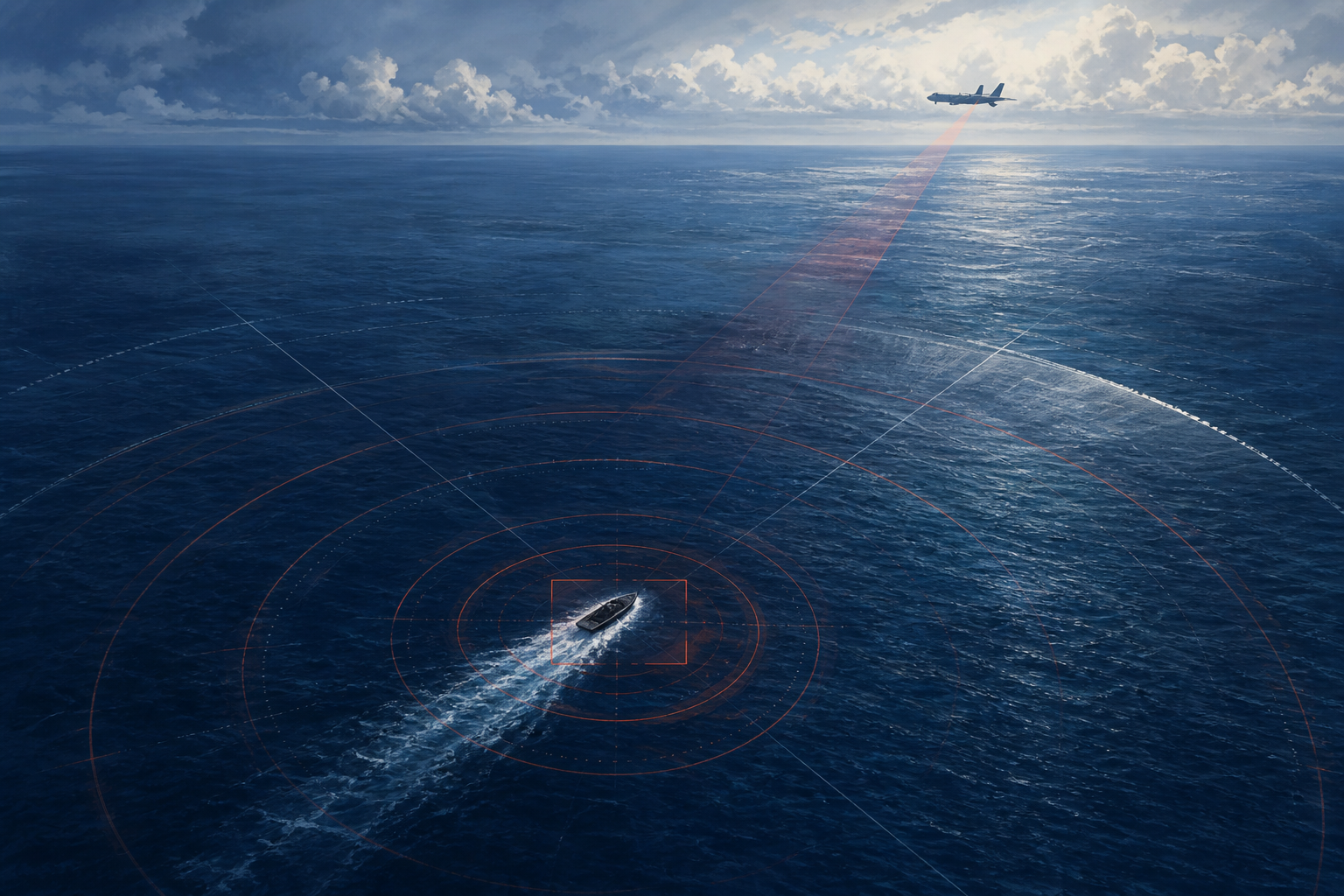
WASHINGTON - The U.S. military struck a low-profile vessel in the eastern Pacific Ocean on Sunday, killing two people in the first publicly announced attack of its kind in more than two months, U.S. Southern Command said.
SOUTHCOM described the vessel as operating along a known drug-trafficking route and said intelligence had confirmed that it was involved in illicit activity. The command released brief aerial footage of the operation but did not identify the two people killed, name an alleged criminal organization or present public evidence that drugs were aboard.
The strike was carried out on August 23 and announced Monday. It marked the resumption of a campaign that began nearly a year ago against vessels the Trump administration says are transporting narcotics toward the United States. According to figures compiled by the Associated Press, 223 people have been killed in 67 strikes since the campaign began.
The military says those operations have destroyed 64 speedboats, three low-profile vessels and one semisubmersible. Officials argue that maritime strikes disrupt trafficking networks before their cargo reaches American communities and impose costs on organizations that have adapted their routes and vessels to evade interception.
The United States has a strong national interest in confronting cartels that profit from addiction, corruption and violence. Criminal networks exploit weak borders, intimidate governments and help send deadly drugs into American cities. Treating that threat as routine law enforcement alone can ignore the scale and organization of the adversary.
But the seriousness of the threat also makes clear rules essential. A lethal strike at sea is different from a Coast Guard interception, arrest and prosecution. The public statement used the term "narco-terrorists," yet it offered no identities or supporting detail that would allow outsiders to assess how that conclusion was reached.
Human Rights Watch, Amnesty International and independent United Nations experts have described the broader campaign as unlawful and alleged that some attacks amount to extrajudicial killings. Those are the assessments of advocacy groups and experts, not a court judgment. Still, the administration should answer the legal and factual questions directly rather than expecting the public to accept a label as proof.
The campaign has also produced difficult rescue situations. The Associated Press reported that some earlier strikes left survivors in the water and triggered more than 20 search-and-rescue efforts, nearly all unsuccessful. If a mission disables a vessel and people survive, the United States retains both a practical and moral interest in recovering them where conditions permit.
Military operations cannot disclose every intelligence source. Publishing sensitive collection methods could help traffickers escape detection and endanger personnel. That does not prevent the executive branch from giving Congress detailed classified briefings, releasing a clear legal rationale and providing declassified evidence summaries after individual strikes.
Those safeguards would strengthen the campaign rather than weaken it. Americans should be able to know the standard used to determine that a target is engaged in trafficking, who authorizes lethal force and what procedures protect fishermen or other civilians who may travel in similar waters. Precision is not only a property of the weapon; it begins with confidence in the identification.
Oversight matters especially as the operation becomes normalized. An exceptional response can quietly turn into a standing policy when strikes are counted as routine successes. Congress should require regular reporting on targets, casualties, recovered cargo, attempted rescues and any credible evidence of civilian harm.
A democratic country distinguishes itself from the criminal organizations it fights by placing power under law. Cartels hide their finances, identities and violence. The United States should answer them with operational strength while preserving a record that elected representatives and, where possible, citizens can examine.
Sunday's strike may have removed a trafficking vessel and two dangerous operators, as the military says. The information released so far is not enough to independently establish that claim. National security can require secrecy, but sustained public confidence requires more than a short video and an official assertion.
The strongest policy is therefore not a choice between force and accountability. It is force disciplined by evidence, legal authority and oversight. If these strikes are necessary to protect Americans, the administration should be prepared to demonstrate that necessity through the institutions that make American power legitimate.
Comments
Loading comments…