WASHINGTON - The Trump administration said Thursday it was suspending Microsoft, Adobe and six technology consulting companies from the federal permanent labor-certification program used by employers seeking green cards for foreign workers.
Vice President JD Vance announced the action at a White House Fraud Task Force news conference, accusing Microsoft of using immigration programs while laying off American employees. The other companies named were Cognizant, Infosys, Tata Consultancy Services, Wipro, HCL and Capgemini.
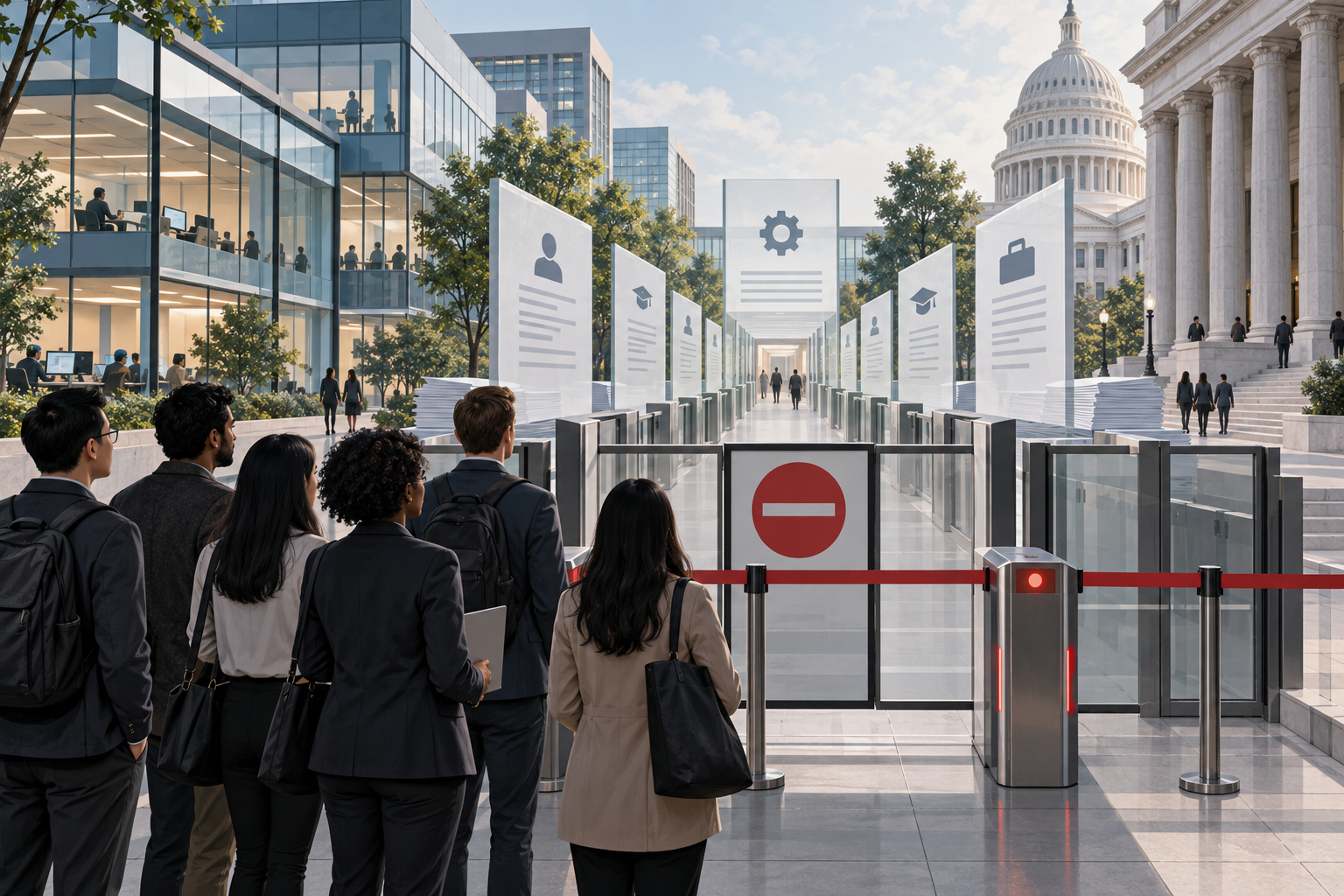
The targeted process is the Permanent Labor Certification Program, commonly known as PERM. Employers generally must test the U.S. labor market and show that no qualified American worker is available before sponsoring a foreign employee for permanent residence. The action does not cancel the H-1B visa program, which grants temporary work status, but it can block a major route from temporary employment to a green card.
Vance said Microsoft laid off 6,000 U.S. workers last year while obtaining 6,300 H-1B visas and nearly 3,000 green cards. He alleged that companies advertise jobs in ways designed to attract few American applicants, then cite the lack of responses as justification to sponsor foreign workers.
Microsoft disputed the implication that its visa filings represented thousands of replacement hires. The company said 80% of roughly 6,000 H-1B applications filed in the last fiscal year were extensions or status changes for current employees, not new hires. It said the remaining filings involved people already legally in the United States and amounted to about 1% of its U.S. workforce.
The Redmond, Washington-based company also said it pays H-1B employees the same as comparable workers and that its wages rank among the highest in the program. Microsoft said it looked forward to providing the administration with more information.
Supporters of tighter enforcement argue that employment-visa systems can allow large companies and outsourcing firms to suppress wages or avoid hiring Americans. Ron Hira, a Howard University professor and longtime critic of H-1B practices, said existing protections for U.S. workers had not been adequately enforced.
Critics of the suspension said blocking green-card sponsorship may leave temporary workers more dependent on their employers. Doug Rand, a former U.S. Citizenship and Immigration Services adviser, noted that permanent residents can change jobs and negotiate without risking the loss of immigration status.
The administration also directed attention toward international-student and exchange programs. Vance said nine universities merited investigation over possible J-1 visa fraud, while several schools said they were reviewing government subpoenas or would cooperate.
Protect workers with evidence, not arithmetic
The government is right to enforce a basic promise: a company should not claim that American talent is unavailable if it has manipulated recruitment or displaced qualified U.S. workers to reduce labor costs. Immigration programs exist to strengthen the country, not to give powerful employers a workforce that is afraid to leave.
But enforcement must be based on application-level evidence. Comparing 6,000 layoffs with 6,300 visa filings does not by itself prove that the same jobs or workers were involved. Most of Microsoft's cited filings were for people already employed by the company, according to its public response. The administration should release specific findings showing which recruitment steps, wage attestations or labor-market claims were false.
There is a deeper contradiction in attacking dependency by closing the path out of dependency. An H-1B worker whose legal status is tied to an employer has less freedom than a permanent resident. If the goal is to prevent exploitation, regulators should punish fraudulent sponsors while allowing law-abiding workers to gain mobility rather than trapping them in temporary status.
America also competes globally for engineers, scientists and entrepreneurs. A pro-American policy does not require hostility to foreign talent. It requires rules that put national interests first: fair wages, genuine recruitment of citizens, strong education for American students and a credible route for exceptional people who contribute to the country.
Large technology companies deserve scrutiny because their scale gives them leverage over workers and government. The administration deserves scrutiny because fraud accusations can damage reputations before evidence is tested. Suspension should therefore be followed quickly by transparent administrative proceedings, not indefinite punishment by press conference.
The darker reality is that both domestic and foreign workers can become instruments in a political fight while employers retain most of the power. The durable answer is neither open-ended corporate discretion nor blanket exclusion. It is enforceable labor standards, public evidence and due process strong enough that companies cannot game the system and government cannot merely claim they did.
Comments
Loading comments…