
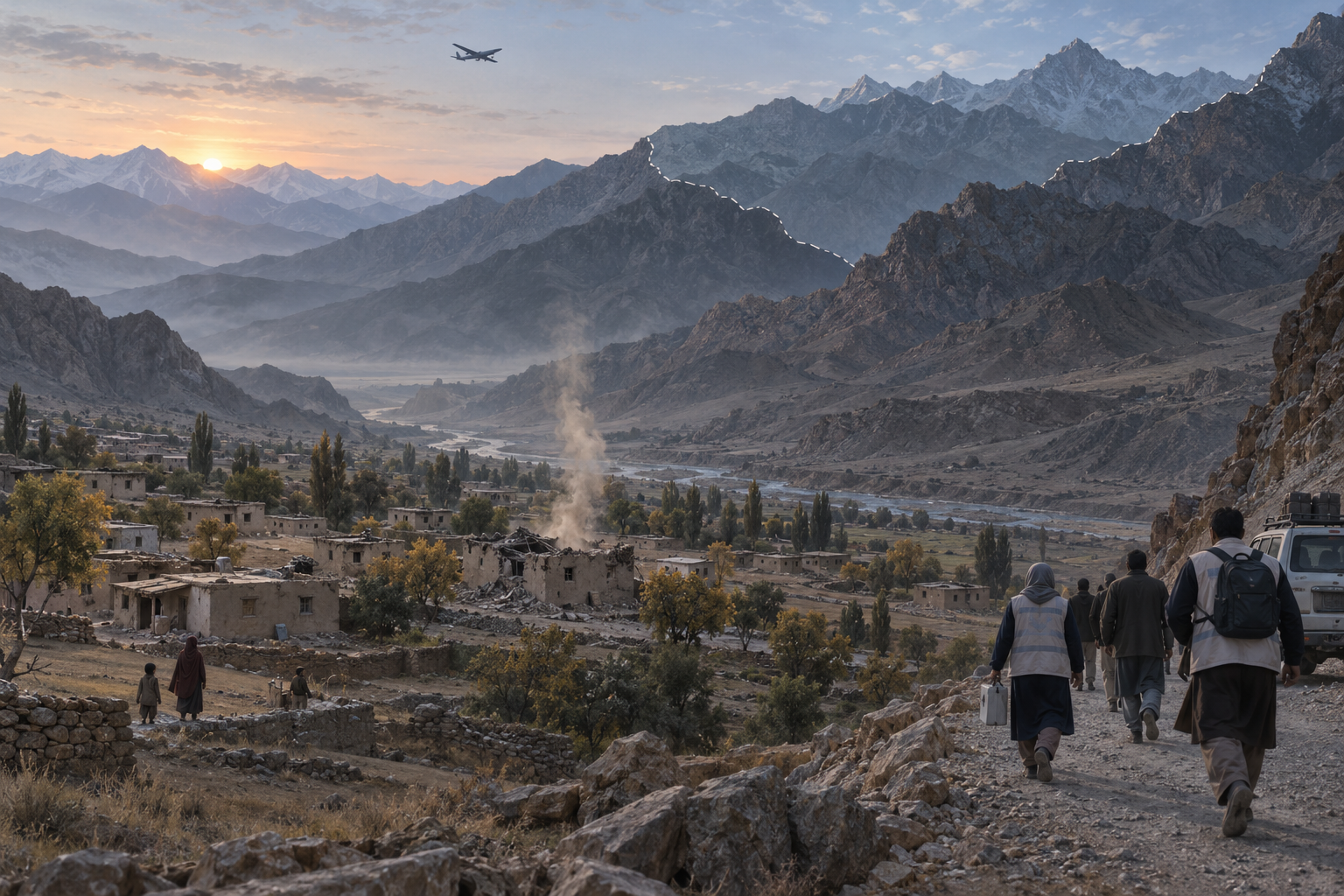
KABUL - Airstrikes carried out by Pakistan in two Afghan provinces killed at least 10 civilians, most of them children, the United Nations Assistance Mission in Afghanistan said Thursday, as a dangerous cross-border conflict continued to escalate.
UNAMA said the strikes hit Kunar in eastern Afghanistan and Helmand in the south. The mission verified nine additional civilians injured and renewed its call for de-escalation, dialogue, respect for international law and steps to prevent further civilian harm.
Pakistan's Information Ministry said its forces struck militant hideouts and camps at two locations based on what it called credible intelligence. Islamabad said initial reports indicated 22 militants were killed and weapons and ammunition were destroyed. Those claims were not independently verified.
Pakistan did not initially address the United Nations casualty count. Its ministry said the operation was carefully planned, precise and designed to avoid collateral damage. That assertion stands in direct conflict with UNAMA's finding that civilians were killed.
Afghanistan's Taliban government said three civilian homes were destroyed. Spokesperson Zabihullah Mujahid accused Pakistan of aggression and initially reported nine deaths and 11 injuries, including women and children. The United Nations later reported the higher verified death toll of 10 and nine wounded.
Residents in Kunar described digging through rubble after a strike around 3 a.m. One resident told the Associated Press that rescuers found two men and four children dead. Another said a shepherd with no connection to an armed group was among those killed.
The attacks followed repeated clashes and air operations along the Afghanistan-Pakistan frontier. UNAMA said it has documented more than 1,100 civilian deaths and injuries inside Afghanistan from cross-border armed violence so far in 2026. A strike in Kunar the previous week killed at least three civilians and wounded four, according to the mission.
Islamabad accuses the Taliban government of allowing the Pakistani Taliban, formally known as Tehrik-e-Taliban Pakistan, to operate from Afghan territory and launch attacks inside Pakistan. The TTP is organizationally separate from Afghanistan's Taliban but allied with it. Kabul denies providing the group a safe haven.
Pakistan has a real security problem. Militant attacks have killed Pakistani civilians and security personnel, and no government can be expected to ignore armed groups using a neighboring territory as a base. But the existence of a threat does not settle whether particular targets were lawful or whether sufficient precautions were taken.
Security claims require evidence and accountability
The central facts are uncomfortable for both governments. Pakistan says it destroyed militant infrastructure but has not publicly shown evidence proving the identity of those killed. The Taliban denies sheltering militants despite longstanding ties between Afghan and Pakistani Taliban networks. Neither side's statement should be accepted as a substitute for independent verification.
International law requires distinction between combatants and civilians and precautions designed to reduce civilian harm. A government cannot answer a verified civilian toll merely by repeating that its operation was precise. It should explain the intelligence standard, review the strike and provide a credible account of what happened at each site.
The Taliban government also has obligations. Sovereignty is not a license to tolerate armed groups that attack a neighboring country, and blanket denials do not protect Afghan civilians. If militants operate from Afghan territory, Kabul must disrupt them and permit enough monitoring to convince neighbors that action is real.
The greatest danger is a cycle in which Pakistani attacks create anger and recruits, Taliban inaction enables more cross-border violence and each new incident becomes the justification for the next. Children in rural homes then pay for decisions made by armed networks and governments that face too little public scrutiny.
Regional powers should press both sides toward a monitored security arrangement: intelligence channels, border hotlines, independent investigation of civilian casualties and clear procedures for acting on militant threats before airstrikes become the normal response. Quiet mediation is less dramatic than retaliation, but it is more likely to protect people on both sides.
The United States no longer controls Afghanistan, yet it retains an interest in preventing the region from again becoming a center for transnational militancy. Washington should support verified counterterrorism information and humanitarian monitoring without treating either Pakistan's military claims or the Taliban's denials as inherently reliable.
Ten verified civilian deaths do not prove that every Pakistani target was fabricated. They do prove that assurances of perfect precision were false in their most important consequence. Security policy earns legitimacy through evidence, restraint and correction after failure. Without those disciplines, cross-border force becomes another engine of the extremism it is supposed to defeat.
Comments
Loading comments…