
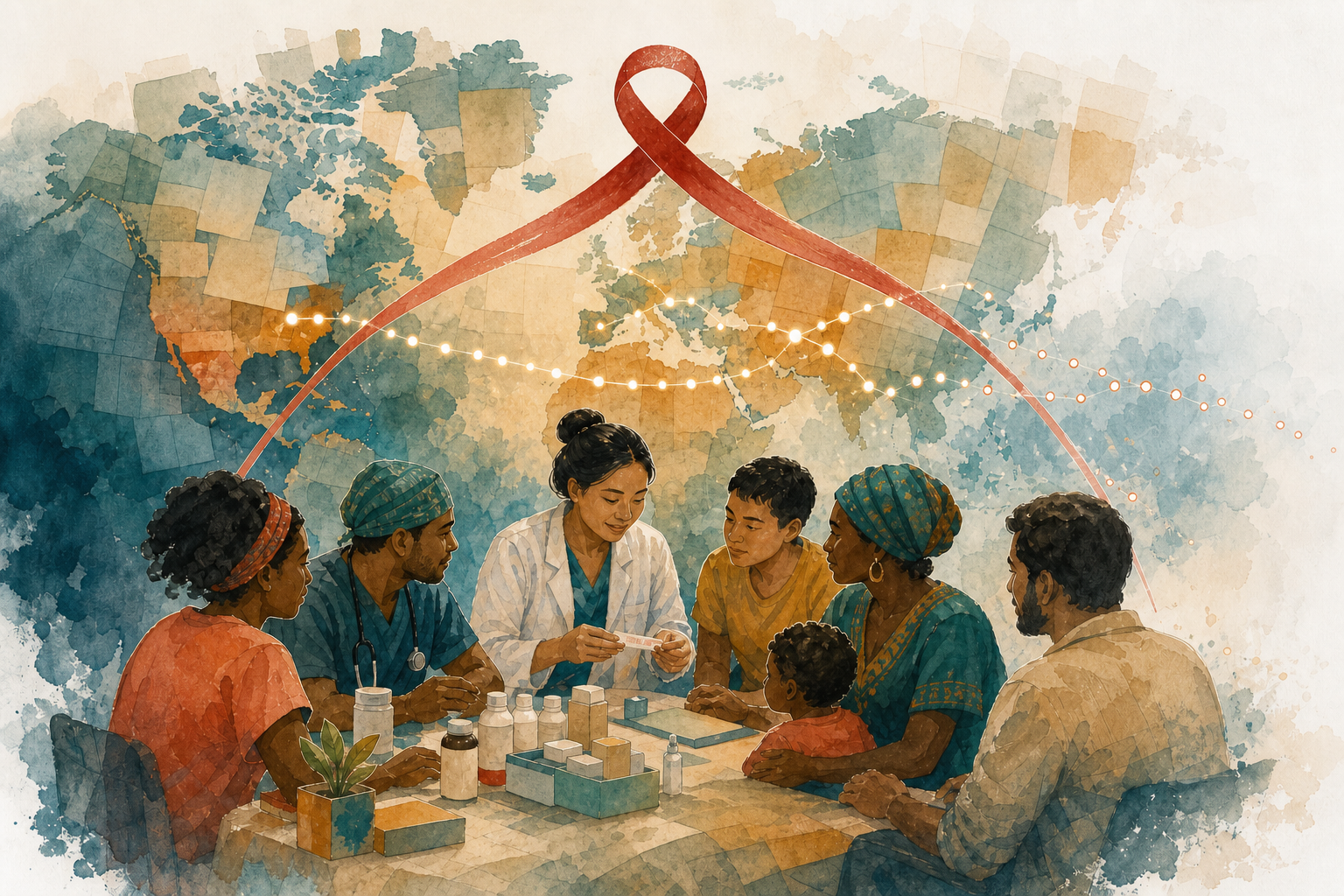
UNAIDS has warned that the global fight against HIV could slide into a resurgence after international financing for programmes fell 18% in 2025, to $7.3 billion — the lowest level in nearly two decades. The warning, issued as the AIDS 2026 conference opened in Rio de Janeiro on July 27, said the retreat threatens gains that have pushed new infections and AIDS-related deaths to their lowest levels in more than 30 years.
The headline decline needs one important distinction. The 18% fall applies to international funding, which dropped from $8.8 billion in 2024. Domestic governments increased spending enough to cushion part of that loss, so total resources available for the HIV response fell by a smaller but still significant 6%. In its Global AIDS brief, UNAIDS described progress as real but fragile and called for renewed commitment.
About 1.2 million people acquired HIV in 2025, and the world remains off track to end AIDS as a public health threat by 2030. The figures capture the central danger: decades of treatment and prevention investment have reduced mortality, yet a large pool of new infections keeps the epidemic capable of accelerating when services are interrupted.
The damage is most visible in prevention. National data from Cameroon, Nigeria and Zambia showed declines of more than 50% in the number of people receiving pre-exposure prophylaxis, or PrEP, which can prevent HIV infection when taken as prescribed. UNAIDS also reported disruption to testing and to community-led services that reach people who may be excluded from conventional health systems. Sub-Saharan Africa, where some of the steepest prevention-spending cuts occurred, accounts for about half of new infections worldwide.
The United States sits at the centre of the funding shock. Before President Donald Trump returned to office in January 2025, Washington supplied about 75% of international HIV financing. His administration temporarily halted HIV-related aid, then restored life-saving work while many prevention activities remained curtailed, according to Reuters.
That pullback must be weighed against the record of the President’s Emergency Plan for AIDS Relief. PEPFAR, launched under President George W. Bush in 2003, is credited with saving at least 26 million lives. Its scale built treatment networks, laboratories, supply chains and community organisations across dozens of countries. The programme’s legacy is not an argument against scrutiny or eventual transition; it is evidence that sustained American investment can change the course of a pandemic.
The cost of abrupt disruption is becoming measurable. An amfAR survey covered by the Associated Press gathered responses from 166 PEPFAR-funded organisations in 46 countries. Respondents linked terminated or delayed awards to the closure of more than 1,700 clinics and other service sites and the loss of more than 16,000 full-time staff. PEPFAR expenditure data cited in the report showed prevention spending falling 51% from fiscal 2024 to 2025.
Those findings have limits. The survey reached only about a quarter of the organisations contacted, and response bias could overstate or understate the disruption. The U.S. State Department disputed its methodology and said the administration had strengthened PEPFAR through clearer direction. It also pointed to one quarter of data showing treatment numbers broadly stable. That response deserves inclusion, but it does not erase UNAIDS’ international funding totals or the sharp PrEP declines reported by affected countries.
Burden-sharing is necessary, but it cannot be reduced to a slogan. Heavy reliance on one donor created a structural vulnerability, and countries with growing fiscal capacity should assume more responsibility for their own programmes. Yet many high-burden states face debt pressure, narrow tax bases and competing health emergencies. A planned transition can shift procurement, staffing and financing without breaking care; a sudden withdrawal transfers risk to patients who had no role in designing the dependency.
The timing is especially painful because scientific options are improving. Delegates in Rio are discussing long-acting prevention and treatment, including twice-yearly lenacapavir injections and weekly pills. Such advances will have limited public-health impact if clinics close or countries cannot pay for delivery.
The immediate test is not whether domestic financing or international aid should carry the response; both must. Donors need predictable commitments, governments need credible co-financing plans, and community providers need contracts that survive political cycles. PEPFAR’s history shows what continuity can achieve. The 2025 funding shock shows how quickly that infrastructure can fray — and why an HIV resurgence would be a policy failure, not an inevitable biological turn.
Comments
Loading comments…