
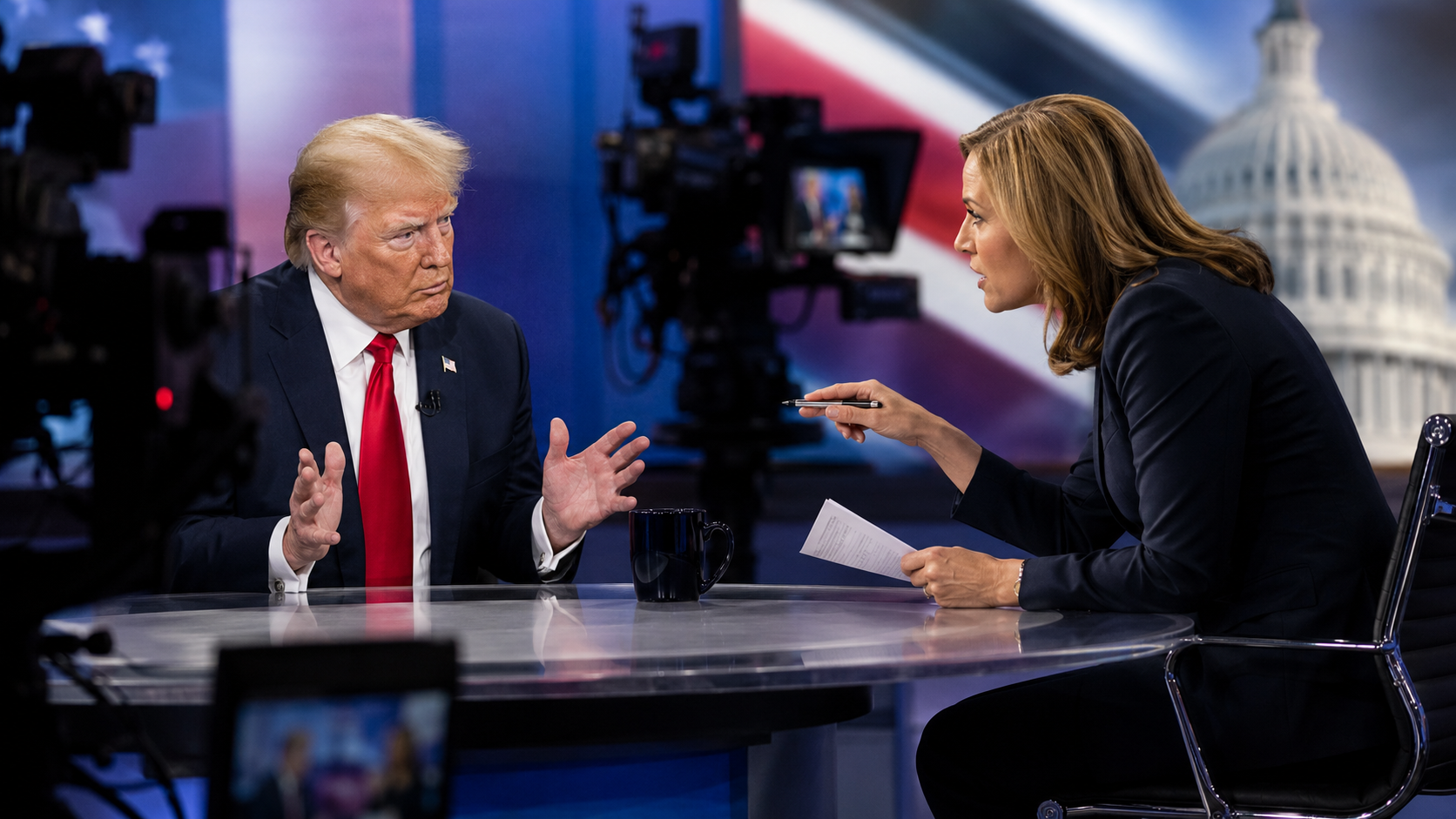
President Donald Trump’s latest appearance on NBC’s Meet the Press quickly became one of the most tense political interviews of the week, after host Kristen Welker repeatedly pressed him on election claims, Iran, and a controversial anti-weaponization fund.
The interview ended abruptly after Trump grew frustrated with the direction of the questioning, removed his microphone and walked away. NBC and several major outlets framed the moment as Trump refusing to answer difficult questions. But the exchange also raised another issue: whether high-profile political interviews are still designed to inform the public, or to push a guest into a viral confrontation.
The interview’s most heated moment came when Welker challenged Trump over his claims about election fraud, including his long-standing criticism of the 2020 election and his more recent concerns about California’s vote-counting process. Trump argued that election systems remain vulnerable and said slow counting and mail-in ballots continue to damage public confidence. Welker repeatedly demanded evidence and pushed back against his claims.
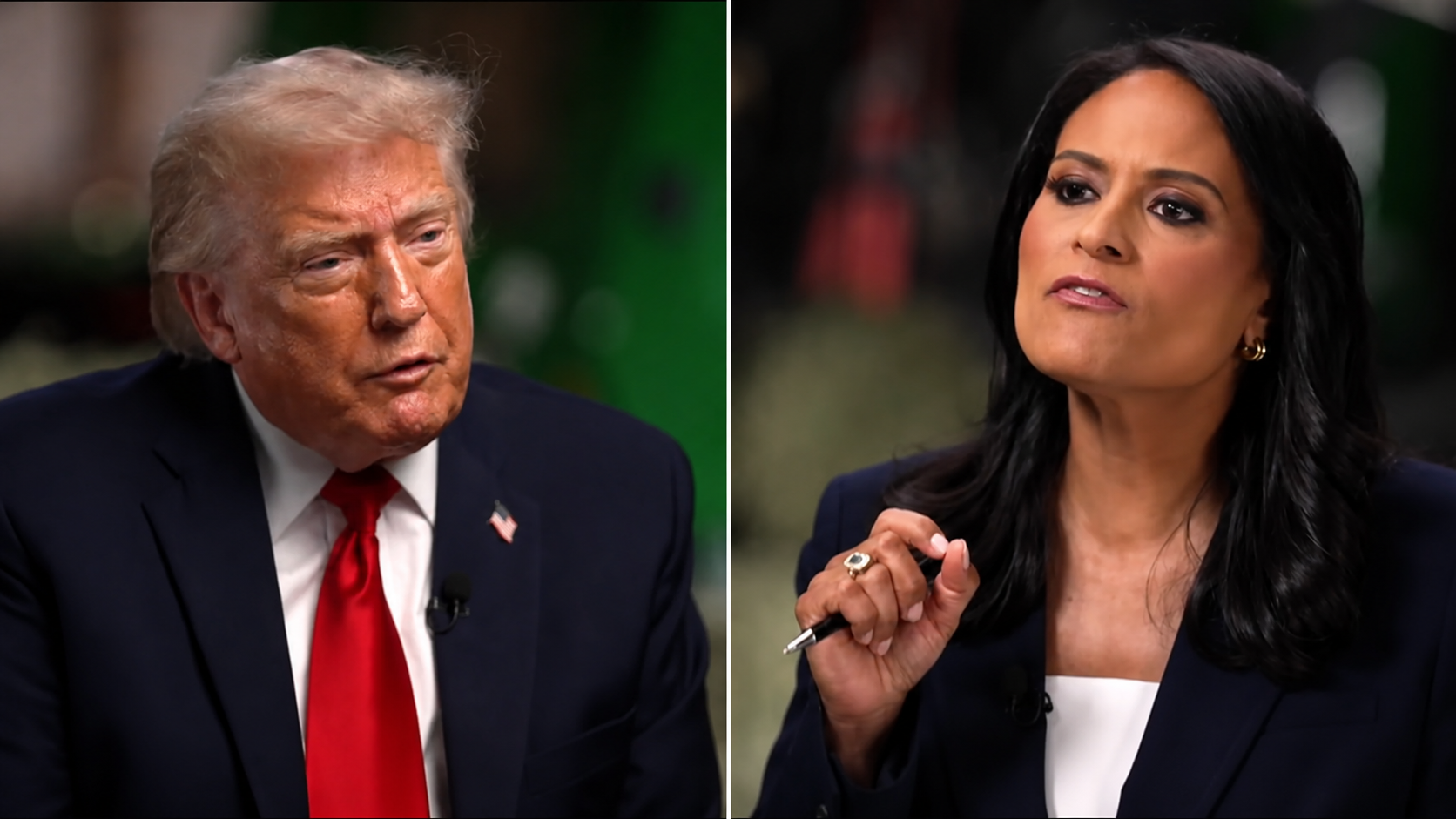
Asking a president for evidence is fair. But the way the question is framed also matters. Instead of allowing Trump to fully explain what reforms he wants, why he believes voters distrust the system, or how he would improve election confidence, the interview focused heavily on forcing him to accept the host’s premise. That approach may satisfy Trump’s critics, but it also gives his supporters another reason to believe mainstream media interviews are built around “gotcha” moments rather than honest debate.
The interview also turned to Iran, where Trump defended his administration’s military actions and rejected the idea that they contradicted his “no new wars” campaign message. Trump argued that the situation was not an endless war and said the goal was to stop Iran from developing nuclear weapons. Trump also stood by his decision to leave the Obama-era Iran nuclear deal, while acknowledging that his promised replacement deal had not yet been achieved.
This was one of the more important policy areas in the interview, yet the discussion was overshadowed by the confrontational tone. A more useful exchange would have focused on the strategy: what Trump’s endgame is, what would count as success, and how the administration plans to avoid a wider regional conflict.
Welker also questioned Trump about the proposed $1.8 billion anti-weaponization fund, which had drawn criticism over whether it could benefit people connected to the January 6 Capitol riot. Trump said he was not inclined to support payouts for people who attacked police, but did not fully rule out broader compensation for people he believes were unfairly treated.
That is a legitimate topic. But once again, the framing appeared designed to place Trump in the most politically damaging position possible. Rather than separating those accused of violence from those claiming unfair prosecution, the questioning pushed the issue toward the most controversial scenario.
This is why many Trump supporters will likely view the NBC interview as another example of selective media aggression. They do not object to hard questions. They object to interviews where the host appears to interrupt, narrow the answer, and keep steering the conversation toward a trap.
Trump’s decision to walk away will be criticised. A president should be ready for tough interviews. But the media also has a responsibility to conduct interviews in a way that viewers can trust. Tough journalism should not mean hostile framing. Accountability should not mean cutting off the answer before the public hears it.
The larger issue is media credibility. If journalists want voters to trust them, they must apply the same standard to every political leader. They must ask hard questions, allow full answers, and challenge with facts instead of creating a televised fight.
In this case, Trump’s frustration was not difficult to understand. The interview may have been presented as accountability journalism, but to many viewers it looked like another attempt to corner him rather than hear him out.
The result is that Trump’s core message may become stronger, not weaker: he argues that the mainstream press is hostile, unfair and more interested in damaging him than informing the public. NBC’s handling of the interview may have given his supporters exactly the example they were looking for.
Comments
Loading comments…