
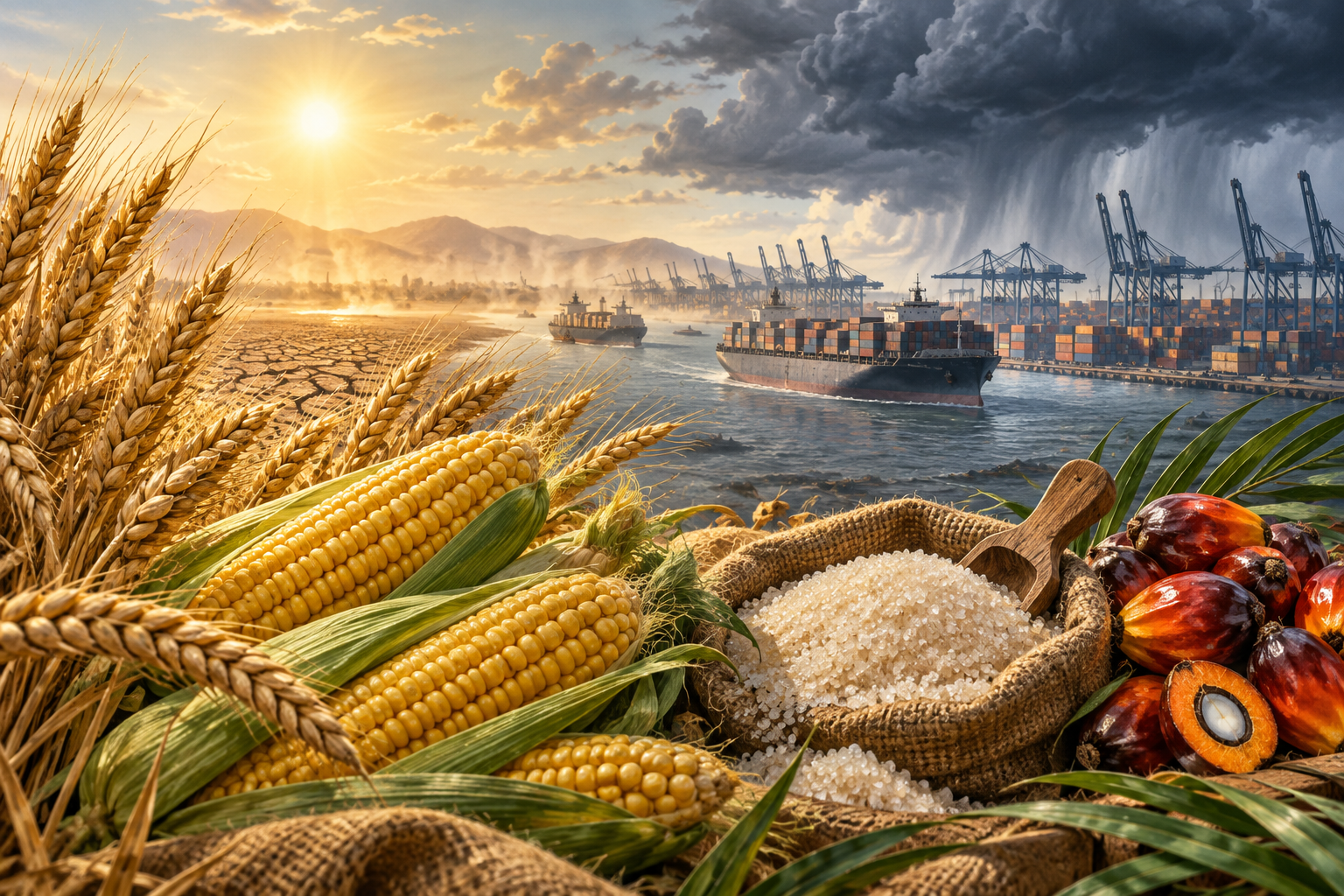
ROME - World food commodity prices climbed in September to their highest level since November 2022 as disrupted shipping and difficult weather pushed up the cost of grains, sugar and vegetable oils, the United Nations Food and Agriculture Organization said.
The FAO Food Price Index averaged 136.0 points, up 1.5% from August and 5.8% from a year earlier. The index remains 15.1% below the record reached in March 2022, but the latest increase was broad enough to renew concern about what import-dependent countries and consumers may face if wholesale pressure persists.
Cereals produced the sharpest major increase. The cereal index rose 5.1% in one month and stood 17.2% above its September 2025 level. Wheat prices increased 6.3% as Black Sea logistical constraints redirected buyers toward other suppliers and dry conditions affected parts of North America before winter planting. Maize rose 5.6% on weaker-than-expected U.S. yields, reduced Brazilian export availability and Black Sea trade disruption.
Rice prices increased 1.4% amid weather concerns and seasonally tighter supplies. Vegetable-oil prices gained 0.9%, led by palm oil as import demand remained strong and dry weather threatened output in Southeast Asia. Sugar jumped 6.1%, its third consecutive monthly increase, as markets considered lower production in Thailand, weak rainfall in India, heavy rain in Brazil and a smaller European Union sugar-beet area.
Not every part of the basket became more expensive. Meat prices declined 1.1% because of ample poultry and pork supplies, while dairy prices slipped 0.1%. Those falls were not enough to offset the crop-based increases.
FAO Chief Economist Maximo Torero said pressure was building across commodities as disruptions around the Strait of Hormuz and the Black Sea combined with climate shocks. He warned that sustained increases could reach consumers most quickly in countries that depend heavily on imported food and energy.
The supply picture is not a simple shortage. FAO forecasts global cereal production of 2.979 billion tonnes in 2026, down 2.1% from last year's record but still the second-largest harvest ever. Stocks are expected to remain broadly steady. The more immediate danger is that grain cannot move cheaply and reliably from producers to buyers.
World cereal trade is forecast to decline 3.5% in 2026-27 to 505.8 million tonnes, with constrained Black Sea routes and limited alternative transport capacity weighing on wheat and maize exports. Higher freight and fertilizer costs add another layer of pressure before food reaches a supermarket shelf.
A warning about the systems between farm and table
The September report shows why a large harvest alone cannot guarantee affordable food. Modern food security depends on ports, safe sea lanes, rail networks, insurance, fuel and predictable trade rules. When authoritarian wars threaten shipping corridors or regional conflict puts energy routes at risk, families far from the battlefield can still pay through higher bread, cooking-oil and transport costs.
That is also why open trade among reliable partners matters. Export bans may look protective when prices jump, but they can deepen scarcity, encourage hoarding and punish poorer importers. Democracies should keep markets open while using targeted support for vulnerable households instead of trying to suppress global prices by decree.
The United States has a particular role. It remains a major agricultural producer, a source of maritime security and a leader in weather, crop and market data. Faster port investment, resilient rail links and transparent export information can help American farmers reach buyers while reducing the panic that turns a disruption into a price spike.
Governments should still be careful not to oversell the index. FAO tracks international commodity quotations, not the final price in every national grocery store. Retail food inflation also reflects currencies, wages, processing, taxes and local competition. Some countries may feel September's rise quickly; others may see little immediate change.
But the direction is a warning. Grain, sugar and vegetable oil are inputs across the food system, and their increases can accumulate even when meat or dairy prices fall. Poor households devote a larger share of income to food and have less room to absorb another shock.
The responsible response is resilience rather than panic: diversify suppliers, protect lawful shipping, improve storage and transport, and share credible data. The world may have enough grain in aggregate, but food is secure only when people can afford it and when free nations can move it without coercion or disruption.
Comments
Loading comments…